Home Blog Page 4303

App Annie and IDC Report Finds Spending on Mobile Games Topped the Combined Total of Home Console, PC and Handheld Console Games in 2017

0
appannie

Live Multiplayer Games on Smartphones and Tablets Took Center Stage for the First Time

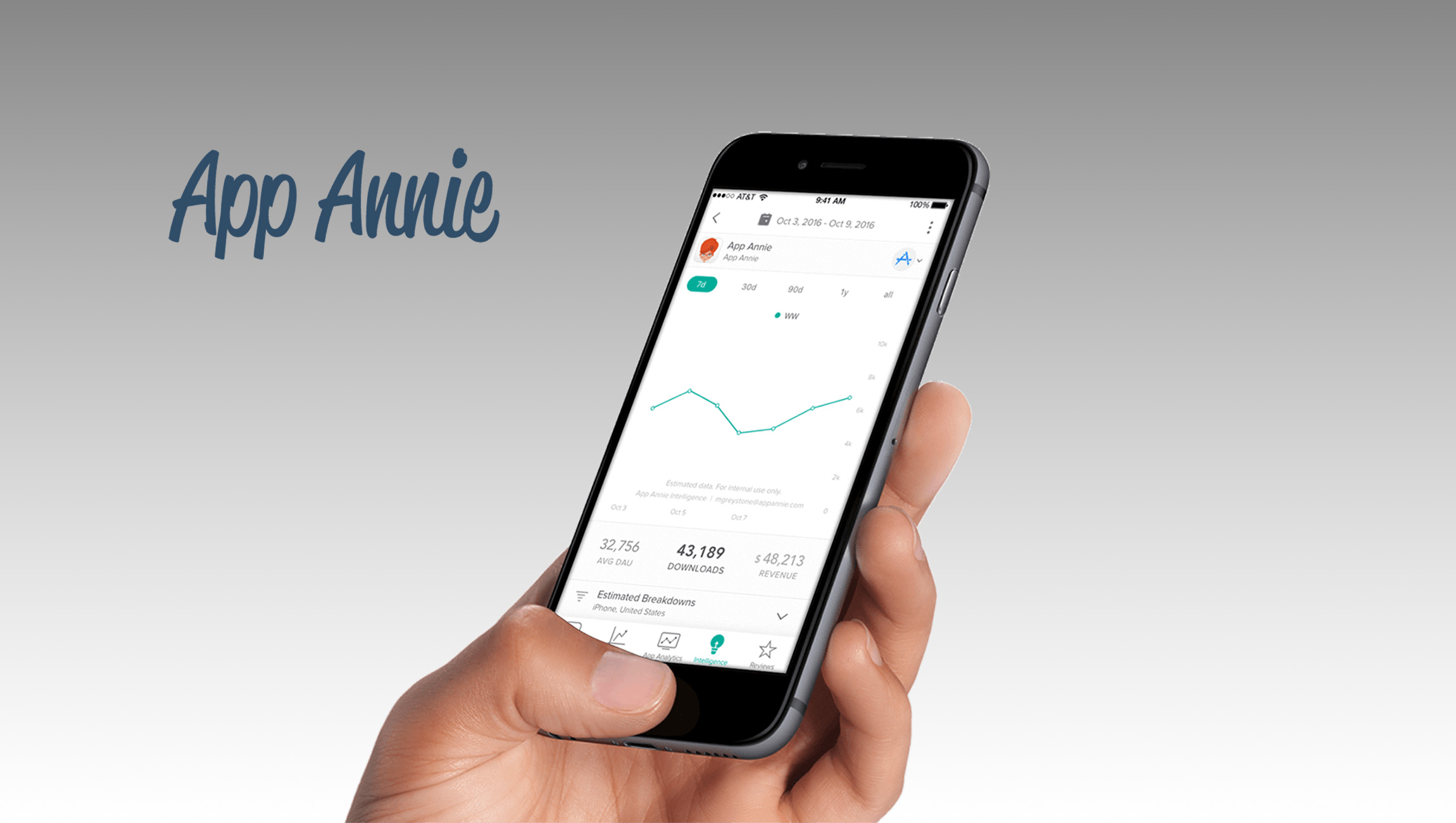
Leading mobile app data and insights company App Annie and International Data Corporation (IDC), the premier provider of technology market intelligence services, unveiled a special joint report entitled, “Gaming Spotlight, 2017 Review.” The report analyzes the mobile games market in 2017 from several vantage points and puts it in a broader, global gaming industry context

The report features three main themes: mobile gaming’s relatively large scale and faster growth rate in terms of direct consumer spending compared to home game consoles and PC/Mac gaming; the ascendance of live player vs. player (PvP) or co-op multiplayer games to the top of the grossing charts last year; and Asia-Pacific’s ongoing rise to dominance not just in terms of spending but, increasingly, in-game origination and gameplay innovation.

Also Read: Brainshark Unveils Sales Training Enhancements to Strengthen Learning Paths

Direct spending on mobile games exceeded the combined spending total on a home console, PC/Mac, and handheld console games by more than one third in 2017, up from a single-digit margin by the same measure in 2016. Games also generated nearly 80% of total worldwide consumer spend for combined iOS and Google Play while accounting for roughly 35% of worldwide downloads.

Danielle Levitas“Mobile gaming’s lead widened globally in 2017; mobile game spending was 2.3x PC gaming and 3.6x game consoles last year. With billions of mobile devices in the world, apps are the mass market gaming platform for casual and serious gamers, enabling them to play whenever and wherever they want to,” said Danielle Levitas, SVP Research, App Annie.

The top two grossing games worldwide on both iOS and Google Play in 2017 featured live PvP gameplay, demonstrating that hardcore-leaning multiplayer elements aren’t just possible on mobile devices, but have already proven popular and lucrative. The ascent of titles like Honour of Kings (published by Tencent and known as Arena of Valor in Western markets), Lineage 2 Revolution (Netmarble), Fantasy Westward Journey (NetEase), and Lineage M (NCSOFT) to the top of the mobile grossing charts shows that live multiplayer games are an important trend in gaming that has clear esports implications. 2017 appears to have been the first year that three different live PvP titles took the top-grossing slot on iOS, Google Play, and handheld game consoles (Pokémon Sun / Pokémon Moon, published by The Pokémon Company and Nintendo for Nintendo 3DS/2DS, was the top-grossing handheld title last year, and features live PvP battles).

Also Read: App Annie Strengthens Executive Team Amid Rapid Company Growth and Market Expansion

An IDC survey of U.S. gamers from 3Q 2017 showed that a lower share of smartphone and handheld console gamers played live PvP or co-op titles (34%) than did PC/Mac and home console gamers (over 44%), but this gap also narrowed relative to a similar survey from 3Q 2016. Live PvP or co-op gamers on smartphones and handheld consoles, the same 3Q 2017 survey showed, skewed younger and male compared to the balance of smartphone and handheld gamers that didn’t play such games. Live PvP or co-op gamers in the U.S. were more likely to have spent money on a smartphone or handheld console game in 3Q 2017, moreover, and were more likely to play associated titles for at least five hours a week.

“Live multiplayer gaming on smartphones and tablets took a big step forward in 2017. Although titles such as Clash Royale, ROBLOX, and Hearthstone: Heroes of Warcraft have been popular in Western markets for some time, it’s now clear that publishers from Asia-Pacific not only have an ‘answer’ to these titles, but upped the ante last year not just in scale but, arguably, in the sophistication of live PvP and co-op gameplay,” said Lewis Ward, Research Director Gaming and AR/VR, IDC.

Recommended Read: App Annie: Netflix and iQIYI Lead APAC Revenue Ranking in Online Video Apps in H1 2017

SRAX Announces Alpha Release of Blockchain Technology BIG Platform

0
SRAX Announces Alpha Release of Blockchain Technology BIG Platform

Limited, by Invitation Only, Alpha Users to Be the Original Participants in Building the First Consumer-Powered Data Marketplace Where People Will Own, Verify and Sell Access to Their Data

Social Reality Inc.’s blockchain identification graph platform, BIG, recently announced the release of the Alpha version of its consumer data management and distribution system to a limited, by invitation only group of users. The announcement represents the first direct engagement for BIG with users and the next step in creating the first consumer-powered data marketplace where people will own, verify and sell access to their data.

“The release of BIG in Alpha is an exciting step in our efforts to build a consumer application and secure data management system with a rewards component. BIG will benefit everyone in the Internet ecosystem and deliver an advantage to our advertising clients while improving the online experience for consumers,” said Christopher Miglino, CEO and Chairman of SRAX.

Also Read: SRAX Intends to Pay Cryptocurrency Dividend with BIGtoken

SRAX Announces Alpha Release of Blockchain Technology BIG Platform
Kristoffer Nelson

Kristoffer Nelson, COO of SRAX, added, “After months of hard work and diligence, our vision for BIG, as the first consumer-powered data marketplace, is coming to fruition. The BIG platform solves challenges for both consumers and businesses. Most importantly, the ability for consumers to verify their existing data and create new data through interactive surveys in the Alpha version represents a significant milestone in enabling consumers to own and manage their data.”

Also Read: SRAX Announces Private Placement of $5.18 Million with Existing Shareholders

BIG Platform, built on the blockchain by SRAX, is a consumer data management and distribution system. Currently, under development, SRAX’s blockchain identification graph platform, BIG, is expected to be the first consumer-powered data marketplace where people will own, verify and sell access to their data. Through a secure blockchain platform, token reward and open source governance structure, BIG will provide users with transparency, choice and compensation to manage and access verified data. As envisioned, participating consumers will be rewarded with digital tokens, BIGtoken. Developers will be able to build online experiences on top of the BIG Platform. The system also provides advertisers and media companies access to transparent, verified consumer data to better reach and serve audiences.

Recommended Read: SRAX Acquires OpenDSP’s Demand-Side Platform

Karen Brophy To Head Nexstar Digital Subsidiary LAKANA

0
lakana

Appointment Highlights Nexstar’s Commitment to Leverage Leading Content Management Platform and Deliver next Generation Solutions to Broadcasters

LAKANA, an enterprise-class SaaS technology company and a wholly owned subsidiary of Nexstar Digital, LLC, announced that Karen Brophy has been named Head of LAKANA and Senior Vice President of Nexstar Digital, effective immediately.

In her new role, Ms. Brophy will be responsible for the overall direction and management of LAKANA, including growing its current operations and launching new innovative content monetization solutions and services. Ms. Brophy will be based in Los Angeles and will report directly to Gregory R. Raifman, President of Nexstar Digital LLC, a wholly owned subsidiary of Nexstar Media Group.

Also Read: Yext Launches New Preferred Partner Program

“LAKANA is dedicated to providing our customers with the best enterprise-level content management platforms and solutions available in the market to enable them to meet their business goals and address the challenges which publishers face today. Karen brings extensive digital media and marketing experience at Hearst, Yahoo!, Tribune & Spin Media and her record of success developing and implementing multi-platform growth strategies will expand our offerings and enhance our users’ platforms and multi-platform integration capabilities,” said Gregory R. Raifman, President, Nexstar Digital.

“In 2017 Nexstar Media Group posted digital revenues in excess of $230 million and we are very optimistic about the long-term growth trends for Nexstar Digital and Nexstar Media Group’s core digital revenue business lines. We look forward to working with Karen as we continue to expand our services to the broadcast and digital industries with new and innovative technology, allowing us to provide unparalleled solutions for media companies and efficient delivery of all products throughout the value chain,” added Raifman.

Also Read: Google to Dominate App Downloads in 2018 as Predicted by Adjust Report

Ms. Brophy brings 20 years of product and business operations experience, with more than 15 years working with leading media and entertainment corporations. Most recently, she served as Senior Vice President of Strategy and Operations at Hearst Newspapers leading key initiatives in a video, audience development, and business operations. Prior to that, she spent seven years as Vice President of Digital Product where she led consumer product, engineering, content strategy and revenue partnerships. She has been a leader in the consumer product sector with prior roles at Yahoo!, Tribune, Spin Media and the New York Times. She also has extensive experience developing enterprise level digital publishing platforms for major media companies including The Financial Times and Time Inc.

“Joining the team at LAKANA and Nexstar Digital is a great opportunity for us to lead the market with cutting-edge approaches to publishing platforms as we expand our product and service offerings to help our clients enhance their audiences – the overall foundation of their business growth. I look forward to working with the talented LAKANA/Nexstar teams to expand the product suite and help shape and advance the way publishers approach growing their audiences,” said Karen Brophy, CEO, LANKA.

Recommended Read: Mobile CDN: What Is It and Why Is It Essential for Mobile Apps?

Trianz Names Matthew Feyling As New VP Of Analytics

0
trianz

Matthew Feyling Has over 20 Years of Industry Experience in Designing Analytical Solutions and Driving Business Adoption to Ensure Customer Success.

Digital business and technology transformation organization Trianz announced that Matthew Feyling has joined the firm as a Vice President in its Analytics and Information Management Practice. Feyling has previously held leadership roles at a Big Data solutions group in the San Francisco Bay area, and will now oversee Trianz’ client engagements in the West Coast region where he will focus on growing its client relationships, driving client value, and supporting client success.

Also Read: Google Acquires Twitter’s Mobile App Developer and Its Crash Reporting System to Boost Firebase

Matt FeylingFeyling has over 20 years of industry experience in designing analytical solutions and driving business adoption to ensure customer success. His role at Trianz will extend to enabling digital transformation at Fortune 1000 client organizations, specifically targeting Big Data, Data Science, and Data Engineering and Analytics Reporting initiatives.

Also Read: MobFox Partners with Moat to Enhance Viewability for Advertisers

Feyling said he looks forward to working with the Trianz leadership team to develop and advance key analytics service offerings such as Modern Data Architectures, Customer 360, Data Monetization, Marketing Analytics, and other data-centric initiatives which have become critical to digital transformations. He is also spearheading the firm’s talent acquisition efforts to accommodate recent growth in the region.

“We’re all excited to have Matt on board. His experience, capabilities and collaborative style should prove to be a tremendous advantage for Trianz clients and our teams in achieving success through the use of analytics that are playing a key role in enterprise transformation,” added Todd Nash, Trianz Analytics & Information Management Practice leader.

Recommended Read: New Adobe Target Mobile Capabilities Enable Always-On Personalization 

Four Step Marketing Consultants Announce Two New Marketing SaaS Applications

0
Four Step Marketing Consultants Announce Two New Marketing SaaS Applications

FSMC Hopes to Bring Personalized and Measurable Marketing to Every Business

Four Step Marketing Consultants (FSMC), marketing technology company based out of Central Florida, announced plans to build two new SaaS marketing applications. The new marketing apps are expected to bring two new income streams to FSMC as well as an opportunity to gain more influence in the business world.

Also Read: Cheetah Mobile Announces Changes to the Board of Directors

Four Step Marketing Consultants Announce Two New Marketing SaaS Applications
Matt Law

“As marketing consultants, we are up to our eyeballs in technology. For every tool we use, there are three more providers behind them asking for our business. The decision to build out and release these new marketing apps doesn’t come lightly. Our team and investors believe that the ideas are unique and that there will be a strong demand for these applications with business owners. Additionally, the apps will not target the saturated market of agency management. Instead, the two applications will solve two significant problems and will be delivered with clean user interfaces, making them easy for businesses to integrate,” said Matt Law, CEO, FSMC.

Also Read: Sitetracker’s “Capture the Future” Contest Aims at Bringing Vital Infrastructure to Light

The first application is slated to be a unified system for measuring a company’s marketing. The core components of the application provide a simplified way for a business to track online and offline marketing. The app will include call tracking, visitor sessions and goals, ROI and various other aspects to determine a campaign’s effectiveness.

The second application is related to personalizing user experiences. The app will generate personalized URLs for offline marketing and customize the user’s online experience based on their history with the company. Though other applications like this do exist, FSMC believes they are missing key features and technology which renders them useless.

“We’ve already built the JavaScript and databases, so the hard part is already done. We’ve also been testing the technology out with our clients for quite a while and are excited about the opportunity to share them with the world. Though we’re not quite sure when the first application will be released, I’d expect we’ll be able to deliver a beta release within six to 12 months of starting on the projects,” Matt added.

Recommended Read: Mobile CDN: What Is It and Why Is It Essential for Mobile Apps?

TechBytes with Deanna Ballew, VP, Product Development, Widen

0
TechBytes with Deanna Ballew, VP of Product Development at Widen

Deanna Ballew
VP, Product Development, Widen

In a recent article, we mentioned how Product Reviews and Recommendations could be a central asset to your entire Content Marketing strategy in 2018.  We spoke to Deanna Ballew, VP, Product Development, Widen, to understand what data points should Product Development teams focus on to close the gap in their Digital Asset Management (DAM) platforms that deliver consistent product recommendations and customer experiences.

Html code here! Replace this with any non empty text and that's it.

Tell us about your role at Widen and the team/ technology you handle.

I’m the VP of Product Development at Widen. We provide digital content solutions for more than 600 global companies. During my 14 years at Widen, I have been shaping our Digital Asset Management solution. In the 2000s, we transitioned from a print services provider into a software company and adopted formal product management. Now, our product management practice straddles software engineering, business strategy, and marketing. I work hand in hand with Widen’s VP of Marketing, Jake Athey, to set our vision. I align the vision across a talented team of product managers, user experience experts, software engineers, and testers to deliver that vision through software solutions.

How do you define your ‘Ideal Customer’ profile? How does a standard customer definition enable you to ensure smooth Product Management?

The role of a product manager at Widen is to deliver solutions that solve customers’ problems. Choosing which problems to focus on is the toughest part of the role. We continually assess which problems are going to have the greatest impact, which ones are delighters, and which ones will propel us in the market.

In shaping the vision of our product, we seek out ideal customers who consistently use our platform across their content lifecycle. From there, we approach customers who value a reciprocal partnership and are able to give us candid feedback. They have a vision for how our product will enable their company to expand. We actively listen to them and observe their needs so we can uncover opportunities to solve problems that will make a difference.

Once we have identified problem areas that are common to many customers, we assess the value of solving a given problem relative to other roadmap items.

In short, our ideal customers give our product teams a broad range of problems to explore without locking us into one direction.

What data points help you close the gap between product recommendations and real customer experiences?

To close the gap between product recommendations and customer experiences, we ask and observe the customer. Their experience spans across their time in the product, use of services, and participation in the broader Widen Community. To provide value, we break down the entire customer journey and seek data from each key step.

Many of our data points come from qualitative methods. Surveys, user research, and win/loss interviews are extremely valuable in understanding our current customers and potential customers. These also uncover areas of weakness where we need to improve our product, service or community.

I cannot say enough about user testing and observing customers live as they struggle with your product and completing tasks. It is extremely eye-opening and reveals whether we are on the right path or not. It’s also an extremely good exercise of patience to not “assist” the user in completing the task!

For quantitative data points, we analyze product usage. Out of the customers who are using the new functionality, how are they using it and how often?

When we combine qualitative and quantitative data, we can identify the synergy of what is working for users and where we need to apply more attention.

On what factors should a modern business choose a Digital Asset Management Platform?

A modern business has many priorities and goals besides Digital Asset Management. The platform needs to support those initiatives and complement the company’s core mission. The hard part of implementing new technology is the change management within teams and push for adoption. For success, you’ll want a provider that offers implementation services and can bring the expertise you need to grow adoption and build a holistic martech stack.

This expertise includes integrations with your other technologies. Modern businesses have rich technology stacks with many tools, and Digital Asset Management plays a central part. In a recent customer visit, our technology audit revealed around 270 different software tools used across sales and marketing teams. The DAM platform needs pre-built integrations for simple connections and an adaptable API for robust custom integrations where needed.

Technology is changing rapidly. Your digital asset management platform should have a proven track record of longevity and innovation to ensure it will grow with your company and the technology landscape. Look for platforms that are battle tested and have a strong release cadence.

Modern businesses have modern users! These users expect a simple platform that meets their needs. To meet these expectations, you need teams that learn and innovate by listening to and observing users. Not only should the vendor have a dedicated user experience team with support from leadership, it should have a user-centered mindset where everyone across the company seeks to deliver the best experience. At Widen, we have set goals and expectation for the whole product development team to take time for onsite visits and sit in usability tests. The only way for us to build products that meet our customers’ expectations is to understand the people using them at every touchpoint.

What are the major challenges in the way product management officers deal with the Software Development, Infrastructure, and Quality Assurance teams? How do you meet those challenges at Widen?

Time and roadmap! Every customer wants to know, “When is ____ going to be delivered?” And every engineering team responds, “Here is my best estimate.” The tension between curiosity about dates and reality about workload in development means that product managers representing their customers’ concerns can find themselves in a tough spot with the engineering team.

At Widen, we have solved this problem with transparency for both our customers and our engineering teams. Product managers invite both customers and internal teams to an online roadmap where customers can vote and comment. Items on the roadmap start as high-level themes and get more detailed through the development process. Customers are able to see what items are priorities ahead of other needs. Internal teams get to see the comments on why items are important and reach out for more details during the development process.

This practice sets transparent expectations and creates shared appreciation between engineering and customers. Instead of setting false expectations and a delivery date with a customer, they watch it progress and know when to expect it. Instead of engineering teams feeling pressured to deliver a laundry list of requirements, they see the value that it brings and find creative ways to deliver value every two weeks to our customers.

After a year of innovating without a timeframe or static roadmap, I’m starting to see some interesting outcomes. Recently, I spoke with a software developer on my team who suggested we give product managers high-level estimates 6 to 9 months out, to better set customer expectations. He had just observed several interviews in which customers asked for timeframes. My response as the Product Manager was no — we don’t want to lock ourselves into a timeframe when instead we could work with customers to solve more valuable problems that we uncover along the way. Our customers participate in an average of six user testing sessions per week and tell us how we can better meet their needs.

What are your predictions on AI/ML capabilities helping Product Development teams achieve better automation and higher productivity?

In product development, AI/ML can change the way we identify and solve problems.

When we look for problems to solve, we usually have a hypothesis. We dig into small subsets of data that we have access to and the ability to synthesize. However, we know that there is an immense, untapped datastore on customer preferences. Machine learning could uncover new patterns and problems that were unknown to us. It gets even more interesting if, someday, we can predict the success of a product or idea through machine learning and predictive analytics.

At Widen, we often brainstorm how AI can help us solve our customers’ problems. By leveraging AI within our product, we could personalize the experience based on the user actions. Users could explore data that is of interest to them instead of first having to search for it and hope they find what they need. Searching for data is a chore and users hope they can enter the right syntax in the right order to find what they need. With AI, users could explore data that is relevant to them and be immersed in a new experience.

As AI becomes refined and accessible, we know it will make a significant impact. The general principles of DAM will hold true, but AI techniques could reduce the time spent on our product and deliver richer experiences.

Thanks for chatting with us, Deanna.
Stay tuned for more insights on marketing technologies. To participate in our Tech Bytes program, email us at news@martechseries-67ee47.ingress-bonde.easywp.com


Sonata Announces Significant Functionality Addition to Its Enterprise Mobility Product Halosys

0
Sonata Software Makes Strategic Acquisition of GBW, a Leading Global Player in the Exciting Customer Experience Space

The Patented Unified Enterprise Mobile Platform Has Found Favour with Customers Seeking to Execute Scalable Mobile Strategies

Sonata Software has announced that its Unified Enterprise Mobility Platform, Halosys, has been enhanced with additional features that boost optimization and usability. Some of the new features include support for bulk CURD operations, calling service function from service, distributed cache Redis, data source usage logging and analytics, OAuth/SAML authentication for admin console, custom authentication for apps, Mongo DB connector and Microservice SDK.

A few months ago, Halosys was granted a patent for its innovation on rule-based notifications. The patent was granted for key technology innovations in the Halosys platform that enable users to be notified across the web, SMS, email and in-app push notifications based on events matching a pre-configured set of filters, including, the user’s location, time of day, along with the data from the event’s object graph.

Also Read: With Tetra, No Need to Record And Transcribe Calls

The Mobile-First Platform includes an Enterprise Mobile Backend as a Service (mBAAS), an app lifecycle management solution and an internal app store. The Platform has APIs & SDKs for iOS, Android, Windows, Xamarin & JavaScript and supports both mobile and web applications. The platform enables businesses to rapidly build, integrate, secure, manage, deploy and analyze enterprise-mobile application portfolio. The platform, also available on Microsoft AppSource, has received a positive evaluation from technology research analysts for its integrations to enterprise applications, including into SAP Hybris, NetSuite, Microsoft Dynamics, Salesforce and common databases. Availability of connectors for legacy and custom developed systems, with key authentication and notification provisions have been found very valuable.

Also Read: Lumavate Adds IT Veteran Bill McConnell to Its Board of Managers

The Halosys platform has seen significant enterprise adoption. A leading global marketing and media company has built a timesheet mobile app for its 10000+ employees, spread across various locations and partner companies on Halosys for scalable mobile program execution, enabling the company to save millions of dollars with accurate billing and payroll. Similarly, a top general contractor in the US used an ‘App Factory’ framework based on the Halosys platform to quickly deploy custom apps. Each app was developed in an average time frame of just five weeks – from requirements gathering to production deployment.

Sonata Software acquired Halosys, headquartered in California, in August 2015. Since then, it has continued to invest in developing the Halosys platform to be a world-class enterprise mobility platform, for the execution of Mobility strategies of B2B, B2E, and B2C enterprises.

Recommended Read: Interacting with Consumers Without Writing a Word


Intelligent Automation & Cognitive Systems: A Match Made in Heaven for 2018

0

Aricent LogoIf a baby was born in 2016, she would be around two years old now and would have just about enough balance to jump, climb stairs with help, and feed herself with basic accuracy – with of course a bit of chaos thrown in.

For data, on the other hand, two years is a very long time. According to IBM, 90 percent of data online has been created since 2016. That is because, in the past couple of years, the number of internet connections and connected devices has proliferated and generated data at a phenomenal rate. At two years old, data has reached adolescence! No wonder many see data as the world’s most valuable resource – not oil.

Also Read: Customer Data Is the Next Competitive Battleground Shaping the Future of Digital Marketing

Data Is the New Oil for 2018

Technology behemoths such as IBM, Microsoft, Google, and Amazon were quick to see the potential of data. Over 2016 and ’17, these companies invested aggressively in technologies such as Cognitive Systems – computing that replicates the human thought process by integrating data mining and self-learning. Cognitive Systems tries to mimic human capabilities that help us to navigate our day to day life by interacting with objects and environments, making decisions based on past experiences and gaining knowledge.

Extracting useful and actionable information from structured and unstructured data is a major driver for Cognitive Systems. Additionally, predictive analytics in B2C markets is another key driver. Researchers have been optimizing algorithms and reducing error rates much faster than ever before. Cognitive Systems made great strides in 2017 and according to analysts at IDC, spending reached a record $12.5 billion in 2017. As R&D reached record levels, Cognitive Systems and AI started moving out of labs and the experimental stage to live deployments.

These are three high points from 2017 for Cognitive Systems; but, they also reveal the limitations —

  1. Autonomous vehicles: The likes of Tesla and Waymo had live street trials and demonstrated how their autonomous capabilities had advanced. They are however not yet at “Level 5” – ready to replace human drivers.
  1. Digital Assistants: In 2017 Google Home was launched in the UK and Amazon’s Echo was sold in the millions. Both devices have skills added almost every day – it yet cannot hold a meaningful conversation with a user.
  1. Speech recognition: In August 2017, Microsoft’s speech recognition hit a remarkable 5.1 percent error rate – that’s on par with human transcribers. The company acknowledged that the next step is to actually get their computers to understand the meaning and intent of words – not just recognize it.

Data, Data Everywhere

All these achievements provide a glimpse of what’s on the horizon for 2018 and beyond. The Deep Learning field has experienced rapid advances that will help data scientists this year to analyze large data sets at an unprecedented scale as never before. Yet there are challenges businesses will need to overcome if they are to effectively utilize the benefits of Cognitive Systems.

 In spite of the significant progress made so far with Cognitive Systems, one of the major challenges businesses will have to overcome is how to wade through data – lightning fast – and find actionable, relevant information that can be used with AI. Another challenge is the misaligned expectations on what Cognitive Systems can actually deliver.  So, in 2018, enterprises will need to address these areas to utilize AI in a variety of use cases where relevant and appropriate data is available.

Also Read:  Is Data Slowing Down Your Sales Rep?

Let’s Get Automated

Over the past two years, along with Cognitive Systems, AI has also been utilized for automation and robotics. Put simply, this has added an extra dimension of “intelligence” to workflows. Already a number of businesses including the technology titans have integrated their cognitive computing systems.

In 2018, enterprises will be looking to speed up the integration of Cognitive Systems and intelligent automation to maximize the business impact. This is a match made in heaven for two technologies that have one crucial element in common – the utilization of data that has reached maturity. So, how can Cognitive Systems and automation get hitched?

Let’s start the wedding plan with the cake – a three layer cake.  Think of the first layer as Cognitive Systems which tries to mimic human behavior by learning continuously. The next layer is automation which refers to the codification of a manual process into software, sometimes known as scripting.

The pièce de résistance of the cake would be the top layer where automation would combine AI and ML capabilities to create intelligent automation. Intelligent automation enabled by AI/Ml technologies could help to process vast quantities of data, actionable intelligence and provide recommendations.

The Icing on the Cake

This ‘three-layer cake’ would not be possible if not for the key ingredients coming into place at the right time. There has been significant progress in computing power, advances in AI/Ml algorithms and an abundance of data ripe of mining.

Cognitive Systems and intelligent automation belong together and arguably, should not be treated as two separate things. They both have AI and ML in common and Intelligent Automation is fundamental to Cognitive Systems. Intelligent automation allows machines to do more than just process data. They can now analyze data sets, spot inconsistencies, check for correctness, and ultimately, make far more intelligent decisions.

Of course, some decisions still require final confirmation from a human operator, but the initial thinking has already been done by the software robot. This has profound implications across different industries. Here are just a few use cases–

  • Transportation: This is one industry that is already facing dramatic transformation. Cognitive Systems and automation will touch every aspect of planes, trains and automobiles – from intelligent maintenance to reducing congestion
  • Online security: Cognitive and automated systems would not only detect and block intrusions to a network faster, it would also take steps to self-heal– and intelligently strengthen its defense to block future intrusions. All this would take place in a matter of seconds 
  • eHealth: Machines can identify diseases and automatically classify them according to risk bands. Automated systems can assist healthcare professionals with personalized medical care for patient triaging
  • Health and safety in energy: Intelligent, cognitive systems would detect problems and keep workers safe in hazardous environments such as mines and oil rigs.

These use cases only scratch the surface of what’s really possible by marrying intelligent automation with Cognitive Systems. It sounds clichéd but the possibilities are endless for enterprises who now watch dotingly over their data. Data is all grown up.

Also Read: This Is the Key Difference Between Your Star Reps and the Rest of Your Team

Inc. Magazine Unveils Ranking of Europe’s Fastest-growing Private Companies

0
Inc. Magazine Unveils Ranking of Europe's Fastest-growing Private Companies

ADYOULIKE Ranks No. 1308 on the 2018 Inc. 5000 Europe with Three-Year Sales Growth of 544% 

Inc. magazine ranked ADYOULIKE. NO 1308 on the 2018 Inc. 5000 list of fastest-growing private companies in Europe. The Inc. 5000 Europe represents the only comprehensive look at what may be the most dynamic segment of the world’s economy: fast-growing private companies.

Inc. Magazine Unveils Ranking of Europe's Fastest-growing Private Companies
Julien Verdier

Julien Verdier, CEO, ADYOULIKE, added, “We are delighted to be listed in the Inc. 5000 list for 2018. Our business has grown at a phenomenal rate over the last three years – double the average median growth of Inc. 5000 companies – as more and more advertisers come to recognize the benefits of native advertising and our innovative technology. The Inc. 5000 list has a long history of identifying ‘the ones to watch’ so I am delighted to have been ranked on the Inc. 5000 list of Europe’s fastest growing companies alongside dynamic brands such as Brewdog, Grosvenor Estates, Pure Gym and Secret Escapes.”

Also Read: ADYOULIKE and Tabmo Join Forces in Native Programmatic Advertising Partnership

The 2018 Inc. 5000 Europe list, unveiled this week on Inc.com, serves as a unique report card on the European economy. Within an uncertain economic climate, latest aggregate revenue among the companies on the list actually increased by €101.8 billion, nearly doubling aggregate revenue from 2013. The list features an amazing group of thriving businesses growing at breakneck speed over the past three years:

  • On average, Inc. 5000 Europe companies grew +473% over the past three years, creating over 380,000 jobs in the process.
  • To make the top 500, a company had to have achieved a remarkable three-year growth of 1 013%.
  • Of the 42 countries included in this pan-European list, the Russian Federation, Italy and Spain fielded the most companies.

Also Read: ADYOULIKE Expands US Leadership Team with Two Key Additions

ADYOULIKE is a global leading in-feed native ad platform with main offices in London, New York, and Paris. Launched in 2011, it is recognized as a pioneer in native technology and creating advertising experiences for users that mirror the websites they are visiting. Using its own native supply-side platform (SSP) and native technology platform, the company enables brands to scale native advertising campaigns across premium and niche publishers, while publishers benefit from access to ADYOULIKE’s marketplace.

Inc. Magazine Unveils Ranking of Europe's Fastest-growing Private Companies
James Ledbetter

“Innovation and entrepreneurship are alive and well throughout Europe. From cybersecurity to renewable energy, the continent’s creativity and deep knowledge are showing the world how to grow and profit in the 21st century-and the Inc. 5000 Europe list spotlights those that do it best,” said James Ledbetter, Inc. & Inc.com Editor.

Recommended Read: What Does Google Chrome’s New “Auto-Annoying-Ad-Blocker” Mean For You?

DataWeave Unveils Advanced SaaS-Based Competitive Intelligence Product Suite

0
DataWeave Unveils Advanced SaaS-Based Competitive Intelligence Product Suite

DataWeave’s AI-Powered Data Aggregation and Analysis Platform Harnesses Billions of Data Points from Diverse Web Sources

DataWeave, a provider of Competitive Intelligence as a Service, announced the launch of a powerful new version of its SaaS-based competitive intelligence product suite that helps retailers and consumer brands leverage public data on the Web to make smarter decisions and compete profitably.

DataWeave Unveils Advanced SaaS-Based Competitive Intelligence Product Suite
Karthik Bettadapura

“Since our inception, we have led the large-scale transformation of how enterprises consume and derive benefits from rich sources of data publicly available on the Web. With the launch of our new, state-of-the-art product suite, we bring more power to our customers’ fingertips through unmatched access to key and relevant competitive insights that drive strategic decision-making,” said Karthik Bettadapura, Co-founder, CEO, DataWeave.

Also Read: Nathaniel Fry Joins DataWeave’s Advisory Board as Strategic Advisor

DataWeave’s AI-powered data aggregation and analysis platform harness billions of data points from diverse Web sources to provide retailers with unified price, promotion and markdown optimization, and product assortment insights, and consumer brands with brand governance, share of voice (SOV) analyses, and shelf space optimization in e-commerce. These insights are typically accessed through a SaaS-based web portal or directly consumed via APIs to augment the customer’s internal analytics systems.

Also Read: InsideSales.com Announces Next-Gen AI Technology for Sales 

With DataWeave’s advanced SaaS-based products, retailers and brands can:

  • View near-real-time insights and historical trends at greater granularity, enabling them to effect faster and more precise actions on pricing, promotions, merchandising, and other areas of revenue optimization
  • Customize their experience based on functions relevant to their profile and act on personalized recommendations
  • Integrate seamlessly with internal data systems and models to generate predictive insights and measure ROI

“While conventional competitive intelligence systems are still mostly limited to providing descriptive insights, our new product suite, with deeper data integration capabilities, lets us deliver prescriptive insights to our customers, so they can instantly solve clearly defined and actionable business problems at scale. As we explore further innovations, we will progress from providing recommendations to enabling actions directly through our products,” added Karthik.

Recommended Read: Sales Performance Gap: The #1 Reason VPs of Sales Miss Their Revenue Targets

Clarivate Analytics Appoints Caroline Birkle As General Manager of Converis

0
Clarivate Analytics Appoints Caroline Birkle As General Manager of Converis

Caroline Brikle Brings More Than 15 Years of Experience in the STM Industry and Will Lead Converis During Its next Phase of Expansion

Clarivate Analytics has announced the appointment of Caroline Birkle as the General Manager of their leading research information management system, Converis. Converis supports universities, research institutions, and funding agencies in collecting and managing data across the research life cycle. Birkle will join Converis on April 16th, 2018, based in Karlsruhe, Germany and will manage an international team across Europe, North America, the Middle East and Asia.

Converis is part of Clarivate Analytics, the global leader in providing trusted insights and analytics to accelerate the pace of innovation and is part of the Scientific and Academic Research Group alongside industry leaders like Web of Science. Built with the research community in mind, Converis is used by faculty, librarians and research managers globally to showcase the outputs and impact of research. Converis offers seamless integration with data, platform, and products from Clarivate Analytics, such as Web of Science, InCites and Derwent Innovation Index, as well as a number of third-party products.

Also Read: Samantha Burridge Takes Over as Director of Strategy & Transformation at Clarivate Analytics

Birkle will join Clarivate Analytics from Thieme Chemistry in Germany, where she is Managing Director and has overall P&L responsibility for global electronic publications, leading an international team including editorial, production and software development. Previously, Birkle held publishing positions with the Royal Society of Chemistry and Thomson Reuters before moving to Holtzbrinck Publishers, where, as Vice President, she led Business Intelligence for STM (including Nature and Macmillan Science & Education) and coordinated the integration of Macmillan and Springer Nature, pre- and post-merger.

Clarivate Analytics Appoints Caroline Birkle As General Manager of Converis
Caroline Birkle

“The research landscape is changing at an unprecedented rate, with technological opportunities creating a pace within the research life cycle that is exhilarating and challenging. The opportunity to join Converis and work together with research offices globally, creating meaningful solutions that address industry needs, is one I am really looking forward to. I am proud to be joining this highly skilled and entrepreneurial team working within one of the industry’s most exciting and dynamic business groups,” said Birkle.

Also Read: Identifying extreme impact in research, Clarivate Analytics uses citations to forecast Nobel Prize winners

Annette Thomas Clarivate Analytics
Annette Thomas

“I am delighted to welcome Caroline to our growing team; with her deep understanding of the research market, commercial and strategic acumen, as well operational and transformational experience, she is ideally suited to lead Converis during its next phase of growth and expansion. Converis currently supports a wide variety of customers in more than 20 countries and it’s our intention to significantly evolve and strengthen its position in the market by integrating more data and by providing a more streamlined product offering. Caroline’s experience will benefit us tremendously as we expand, and accelerate innovation and growth,” said Annette Thomas, CEO Scientific & Academic Research Group, Clarivate Analytics.

Recommended Read: New Adobe Target Mobile Capabilities Enable Always-On Personalization 

How Chatbots Are Changing the Way Research Is Done

0
How Chatbots Are Changing the Way Research Is Done

Chatbots Can Share a Multitude of Information and Messages with the Survey Respondents

Artificial Intelligence, Machine Learning, and Chatbot technologies are changing the way work gets done with many industries across geographies adopting these technologies into their everyday work to improve productivity.

Where Does This Leave the Research Industry?

Surveys moved from offline to online with the introduction of web surveys. Although innovative at the time, this methodology has not really changed in the last two decades. This gives us a pretty good understanding of why survey response rates have also remained at 5-10% mark.

Research companies across the globe are starting to look at new and innovative ways to keep their respondents engaged in their surveys and chatbots are looking to bridge this gap by changing the way surveys are taken by introducing a conversational approach to surveys.

Also Read: Progress Launches AI-Driven Native Chatbot

More than a back and forth of questions, these chatbots can share a multitude of information and messages with the survey respondents, giving research firms the ability to build a contextual conversation with every survey.

Existing players in the survey tool space such as SurveyMonkey have started offering chatbots as a solution to deliver their surveys, albeit in a very simple format. Other chatbot companies such as surveybot.io, claim to have 800+ customers who are leveraging their online conversational solution. Built for research surveying needs, AceBot.ai lists some of the larger Research firms as its customers having handled over a million conversations through their Chatbot-led survey tool.

Also Read: ScaleX.Ai Announces Personalization at Scale, Powered by Artificial Intelligence

How Chatbots Are Changing the Way Research Is Done
Ralph Vaz

“Our customers are seeing a huge jump in survey response rates of up to 85%, this has helped them in attaining their previously difficult sample goals faster than their older methodologies,” says Ralph Vaz, Co-Founder,  AceBot.ai.

There is a definite change that has begun in the research industry and chatbots are here to completely change the way surveys are taken.

Recommended Read: If A Picture’s Worth a Thousand Words, Then Visual, Interactive Content Is Priceless

10 Best SEO Names-Top SEO Agencies Selected by Online Marketing Industry

2
10 Best SEO Names-Top SEO Agencies Selected by Online Marketing Industry

 10 Best SEO Has Announced Its Selection of Top SEO Companies

After the greater part of a decade and thousands of pages of content, the online industry magazine 10 Best SEO has again begun adding to its portfolio of content. Well-known for its SEO tips, daily blog, and ever-expanding directory, this website has catered to users both within and interested to learn about the SEO and online marketing sectors. For over six years, 10 Best SEO has been providing varied media, news and updates for the marketing sector via its online industry magazine, and earlier this month, staff compiled their selections of top SEO companies.

Also Read: NETGEAR Joins Swrve Series D Funding Round After Successful Deployment of Swrve’s Customer Interaction Platform

Straight North, an online marketing agency based in Chicago, has worked with clients around the world. Their attention to detail on projects ranging from branding & design to search engine optimization & pay-per-click advertising has allowed them to stand apart from the competition. Straight North has made its way to the pinnacle of this Best SEO Agencies list.

Also Read: Evergage Named a Top Rated A/B Testing and Personalization Tool on TrustRadius for Second Year in a Row

Hailing from San Diego, CA, Ignite Visibility appeared second on this list. This company has become one of the most well-known companies internationally when it comes to SEO. They currently serve more than 100 companies of varying sizes, and they approach each client in a customized and individualized fashion. This bespoke strategy has garnered a great deal of success and makes Straight North deserving of this recognition.

Beyond this new list, 10 Best SEO has a continued commitment to providing its users with a wealth of new information and data about its sector. For many around the web, 10 Best SEO has become known as the best SEO blog online, due to its unique and growing content.

Recommended Read: Here’s What Was on Everyone’s Take-Away List at Revenue Summit 2018

Interview with Joe Camacho, CMO, SABIO Mobile

0
Joe Camacho
Interview with Joe Camacho, CMO - SABIO Mobile

[easy-profiles profile_twitter=”https://twitter.com/sabiomobile” profile_linkedin=”https://www.linkedin.com/in/joe-camacho-6100b415/”]
[mnky_testimonial_slider slide_speed=”3″][mnky_testimonial name=”” author_dec=”” position=”Designer”]“Strict privacy and brand safety standards have a tremendously positive impact on mobile marketing campaigns.”[/mnky_testimonial][/mnky_testimonial_slider]

Tell us about your role and how you got here. What inspired you to be a part of a mobile marketing company?

As a Co-Founder and CMO, my role is constantly changing. Initially, I was wearing many different hats but am now able to focus on the company’s marketing mix, specifically product development and promotion. The journey to get here began after film school while working in television production at the NBC O&O in San Diego where I continued to work full time while finishing my MBA and transitioned from TV news production into Sales & Marketing at the station. The relationships I made and the Media Sales experience I gained ultimately led to the evolution from broadcast television to the fast-paced mobile industry.

With ad-viewability metrics catching up, how does SABIO satisfy the customers in delivering ROI?

The importance of viewability led our product innovation and strategy teams to develop Validated Publishers™, an additional publisher vetting process that requires a high viewability threshold. The high viewability standard we’ve set for ourselves has improved the delivery of increased ROI for our customers.

How do mobile marketers decide on their optimization and personalization standards for mobile marketing?

It’s all KPI driven. Depending on the campaign’s KPI goals, personalization should be embedded into everything you do from both a creative perspective and also the targeting and delivery of the ad, given mobile’s unique personalization capabilities.  For example, if the campaign is a brand awareness campaign with a click-through rate as the KPI, personalizing the creative to dynamically change with a variety of elements such as local weather, time, or the consumer’s location personalizes the message and improves the CTR.

How do data privacy regulations and brand safety standards impact mobile marketing campaigns?

Strict privacy and brand safety standards have a tremendously positive impact on mobile marketing campaigns both individually and at a macro level as well. These standards, such as the TAG certification, help weed out the bad players in our industry and help companies who are proactively developing brand safety and ad fraud protections such as our Validated Publishers™ to differentiate themselves, deliver better performance, and help restore a level of trust necessary for marketers and martech companies to form lasting partnerships and change.

How do you see mobile marketing landscape evolving with the maturity of behavioral targeting and location data platforms?

With the unprecedented and tremendous data processing capabilities that AI is providing, we are able to combine enormous amounts of data, including but not limited to behavioral and location data to improve the targeting and delivery of mobile marketing campaigns. As these capabilities continue to evolve and the data sets available continue to be added, such as voice and facial recognition, driverless networks and their media, along with the growing number of ubiquitous connected devices, I foresee them all working together seamlessly through the app ecosystem on our mobile devices so that our need and want sets are satisfied nearly automatically and without us having to ask. Companies that identify these opportunities now and in the future will be able to use mobile marketing data to not only deliver targeted messages but also the actual delivery of goods and services more efficiently.

What startups in the martech/ ad tech industry are you watching/keen on right now?

I don’t want to mention any specifically for various reasons but generally, companies that are focusing on voice recognition data.

What tools does your marketing and advertising stack consist of in 2018?

While we use SEO/SEM and a few other tools including content marketing, we also use our own technology to reach our customers with our own ads. With the use of our own Predictive AI platform that combines app profile segments with locations of our targeted customers, we’re able to deliver our own ads at a reduced cost and higher ROI.

Would you tell us about your standout digital campaign at SABIO?

We ran an amazing campaign in partnership with Digitas and The Trade Desk for Lyft’s Round Up & Donate Campaign which allows Lyft’s customers to round up their fare to the nearest dollar and donate that amount to a charity the customer preselects. This was an exceptional campaign, not only because of the professionals we have the privilege of working with at DigitasLBi and The Trade Desk, but most importantly, it highlighted the great work Lyft is doing to raise millions of dollars for great causes such as Habitat for Humanity, and St. Jude Children’s Research Hospital. We used our App Science® technology to identify Lyft’s customers and their competitors by targeting people who have rideshare apps such as Lyft and also charity apps like Share The Meal and Snap Donate.  The video campaign performed well above industry Video Completion Rate benchmarks but the reason it stands out here at SABIO Mobile is that it allowed us to use our technology and hard work to help the client do more than simply sell more widgets. It’s a brand awareness/cause marketing campaign I’m really proud of.

How do you prepare for an AI-centric world as a marketing leader? How do you leverage AI capabilities at SABIO?

We’ve prepared for the future by building our own AI platform and placing it at the center of everything we do. We call it App Science® and we believe that “You are what you App.” App usage data, including the apps a person has on their mobile device combined with the locations they’ve recently visited, tells us a lot about that person’s lifestyle, media preferences, demographics and cultural identity.  It allows our clients to know their customers in a better and more granular way. With over 250MM mobile devices’ app usage data in our platform, we’re able to identify correlations between certain audience segments that help find not only a client’s current customers but also the most likely future customers as well.

How do you bring people and technology together at one place?

Our company continues to expand and in fact, we recently opened our App Science® Lab in Hyderabad, India. Communicating across the country and with our team in Hyderabad requires scheduling meetings with multiple time zones via video conferencing and services such as Slack and cloud computing to share files, ideas, and work literally around the clock.

What apps/software/tools can’t you live without?

I live in LA and I don’t leave home or go anywhere without using the Waze app. It recognizes my schedule, recommends I stick to my favorite route or has me take one of the canyon roads when PCH is all backed up.

What’s your smartest work related shortcut or productivity hack?

I wouldn’t say it’s the smartest, but it’s definitely a habit that I find useful. I text myself action items that I need to put at the top of the list. This reminder is with me everywhere I go, staring me in the face until it gets completed, deleted, and repeated.

What are you currently reading? (What do you read, and how do you consume information?)

I’m constantly reading articles and updates from the network of influencers, colleagues, and contributors I’m connected to. However, I’m currently reading a book about the life of Ronald Reagan. When Character Was King by Peggy Noonan was a gift that reminded me of the earlier times of my life when I was in the United States Marine Corps and my Commander In Chief was a man of great character and integrity.

What’s the best advice you’ve ever received?

The best advice I’ve ever received came from my pastor when I was a teenager. He quoted a scripture that said, “Wait on the Lord, be of good courage, and he will strengthen your heart.” It reminds me to be patient and continue having courage even through difficult times. Things usually work out in the long run but during those tough periods, it takes great courage to keep your chin up, smile in the face of adversity and persevere through life’s valleys; believing the sun will shine again.

Tag the one person in the industry whose answers to these questions you would love to read:

Jeff Bezos

Thank you Joe! That was fun and hope to see you back on MarTech Series soon.

Also Read:  Interview with Aziz Rahim, CEO, SABIO Mobile

[vc_tta_tabs][vc_tta_section title=”About Joe” tab_id=”1501785390157-b58e162d-0ae25a4b-c27aca64-108e51b0-80edaf37-bd3d357a-6c46621e-81d5″]

Joe Camacho is Sabio Mobile’s CMO. His responsibilities include the company’s marketing efforts that include the continued expansion into new markets and verticals. He has previously served as CMO of the Latin American Multimedia Corp, where he was responsible for the marketing and distribution of the company’s Spanish language television properties. Joe has also served in the Marine Corp.

[/vc_tta_section][vc_tta_section title=”About SABIO Mobile” tab_id=”1501785390320-2d44fa50-740c5a4b-c27aca64-108e51b0-80edaf37-bd3d357a-6c46621e-81d5″]

SABIO mobile

Sabio is smarter mobile advertising. We offer brands and agencies cutting-edge technology, killer customer service, a full creative suite, and an agile approach to mobile ads. Sabio’s App Science™ capability infuses deep learnings from a consumer’s app-ecosystem and their geo-behaviors to help brands reach and understand their target consumers more efficiently on mobile.

[/vc_tta_section][/vc_tta_tabs]
[mnky_heading title=”MarTech Interview Series” link=”url:https%3A%2F%2Fmartechseries-67ee47.ingress-bonde.easywp.com%2Fcategory%2Fmts-insights%2Finterviews%2F|||”]

The MTS Martech Interview Series is a fun Q&A style chat which we really enjoy doing with martech leaders. With inspiration from Lifehacker’s How I work interviews, the MarTech Series Interviews follows a two part format On Marketing Technology, and This Is How I Work. The format was chosen because when we decided to start an interview series with the biggest and brightest minds in martech – we wanted to get insight into two areas … one – their ideas on marketing tech and two – insights into the philosophy and methods that make these leaders tick.

NinthDecimal’s Omnichannel Marketing Platform Breaches 100 Percent Annual Revenue Growth

0
NinthDecimal’s Omnichannel Marketing Platform Breaches 100 Percent Annual Revenue Growth

NinthDecimal Crossed the 100% Annual Growth for the Third Consecutive Year

NinthDecimal, a leading omnichannel marketing platform powering real-world conversions for brands, has announced more than 100 percent annual revenue growth across its marketing platform in 2017. A record number of agencies, brands, and publishers partnered with NinthDecimal last year as the industry increased its focus on bridging the online and offline behaviors of consumers.

Recommended Read: [24]7.ai Removes Time, Cost and Risk Barriers to Chatbot Deployment

Currently, NinthDecimal is an omnichannel marketing platform powering real-world conversions for Fortune 500 brands. Using location intelligence, the company identifies a brand’s best customers and new prospects; activates marketing strategies to drive store visits and sales; and quantifies the impact of advertising across all media.

At the time of this announcement, Michael Fordyce, CEO of NinthDecimal, said, “2017 was a pivotal year of growth for NinthDecimal as many of the largest brands in the country made our data and measurement products a central part of their marketing strategy, which was capped off by our third consecutive year of triple-digit growth.”

Michael added, “As more and more brands use our marketing platform to make multi-million dollar marketing decisions, we are in a strong position to accelerate our growth through 2018 and beyond.”

Quantifying the Impact of Marketing and Advertising

NinthDecimal measured more than $500 million in media spend during 2017 across TV, out-of-home, mobile, and other media formats as demand for offline attribution of all media increased. This includes measuring one of the largest U.S. consumer electronics launches of the year focused on driving visits to 9K locations. Other 2017 measurement highlights include —

– Omni-channel measurement and attribution. NinthDecimal nearly tripled year-over-year measurement revenues and doubled the number of TV campaigns measured for the second consecutive year.

– Connecting digital assets to offline sales. NinthDecimal launched Website LCI® in 2017, the industry’s first website-to-store attribution offering giving marketers the intelligence to quantify store visits generated from their website and website traffic strategies such as search.

– Expanding ecosystem of partners. The number of media companies, TV networks, and premium publishers integrated with NinthDecimal’s measurement platform grew to more than 250 in 2017.

The Largest Real-Time Engine of Consumer Behavior

Over 900 brands relied on NinthDecimal audiences and its activation network of more than 200 partners, including leading DSPs, DMPs, social platforms, and TV buying platforms, to build marketing success in 2017. This customer growth contributed to several key business milestones during the year —

– Audience data. Revenue from NinthDecimal’s mobile-derived audiences grew more than 100 percent for the third straight year.

– Investing in high-quality and propriety data. The company launched its software development kit (SDK) fueled by the acquisition of moLOGIQ in the fourth quarter of 2017. The NinthDecimal SDK, a unique source of data representing billions of data points, has been deployed across more than 50 million Android and iOS mobile devices.

– Marketing platform growth. NinthDecimal scaled its platform to more than 190 million monthly active users seen in nearly 10 billion locations per day.

– Self-service platform launch. NinthDecimal’s new audience creation tools released in the fourth quarter of 2017 allow brands to combine their first-party CRM data with NinthDecimal’s proprietary audience intelligence, unlocking the power of the two most important sources of customer data.

NinthDecimal’s continued innovation was recognized via a newly awarded patent for household-to-device mapping capabilities. This adds to NinthDecimal’s patent portfolio that already includes methods for location data precision, measurement for digital media, and measurement for TV. Together, these patents form the foundation for the company’s Omnichannel Marketing solutions.

Read More: Is GDPR Really Changing Ad Tech?

Last year also marked the expansion of NinthDecimal’s board of directors with the addition of Manish Bhatia, the CEO of Kantar Media North America and former chief product officer of comScore. Bhatia brings one of the most successful industry track records of identifying, building, and managing successful digital data businesses globally.

NinthDecimal was recognized on the Inc. 5000 for the third consecutive year, making it one the fastest-growing private companies in the country. According to Inc. Magazine, of the tens of thousands of companies that have applied for the award over the years, only 20 percent have made the list three times.

NinthDecimal has the largest real-time engine of consumer behavior based on where you live, work, shop, and play. Its platform is powered by nearly 200M U.S. consumers seen in almost 10 billion locations per day, unlocking AI-driven consumer intelligence not visible through traditional search or social platforms.

Read More: Fierce Pace of Tech Disruption Has Forced Companies to Innovate via M&As

MobFox Partners with Moat to Enhance Viewability for Advertisers

0
mobfox

The Mobfox Moat Partnership Will Enable Advertisers Access To Verified Inventory

This new partnership enables Mobfox to offer advertisers Moat’s viewability metrics for improved transparency, better ad measurement and optimization for in-app ads. These tools would be available for all inventory that comes from Mobfox SDK publishers. Partnering with Moat, we are able to provide advertisers and publishers a solution that ensures verified, high-quality inventory, and a greater means to track the effectivity of our advertisers’ ads.

Also Read: Mobfox First to Offer Factual and Adsquare Data Directly from Its SSP

“By pulling back the curtain on viewability metrics, we’re able to provide our customers with a clearer picture of their ads’ reception, giving them the tools they need to optimize the way they serve ads. We are proud to provide additional indicators at ad placement level for our partners to successfully run their campaigns, as we continue to enhance and expand our mobile and programmatic advertising capabilities,” said Kumaran Sambandam, SVP Global Demand, Mobfox.

Matomy Media Group acquires Mobfox: In 2014, Matomy Media Group, a global advertising performance company, acquired Mobfox. It added Mobfox’s ad technology into its own suite of advanced programmatic solutions.

Also Read: Alexa.com Unveils New Branding Gap Analysis to Boost SEO And SEM Efforts

Oracle acquires Moat in 2017: Oracle has scored a major martech moment just days before its marquee annual event, The Modern Marketing Experience 2017. The world’s leading cloud platform announced that it had signed a decisive agreement to acquire MOAT, a digital measurement company. Moat will join Oracle Data Cloud to enable marketers and publishers gain insightful results from their media campaigns.

As part of Oracle, Moat will connect data to consumer attention for better media experiences and business outcomes. With Moat’s acquisition, Oracle Data Cloud will now offer brands and publishers a full suite of targeting and measurement solutions to improve the outcome of virtually every type of digital advertising campaign.

Recommended Read: TechBytes with Gil Klein, Managing Director, Mobfox

Scrapping Email: How Millennials are Changing Workforce Communication

1
GUESTPOST-FEATURE

Phobio LogoThe workplace is evolving, especially as millennials become the vast majority of the workforce. This demographic is growing – representing 38 percent in 2017 from just under 25 percent in 2011 according to Paychex, and is influencing how we conduct business, manage people, and communicate.

Until now, email has been the pervasive medium for organizations to communicate, however, new messaging platforms are challenging the status quo to serve the needs of millennials. Whether working at a desk or in the field, email is not keeping today’s workforce connected to the organization. In fact, a Workfront survey of over 2,000 employees shows that on average, a total of 199 emails are sitting in their inbox unopened. This further validates the ineffectiveness of email, and the lost opportunity for organizations deliver timely, business-critical information to the changing workplace and workforce.

Today’s workers are demanding real-time communication – expecting to live, work, and communicate at the moment. Based on their needs, next-generation communications platforms that mimic an organization’s structure can present leaders with the capability to deliver the right information, to the right employees, at the right time. These solutions not only provide instant access to the front-lines but also give the front-lines access to their peers.

More than point-to-point message delivery, next-generation platforms can be connected to disparate systems like intranets and other scheduling, CRM, and HR applications – creating robust knowledge bases that drive operational efficiencies, scalability, and growth. These knowledge bases can be further automated through artificial intelligence (AI), enabling users to quickly get answers to questions in milliseconds.

AI technology provides new ways to engage employees and customers. According to Gartner, 30 percent of our interactions with technology will be through conversations via smart machines and software-based robots.So, what are the key drivers impacting these transformational changes in technology and the workplace?

Top-Down Messaging

While organizations are geographically-dispersed and employ a mix of full- and part-time personnel, they still need to deliver timely messages to the right person (or group) at the right time. Delivering messages to an app is more responsive than traditional email. In fact, our clients on average realize a 200% increase in messaging received-rates compared to email. This significantly improves employee engagement and performance.

Workforces can receive and acknowledge timely sales promotions, urgent corporate announcements, details on new product launches, and more, directly to their smartphones. Additionally, time-sensitive information can be separated from the everyday workplace chatter so that it does not get lost or forgotten.

Also Read: Why You Should Be Paying More Attention to Your Holiday Email Marketing

Peer to Peer (and Group) Communications

Horizontal communication can yield a higher quality of information exchange since it transpires directly between team members working in similar environments. Threaded conversations contained in an app, enable peer and group communications, giving team members the capability to work together, collaborate, and exchange information in real-time as necessary.

Engagement and Accountability

In our experience working with large retailers and enterprises, individual, group, and organizational performance can be correlated to those who receive key messages, versus those that did not open them. To boost employee engagement, with real-time reporting in place, management has the ability to monitor what messages were opened and by whom. Knowing open rates can be monitored, employees are more attentive, diligent and engaged. Additionally, insight via analytics provides the capability to view the health of your organization and holds teams more accountable.

Also Read: Have Your Best Email Marketing Year Ever by Focusing on Engagement

Artificial Intelligence and Machine Learning

According to a report from the McKinsey Global Institute, artificial intelligence and machine learning capabilities through bots shift the burden away from workers struggling to manually filter the influx of content, communications, and notifications.

Instead, chatbots can be integrated with an array of systems and applications to fetch all types of information. They are always on and ready to serve employees (and customers) in real-time.

Using conversational language, employees can ask questions pertaining to personal schedules, policies, promotions, and more. As questions are answered, machine learning enables chatbots to grow and expand their knowledge parameters.

Making the Shift with Millenials 

It is clear that mobile devices, apps, and chatbots integrated with next-generation communications platforms are enabling organizations to empower their people in the workplace with tools to collaborate more effectively. As a result, workforces, especially millennials, will be better informed, engaged, and connected. Thus, they will be in the best situation to make decisions, be more productive, and deliver impactful customer experiences. 

Also Read: Reaching the Millennial Travelers: The Marketing Channel That’s Making a Surprising Impact

Here’s What Was on Everyone’s Take-Away List at Revenue Summit 2018

1
Here's What Was on Everyone's Take-Away List at Revenue Summit 2018

The One-Day Event Talked About the Most Innovative and Actionable Best Practices to Scale Revenue While Being a Phenomenal Destination for C-Level Enterprise Leaders, Junior Sales, Sales Management, and Demand Generation Marketers

Missed one of the most amazing sales and marketing conference of this year? Don’t worry; we bring you a gist of what took place in San Francisco, California at Revenue Summit 2018.

Hosted by Sales Hacker, the leading resource for sales innovation, acceleration, and the future of sales, The Revenue Summit is known for empowering B2B leaders to accelerate growth across the entire funnel, by aligning sales, marketing, and customer success through the lens of technology.

The top five key takeaways from the conference include:

  1. Not all analytics are created equal
    During their talk about the future of sales leaders, Jacco vanderKooij, Founder, Winning By Design, and Rob Jeppsen, CEO Xvoyant spoke at large about how most sales teams are looking at the wrong metrics. They went on to explain how instead of volume metrics, companies should focus on conversion metrics and productivity metrics for better sales.
  2. Change Your Daily Rep Goals
    Olivia Nottebohm, Senior Director, SMB Sales and GTM Operations, Google Cloud, and Sean Kester, VP of Product Marketing, SalesLoft, spoke about the significant improvements that were made ever since their sales teams switched daily rep goals from being volume-driven to focusing on 3-5 positive conversations per day.
  3. Sales Enablement Will Take You to the Next Level
    With sales teams placing a higher emphasis on sales efficiency, there has been an increased focus on using the right sales tools to spur growth. Jacco and Rob also mentioned that more teams are likely to spend four days per week selling and dedicate 1 day per week on sales training.
    “There’s no one-size-fits-all approach. You must speak with reps or managers directly to understand where they feel strong and where their gaps lie,” said Amanda Chang, Senior Sales Enablement Manager, Zoom Video Communications.
  4. Selling is a Team Effort
    In his session, Amit Bendov, CEO, Gong.io informed that HE has found calls that involve multiple sales reps are 258% more likely to close. An approach also used by Jennifer Brandenburg, VP of Inside Sales, ServiceMax, and Chris Donato, VP of Sales, DXC Technology. While Jennifer uses a small army to close deals after handoff by the sales development team at ServiceMax, Chris found that team-based quotas and bonuses helped his reps keep each other accountable.
  5. Success depends on a structured process
    John Barrows of JBarrows Sales Training, and Morgan Ingram, Director of Sales Execution, JBarrows Sales Training, recommended creating structured training and execution processes for companies that are hiring reps straight out of college, finding them to be highly effective.

This is what some of the attendees had to say about revenue Summit 2018

Here's What Was on Everyone's Take-Away List at Revenue Summit 2018
Steven Broudy

“Sales Hacker brings together the top practitioners in sales & marketing. The connections and the knowledge transfer that happens here is priceless,” said Steven Broudy, Director of Inside Sales, Americas.

Also Read: Are You Ready for The Revenue Summit ’18?

Here's What Was on Everyone's Take-Away List at Revenue Summit 2018
Mark Roberge

“Revenue Summit is the destination for learning how to accelerate sales & marketing at any B2B organization, with purely educational content that moves the needle,” said Mark Roberge, Former Chief Revenue Officer at HubSpot.

Here's What Was on Everyone's Take-Away List at Revenue Summit 2018
Koka Sexton

Calling it an “incredible event”, Koka Sexton, Global Social Sales & Marketing at LinkedIn, said, “An incredible event full of awesome insights and actionable takeaways from passionate people; a rare occasion for sales & marketing professionals to get together and learn from each other.”

Recommended Read: Salesforce to Invest $2 Billion in its Canadian Business Over Five Years


MarTech Champions Pay Tribute to Stephen Hawking

0
MarTech Champions Pay Tribute to Stephen Hawking

I was six-years-old when the Comet Shoemaker-Levy broke apart and collided with Jupiter in 1994. That was my first brush with astrophysics and anything related to the Milky Way. That was the start of my curiosity about the Big Bang and space, and then I read Stephen Hawking’s Life in the Universe. When I met him in 2001, during his visit to Mumbai (India), I realized what human brain is capable of thinking, and achieving for the entire mankind.

As Katie Martell of On-Demand Marketing, put it, “Stephen was in many ways a practical dreamer. That’s the right mix for any of us with a career in marketing.”

“Be curious.” 

In this tribute to the man who prophesized the rise of ‘superintelligent artificial intelligence’ as a steering wheel of the mankind’s fate, Stephen Hawking left many in the Martech world awed with his inspiring tales and feats.

Dr. Marcell Vollmer, Chief Digital Officer, SAP Ariba

In his LinkedIn bio, Dr. Marcell Volmer quotes that “I’m sensitive to the complexities surrounding the intersection of technology, compliance, and supplier networks that today’s procurement leaders face.”

Remembering the “man who walked the cosmos in his brain”, Dr. Marcell said, “Stephen Hawking inspired me by two quotes I couldn’t describe it any better: – “However difficult life may seem, there is always something you can do and succeed at.”

And, “Intelligence is the ability to adapt to change.”

Yaagneshwaran Ganesh, Director of Marketing, Fiind Inc

A Top 100 Martech Influencer, and a Guest Author at MarTech Series, “Yaags” found his inspiration drawing knowledge from Professor S.W. Hawking. He said, “For me, Stephen Hawking was a man who inspired the universe from his wheelchair, and is one of the greatest contributors to cosmology and physics. But for me as marketer and martech enthusiast, he inspired me to believe in AI more than I always did. He always said he was an optimist and believed that  AI can be for the good of the world, and we only need to be aware of the dangers, and identify them.”

“My expectations were reduced to zero when I was 21. Everything since then has been a bonus.”

Connecting science with the cosmic relevance that is central to mankind’s existence today, Yaags added, “In fact, it (AI for good) inspired me and Krishna, a renowned mindfulness coach to build a framework to engineer customer experiences using AI, neuromarketing, mindfulness and data science.”

Scott Swanson, CEO, Aki Technologies

The CEO of Moment Marketing Science company, Aki Technologies, had drawn great inspiration from Dr Hawking’s perspective that science unlocks knowledge when he said, ‘Scientists have become the bearers of the torch of discovery in our quest for knowledge.’

Jen Spencer, Vice President, Sales and Marketing, SmartBug Media

The Marketing Chair of “Girls in Tech Phoenix” shared her personal experience from the moment news of Hawking’s demise broke on Tuesday. Jen said, “Late last night, my 14-year-old son gasped and said, ‘Oh no, Stephen Hawking died.’ While this news was absolutely tragic, as a mom I was proud that my sports-obsessed teenager knew who he was and that this was a significant loss. I’m grateful for the scientific contributions of Dr. Hawking, for his tenacity, his wit, and the inspiration he has been and will continue to be to all of us.”

“The universe doesn’t allow perfection.” 

Ilan Kasan, CEO & Co-Founder, Exceed.ai

The pioneering technocrat in Conversation Automation technology shared how he turned to Stephen Hawking’s quotes everytime he thought of servicing his customers. Ilan said, “Hawking once said, ‘People who boast about their I.Q. are losers.’ This applies to companies as well. Companies should not boast about how good they are, they should talk about how they can add value. And then it is up to the customers to determine how good the company is.”

Krishna S, Founder of AskKrishna Centre for Mindfulness

Krishna, who is a life-transformer, found a deep connection with Stephen Hawking to share with us. He said, “Beginning my academic career as a student of Physics, have been introduced to Steven Hawking’s insights very early on in life. It had its own impact on my growing years and his deep insights into cosmology, an area that got me going as a Mythologist made me more attracted towards his research! In due course, all these facilitated my journey as a Mindfulness Coach, opening new vistas into human mind and behavior. This culminated and manifested into “Customer Engineering”, where I’d an opportunity to collaborate with Yaags, strangely who is also inspired by Prof. Hawking!”

Hawking: Master of the Universe

As we explore Dark Data, Cryptocurrency and the impact of fraud metrics on marketing and advertising campaigns, there are so many lessons from Professor Hawking that we could fall back on.

What better way to conclude this tribute than using his quote —

Today will still yearn to know why we are here and where we came from. Humanity’s deepest desire for knowledge is justification enough for our continuing quest. And our goal is nothing less than a complete description of the universe we live in.” – A Brief History of Time

Movable Ink Introduces Automated Content Sourcing

0
Movable Ink Introduces Automated Content Sourcing

Movable Ink’s Automated Content Sourcing: No Coding Required to Pull and Repurpose Creative Content from Web sites, APIs and Social Channels

Movable Ink, the provider of leading intelligent content platform, introduced Automated Content Sourcing, which allows marketers to easily access and integrate widely scattered content into their email campaigns. Previously, designing and formatting content pulled into email required developer resources. Now with Automated Content Sourcing, any marketer can easily do this using Studio, Movable Ink’s drag-and-drop graphics editor without any coding or development – saving more time for already tight production schedules. Marketers can also preview and approve personalized content using Contextual Preview, and verify it will render correctly in any inbox with an optional Litmus account.

Also Read: Movable Ink and Persado Partner to Build AI-Powered Personalized Content Engagements

Brands have massive amounts of content, however, it’s scattered across countless channels and not readily accessible by everyone. Despite all of the available content, email marketers often face bottlenecks because they need to repurpose and reformat it so that it will render properly in an email.

Movable Ink’s Automated Content Sourcing enables email marketers to easily source, integrate, personalize, and reformat content for email using a variety of flexible capabilities including:

  • Import individual images, product info, prices, inventory, levels, or entire content blocks from websites
  • Pull images, content, and data from internal and external sources including partner websites, using CSV files or APIs
  • Integrate offers and data from offer management tools, like IBM Interact or Pega for Marketing
  • Combine promotions with user-generated content (UGC) and social posts from fans using social curation tools that can be remixed and layered on top of other images.

Also Read: Movable Ink Hires Former Hootsuite Executive to Accelerate Global Growth

Movable Ink Hires Former Hootsuite Executive to Accelerate Global Growth
Vivek Sharma

“From a consumer’s perspective, the content is the most important part the emails they receive from brands. However, most email marketing tools were built to focus only on optimizing email delivery, not content. Movable Ink’s Automated Content Sourcing makes it easy for any marketer to grab and reformat content from countless brands, product, social and third-party sources, without any coding. This simplifies the production of innovative email campaigns and speeds time-to-market,” said Vivek Sharma, CEO, Movable Ink.

Recommended Read: Beating the Big Guys Is All About Brand Loyalty