Home Blog Page 4194

Eyeota Hires Experienced AdTech Leader Pieter de Zwart as CTO

0
Eyeota Hires Experienced AdTech Leader Pieter de Zwart as CTO

Pieter de Zwart Joins Eyeota as Chief Technology Officer to Further Eyeota’s Audience Platform

Eyeota, the global leader in audience data, hires Pieter de Zwart as Chief Technology Officer to lead the company’s technology strategy and spearhead the development of Eyeota’s global audience platform.

Read More: Is Sales, Customer Success? And, Why Is It Not?

Pieter de Zwart
Pieter de Zwart

Pieter joins the team with more than a decade of ad tech engineering and management experience and a proven track record of developing scalable systems and processes. A frequent speaker at events, Pieter is highly regarded as a thought leader and expert in the industry. Prior to Eyeota, he spent nine years at the Rubicon Project, where he helped scale the business from a 100-person startup to a publicly-traded company.

Currently, Eyeota is the global leader in audience data.  that empowers marketers, advertisers, and agencies to deliver targeted campaigns and engage with the right audiences while enabling publishers and data suppliers to monetize their audiences more widely.

At the time of this announcement, Kevin Tan, CEO, Eyeota, said, “We are excited to welcome Pieter to Eyeota. His experience building teams and infrastructure across distributed markets in a growth stage company enables us to scale at a greater velocity.”

 Recommended ReadB2B Buying Disconnect: Are You Targeting the Right Set of Customers?

Kevin added, “His knowledge of the rapid evolving industry and deep relationships among tech leaders in the community allow us to better target the development of our audience platform for clients and partners in the U.S. and across our global markets.”

Pieter held several roles during his tenure at the Rubicon Project, most recently as VP of Engineering, where he led the company’s header bidding and video initiatives. He was also the founder and President of Prebid.org, an independent organization designed to ensure and promote fair, transparent and efficient header bidding across the industry.

“Eyeota is at the nexus of an evolving ad and martech ecosystem as publishers realize the full potential of their data assets and buyers embrace buying high quality, privacy-compliant audiences,” said Pieter. “I seized a tremendous opportunity to join a seasoned and respected management team that is focused on building a global independent platform that enables clients to scale in their individual markets.”

Recommended ReadOracle Marketing Cloud Adds Infinity and Audience CX to Enable Pinpoint Targeting

Pieter received a bachelor’s degree in Mathematics and Computer Science and a master’s degree in Software Engineering from Santa Clara University.

Certified by numerous data privacy associations around the world, including the NAI, IAB, and EDAA, Eyeota ensures its data is trusted and accredited for the highest quality and security. The company was founded in 2010 and has offices in Berlin, Detroit, London, Los Angeles, Melbourne, New York, Singapore, Sydney, and Tokyo.

Read More: Follow That Puck: Multi-Channel, Multi-Location Marketing Is Moving into the 21st Century… Are You?

Rakuten Marketing Powers Programmatic Prospecting Ad Solution with New Artificial Intelligence and Machine Learning Technology

0
Rakuten Marketing Powers Programmatic Prospecting Ad Solution with New Artificial Intelligence and Machine Learning Technology

Predictive AI Helps Brands Discover New, Previously Untapped Customers Who Are Ready to Buy

Rakuten Marketing has released a new edition of its high-performing programmatic Prospecting product, taking online advertising to an all new level of performance by connecting brands with relevant, in-market audiences they wouldn’t have otherwise found. This new, market-leading edition of Rakuten Marketing Prospecting is powered by proprietary artificial intelligence (AI) and machine learning (ML) technology, and unique Rakuten ecosystem data. It successfully helps brands acquire high-value consumers that will drive long-term growth through loyalty and repeat purchases.

“Advertising is a pillar of the Rakuten global business, with over 100 data scientists and data engineers dedicated to advertising innovation,” according to Rakuten Marketing CTO, Dr. Neal Richter. “Rakuten Marketing technology and products are the result of this investment, and our tech stack is designed to use marketing dollars where they can drive the most value in conversions and sales. AI and machine learning, combined with a strong data strategy, is the key to bringing the relevance and authenticity to advertising that consumers want and value. We’re committed to strategically activating our technology and data to deliver these high-performing ad experiences at scale.”

Also Read: Rakuten Marketing Announces Winners of the 16th Annual Golden Link Awards at DealMaker New York 2018

In today’s highly competitive ecommerce arena, programmatic advertising is shaping the way digital media inventories are managed and delivered to online consumers. Rakuten Marketing Prospecting is a proprietary and innovative custom audience-acquisition product that increases advertising performance by helping digital marketers find people whose interests align with their brand, who demonstrate a propensity to purchase online, and who are likely to connect with the brand’s core values to become loyal customers. The Rakuten Marketing AI and ML algorithms learn from consumer signals (further enhanced by CRM data or DMP integration), to create more dynamic audiences than those that simply mirror existing customers; it predicts and targets potential customers that aren’t already on a brand’s targeting radar. This has two key benefits:

  1. People are more able to discover new brands that connect with their needs and interests.
  2. Marketers can discover audiences they wouldn’t otherwise have found, at scale, driving profitable business growth.

Dr. Neal Richter continued, “Rakuten Marketing Prospecting allows brands to go beyond standard look-a-like modeling and deliver ads based on predictive intelligence and data. Our AI and ML-driven technology means marketers can dynamically adjust to be relevant to the specific needs and interests of potential customers, which increases the overall quality and effectiveness of their online experience. With this technology, digital marketers have a greater ability to find audiences that are relevant, in-market and potentially loyal consumers.”

How Rakuten Marketing Prospecting Works

Rakuten Marketing Prospecting is built on four core technology and data components:

  • Audience Amplifier, a proprietary audience-creation platform, designed through shared expertise and algorithms of Rakuten Marketing and the Rakuten Institute of Technology (RIT).
  • The proprietary Rakuten Marketing demand-side platform, DSP.
  • Rakuten ecosystem data, representing the most brand-relevant and purchase-ready consumers from a data pool of over 1.2 billion memberships across Rakuten businesses worldwide.
  • Partner Enriched Audiences, complementing Rakuten ecosystem data to find even more interested consumers, and drive incremental performance at an even greater scale.

Also Read: Rakuten Marketing Whitepaper – Avoiding Data Breaches: Understanding What Constitutes a Consumer Data Breach Under GDPR

In concert, these components fuel AI and ML algorithms that leverage various signals from consumers, including sites browsed, products viewed and purchases made. That data is combined with ad placement data, which the predictive model utilizes to determine the right ad and price to pay for specific consumers based on their propensity to purchase – weeding out fraudulent bot traffic in the process. Engaging and visually rich Prospecting ads deliver site visitors, already identified by AI and ML, who are likely to engage and convert. The result is ads that are relevant, helpful and authentic, delivering a positive shopping experience that leads to a sale.

How Rakuten Marketing Prospecting Benefits Brands

Rakuten Marketing Prospecting eliminates wasteful ad spend by identifying shoppers most likely to purchase advertised products, services or experiences. There are three classes of traffic brands see online – robots, online browsers who don’t convert (lookie-loos), and in-market shoppers. Rakuten Marketing Prospecting uses AI and ML to build models that: differentiate each group; prioritize marketing investment to reach in-market audiences; predict the content most relevant to in-market consumers; deliver ad experiences that are useful to consumers; and drive meaningful return on investment.

Prospecting is a key component to a broader digital marketing strategy that should be holistically applied. When paired with Rakuten Marketing Retargeting – used by more than 400 brands today – brands can effectively influence consumers through a variety of ads, spanning devices and publishers, and bring purchase-ready consumers to their site.

Prospecting is the latest in the Rakuten Marketing suite of products that leverage AI, ML and data to improve marketing experiences and client performance across its core services: Affiliate, Display and Search. It’s built on core technology components that were designed collaboratively with the Rakuten Institute of Technology (RIT) – the dedicated research and development organization of Rakuten, Inc., which aims to predict the direction of future services based on state-of-the-art AI technologies.

Recommended Read: Rakuten Marketing Announces Participation at the 2018 IRCE

Is Your Marketing Operations Team Leading the Customer Journey?

0
Marketing Operations Lead Customer Journey

Pedowitz GroupMapping and operationalizing the customer journey are critical activities for today’s B2B marketer. As more companies turn away from product-centric strategies and embrace customer-centric strategies, the pressure mounts for marketing to lead the transition. Yet, how ready is marketing to step up to the plate and what prepares marketing for this challenge? Based on my work with hundreds of marketing organizations, when marketing has a strategic Marketing Operations (MO) department, marketing successfully leads the transition to being a customer-centric organization.

Also Read: How to Stop Your MO Group from Regressing

Right Place, Right Time

One of our clients recently decided they needed to become customer-centric. It was a company-wide initiative spearheaded by the CEO. The MO group in this company had been in place for seven years and had brought to marketing a data orientation supported by a connected MarTech stack. They had helped all of marketing adopt a true data orientation and had institutionalized a strong office of project management. The MO team had helped re-engineer key marketing processes to improve efficiency and effectiveness. They worked as the right-hand person to help the CMO put credible numbers on the board and be credible with the executive team. They already knew the customer through their digital body language. This group also had been trying to help marketing and by extension, the rest of the company adopt customer-centricity, but with no results.

As the CEO of this company looked to pivot towards a customer-centric strategy, the marketing ops team was ready to step up and play a key leadership role and indeed they did. Transforming a product-centric organization to a customer-centric organization was made easier by having in place a strategic marketing operations organization. The CMO was able to lead this transformation across the entire organization and the time to transformation was greatly reduced as was the friction of change. Why? Because the MO team was a strategic MO team and they were ready.

As a strategic MO group, three attributes allowed for the ease of this transformation:

  • A Data Orientation
  • Connecting the MarTech Stack
  • Cross-Functional Collaboration

Also Read: Rise of the Revenue Analyst in Marketing Operations

A Data Orientation

Saying MO has a data orientation is like saying the sky is blue. After all, a key responsibility of the MO team is to collect, interpret and share data to improve results. The difference with a strategic MO is that the MO group infuses this data orientation across all parts of marketing. The MO group doesn’t act like a bunch of mad scientists working in a code protected room. They don’t harbor data, in fact, just the opposite. They work with the entire marketing team to help them embrace, use and take responsibility for the quality and analysis of the data available to the marketing team. They work to democratize data by helping the marketing team see the power and the possibilities derived from making data-driven decisions.

Chief among all kinds of data is customer data. This includes the digital body language and the demographic data that informs our working knowledge of the customer. How we create personas, how we segment, how we communicate, what we communicate, actions we take, etc. Once the MO group has reformed marketing around the truth in the customer data, the CMO and entire marketing department gain a unique understanding of and relationship with the company’s customers. This is part of the foundation that eased the transformation in the company I described.

Also Read: The Role of the Datanista on the Customer Journey: How to Harness Psychic Prowess for Competitive Advantage

Connecting the MarTech Stack

Connecting the MarTech stack in a customer-centric world is vastly different from connecting MarTech in a product-centric world. Most MO organizations mature in a product-centric world. As a result, the MarTech stack and what it connects with is limited. In a product-centric world, marketing is typically tasked with marketing the product to prospects or non-customers. In other words, marketing owns a piece of the funnel and has no view or responsibility to a holistic customer journey. As a result, most systems are used and kept within marketing except for the connection to CRM.

Once a company begins to transition to customer-intimacy, marketing now takes on a much larger role that includes creating experiences at every part of the customer lifecycle. Marketing now works with prospects and customers. Assuming this larger responsibility requires the creation of a broader technical environment that connects no matter where the customer is on their journey. In this sense, connecting MarTech means connecting outside of marketing and means trying to envision and optimize a technology ecosystem that supports, enables and optimizes the customer journey from initial purchase to advocacy. In the example above, this MO group was ready to make the connections both from a leadership and a technical perspective.

Also Read: The Wrong Way to Buy MarTech

Cross-Functional Collaboration

In a product-centric world, marketing struggles to work with other parts of the organization due to a lack of credibility, lack of understanding, or lack of systems. A huge benefit to marketing of having a strategic MO group is the strategic MO group is very collaborative and is often more credible than other parts of the marketing organization. I’ve seen this dynamic in action and I recently asked a VP of Marketing Operations why they seemed to have this kind of credibility and could drive unprecedented cross-functional collaboration. His response was they did not have a history to overcome and they spoke in the language of data, not gut feeling.

This was the environment already in place in the example above. As a result of already having credibility through data, the MO group had established working relationships with many parts of the company. When the CMO stepped up to help lead this company transformation, MO leadership was also ready to lead and to operationalize across the company.

Also Read: Core Organizational Ingredients of the Ever-Expanding Marketing Operations Function

Conclusion

I don’t have scientific evidence to support my hypothesis that having a strategic MO group in place accelerates and eases the transition from being a product-centric to a customer-centric organization. What I do have are qualitative observations and common sense. Once the CEO and other leaders decide to make this transition, marketing is often tapped to help lead this initiative. When this happens, if the MO group is strategic i.e. has democratized data, created a technical foundation that can extend to other parts of the company and has well-established cross-functional working relationships, the transformation is destined for success.

Also Read: How Marketing Ops Runs Marketing Like a Business

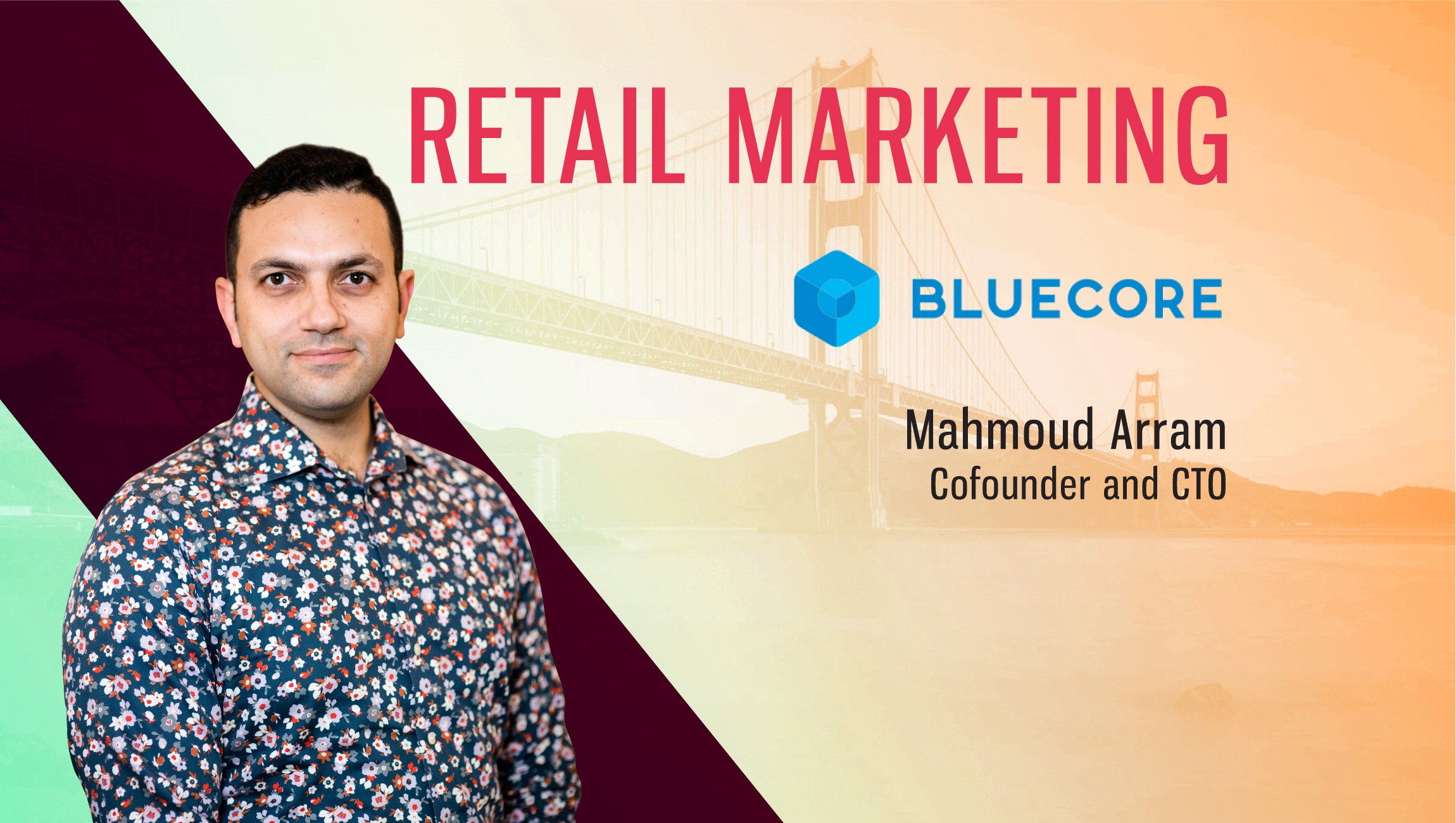
TechBytes with Mahmoud Arram, Co-Founder and CTO, Bluecore

0
Mahmoud Arram

Mahmoud Arram
Co-founder and CTO, Bluecore

The B2C tech ecosystem is dynamic and growing at a rapid pace. it’s the go-to learning space for B2B marketers, especially for those who are focused on delivering high-end personalized customer experiences across their Marketing Automation campaigns. Mahmoud Arram, Co-founder and CTO at Bluecore, explains the finest differences between the Email Marketing technologies that marketing teams should be using for B2C/Retail and B2B.

Html code here! Replace this with any non empty text and that's it.

Tell us about your role at Bluecore and the team/technology you handle.

I’m the co-founder and CTO. As CTO, I’m responsible for formulating and guiding the technology roadmap for Bluecore’s products and services. I also work with some of the most prominent retail brands within the Internet Retailer Top 50 to unlock the full power of our platform. Finally, a significant part of my role is working closely with our partnerships team to define the vision and integration points of Bluecore in the larger marketing tech ecosystem with strategic partners.

 Are there differences between the Email Marketing technologies companies should be using for B2C/Retail and B2B?

For B2C specifically, we believe solutions will become more vertically focused. A vertical specific solution is more actionable than a horizontal one because it has language and workflows that match users’ exact needs and are designed specifically to help solve the problems their business faces. Verticalization allows AI to better understand particular types of data and business goals that are unique to different verticals, and ultimately make decisions with specific outcomes in mind.

Especially in B2C, I think consumers have high expectations for the quality of communications brands and retailers engage them in. The expectations have been shaped by the dominant ecommerce players and mainstream consumer technology platforms. Consumers expect B2C brands to provide timely, engaging and personalized content that balances recommendations with discovery. This is where verticalization becomes important.

How do you see the technology market for automation and personalized communication improving with data science maturity?

In the very early days of ecommerce, marketing technology aided marketers in reaching and communicating with customers. Recently, powerful task automation such as automated triggers in response to customer behavior and catalog changes provided massive productivity and performance gains.

The next step in this evolution is verticalized artificial intelligence that is specifically trained to hit business goals defined by marketers. The autopilot would hone in on the goals by pulling digital marketing levers such as identifying communications opportunities, automatic prioritization and rapid testing of content. We’re focused on bringing that to ecommerce.

The technology market is also maturing towards stronger privacy and security guarantees. This will significantly reduce the value proposition of third-party data aggregators. The good news is that retailers’ own data sets — referred to as first-party data — have much higher potential, but until now the industry lacked the technology to unlock that potential. Advances in data science, such as Differential Privacy, will make it possible to amplify the power of first-party data by training verticalized AI on aggregated datasets while providing strict privacy guarantees on the consumer level and protecting valuable competitive insights at the retailer level.

What do you see as major challenges retailers are facing in leveraging customer data for better Email Marketing ROI and targeting?

I think there are two types of challenges: organizational and technical.

Organizationally, retailers’ marketing teams are organized around channels: there is typically an email team, a paid ads team and perhaps a social team. They use different technology vendors and platforms and have siloed data sets and sometimes track orthogonal KPIs. This makes it hard to collaborate and share insights. Aided with channel agnostic marketing platforms, I believe the organization structure of retail marketing teams will have to evolve to be better aligned with merchandising teams around products and customer segments.

As for technical challenges, there are too many data sources inside of a retailer: ecommerce customer behavior, catalog changes, in-store offline transactions, CRM updates, customer service interactions and feedback loops from marketing activities. The disparate data sets move at different speeds: some are real-time, and some are daily feeds. Moreover, they have varying structures; some are ecommerce specific and some are proprietary. This leads to a heterogeneous marketing stack that is expensive and hard to manage. In turn, this makes it operationally and technologically very difficult for retailers to use their own data as a competitive advantage to drive better business outcomes.

What would Email Marketing look like in 2020? Do you see the rise of Video and Bots influencing Email Marketing adoption/effectiveness?

I think the performance of the email channel will continue to grow and outperform other marketing channels in 2020 and beyond. Performance is driven by better personalization and more sophisticated inbox management by the inbox providers. I’m not sure how bots would play a role here; although there are many useful use cases around handling the first lines of customer service.

I think we will continue to see the evolution of in-email content. I’m not sure if it will be video specifically, but I suspect dynamic content will continue to become popular in service of personalization. People will continue to look forward to receiving emails from their favorite brands.

What does your product roadmap for retail email tools look like for 2018-2020?

We’re looking towards a future where marketers can focus most on their goals and less on other timely tasks that can be done more efficiently through technology and AI. The process of moving towards this goal will be gradual – but we’re determining what’s easiest for our clients to give up control of and going step by step from there. For example, humans aren’t going to commit and feel comfortable enough to move from a car today to an autonomous car without a steering wheel, overnight. We’re looking forward to a future where our clients can focus majority of their time on working towards meeting – and exceeding – their goals.

Thanks for chatting with us, Mahmoud.

Stay tuned for more insights on marketing technologies. To participate in our Tech Bytes program, email us at news@martechseries-67ee47.ingress-bonde.easywp.com

High Growth Sales Enablement Showpad Opens London Office with 15 Staff

0
High Growth Sales Enablement Scaleup Opens London Office with 15 Staff

Stuart Small Appointed UK Managing Director of Showpad

Showpad, the industry’s first sales enablement platform combining sales content, readiness, and buyer engagement solutions, has opened its first UK office in London reflecting both the opportunity and Showpad’s commitment to investing in the UK market. Stuart Small joins as Managing Director leading a team of 15 staff members (11 of whom joined this year) working from new offices in Moorgate.

Founded in Belgium in 2011, Showpad is a true innovator in the sales enablement market, which Aragon Research predicts will be worth $5 billion by 2021. Its platform bridges the gap between sales and marketing to help companies improve the buyer experience and boost sales productivity.

More than 1,000 companies in 50 countries around the world use Showpad’s platform. The company has been awarded numerous accolades including recognition as one of the fastest growing privately held companies in Europe according to the Inc. 5000 Europe list and third in the Deloitte 2017 Technology Fast 50 list for Belgium, which recognizes the fastest-growing European technology companies.

Also Read: Showpad Releases the Sales Enablement Industry’s First Augmented Reality Features to Deliver More Immersive Buyer Experiences

UK Managing Director Stuart Small has extensive experience leading global and fast growing technology companies. Prior to Showpad, he was Vice President of EMEA at Silverpop, an IBM company. He also held senior executive positions at Groupon, Marketo, Google and Sophos. He says: “I am delighted to join such an exciting fast growth technology company, leading the business in the UK and Nordics. With more new hires to join we expect to more than double our headcount by the end of this year and will soon be looking for bigger offices.”

Pieterjan Bouten, CEO and co-founder of Showpad said, “As the largest sales enablement provider in Europe, we’ve already built a sizable presence in the UK. With this office, we’re able to further accelerate growth, attract new customers and support our growing global customer base from a third European location.”

Earlier this year Showpad secured $25 million in additional Series C funding from Insight Venture Partners to continue its global expansion. Since then the company has doubled the size of its North American headquarters in Chicago and acquired LearnCore, a leading provider of sales training and coaching software for $50 million USD. This acquisition positions Showpad as the leading platform for B2B sales and marketing teams who currently purchase sales content, readiness and engagement solutions from multiple vendors. The combined company now has 350 employees globally.

In late June, Showpad also launched its Partner Program to enable customers to better leverage Showpad to improve the effectiveness of their marketing and sales teams. The program features more than 40 technology and solutions partners, including Slalom, Salesforce, Deloitte, POPcomms and LEWIS Purestone.

Recommended Read: Showpad Acquires LearnCore to Deliver the Industry’s First Integrated Sales Enablement Platform

Interview with Liam Galin, President and CEO, Matomy

0
Liam Galin
Interview with Liam Galin, President and CEO at Matomy

[vc_wp_text]“The future of mobile advertising is in-app. Consumers today are spending more time than ever before on their smartphones – up to five hours a day.”[/vc_wp_text]
[easy-profiles profile_twitter=”https://twitter.com/liamgalin” profile_linkedin=”https://www.linkedin.com/in/liamgalin/”]

Tell us about your role at Matomy and how you got here.

I joined Matomy as President and CEO in 2018 following a long career in technology and global business, with a focus on telecommunications. Before landing at Matomy, I served as President and CEO of Flash Networks, the leading provider of optimization, monetization and security solutions for mobile operators. My interest in high-tech, in general, stems from my curiosity and attraction to computers since I was a kid and was later on enhanced by my service as the head of a research and development department in the Israeli Defense Forces’ elite 8200 Intelligence Unit.

What’s the most fascinating aspect of leading a media advertising company in a tech-heavy industry?

Actually, we don’t see ourselves as a media company – Matomy has evolved from its incarnation and growth as a media company to a leading global provider of data-driven programmatic solutions.

How is the media tech industry different from when you first started?

There have been two important shifts in the industry over the last few years: from performance to programmatic advertising and from many vendors to a duopoly-dominated marketplace.

Given the changing dynamic of advertising analytics and customer insights, where do you see Matomy fitting in the adtech ecosystem?

Matomy’s extensive data capabilities allow us to assist our partners in predicting ad trends and personalized – albeit anonymous – consumer needs. We utilize our cutting-edge technology and, instead of storming users with too many irrelevant ads, we generate segmented audiences and customer insights, enabling highly-targeted, personalized ads. This is a win-win situation where users are less interrupted and are more responsive, which benefits advertisers.

What is the ‘State of Audience Data and Analytics’ technology in 2018?

Audience data and analytics technology are still in their infancy. While consumer privacy should always be a major priority, over-concern has deterred people from benefiting fully from the advantages of audience segmentation – it’s just not being explored fast enough in our industry. Audience data can be generated without jeopardizing users’ privacy but prejudice and misunderstanding create confusion.

How does Matomy leverage these numbers for better ad performance?

Our Mobfox platform offers publishers a new level of insight and prediction into their anonymous best users – in terms of demographics and behaviors – which can be leveraged for better decision making in all aspects of their business.

What does your ‘Ideal Customer’ Profile look like? Which new geographies are you currently targeting?

When it comes to in-app advertising, app developers and publishers are our number one audience – and since the US is the hub of most in-app advertising activity, it is our go-to geography. That said, we are active in Europe and China and are growing in Latin America.

What are your predictions on the most influential disruptions in Mobile Advertising and Video technologies for 2018-2022?

The future of mobile advertising is in-app. Consumers today are spending more time than ever before on their smartphones – up to five hours a day – and of that time, 87% is spent using apps. As more people install ad blockers, desktop and mobile web have become increasingly problematic – but mobile apps are still removed from that issue. And with programmatic in-app rising, as well as the superior demographic and geolocation data available through apps, and innovative and engaging in-app ad formats taking hold, in-app will be a tremendous boon to advertisers looking to optimize audience targeting and drive conversions.

How do you prepare for the post-GDPR era?

At Matomy, we are committed to upholding and honoring our clients’ trust with their sensitive data; this is a top priority for us. We are doing everything in our power to make this process as seamless as we can for all our partners. In order to prepare for GDPR, Matomy has been working with an external advisor and is completing its General Data Protection Regulation-related work as a data processor. This includes mapping and assessment; analysis and implementation of procedures, agreements, guidelines, policies, and opt-out tools; the appointment of a DPO, etc.

What startups in the technology industry are you watching keenly right now?

Frankly, I am focused on Matomy’s core brands – Team Internet and Mobfox.

What marketing and sales automation tools and technologies do you currently use?

We have a small but kickass creative team building a lot of our content and systems in-house. That said, like many B2B companies, we rely on awesome marketing tools like MailChimp for our newsletters and automated email campaigns, Buffer for managing our social media activities and Mention to help us monitor and manage reputation.

Could you tell us about an outstanding digital campaign at Matomy? 

BeSoccer, an app providing real-time soccer results, nearly doubled revenue in Latin America simply by moving their inventory to auto-optimization on the Mobfox platform. 

How do you prepare for an AI-centric world as a business leader?

We invest heavily in machine learning and deep learning technologies to analyze the accumulated trillions of data-points without infringing on privacy. We are focusing on taming technology to create real business insights.

How do you inspire your people to work with technology?

I don’t have to…they are so tech savvy.

One word that best describes how you work.

Trust. I make sure I have good people on my team, so I don’t have to work too hard.

What apps/software/tools can’t you live without?

Email. Whatsapp. Navigation. Evernote.

What’s your smartest work-related shortcut or productivity hack?

I don’t use folders, I use tags – with the GTD (get things done) methodology.

What are you currently reading?

I like to read books on management – but I am between them at the moment. Instead, I am now doing a lot of online research, one article at a time.

What’s the best advice you’ve ever received?

My mentor, when I first became a tech CEO 20 years ago, told me: Sell more. Lower expenses.

I also defer to Steve Jobs’ advice to everyone in his 2005 address at Stanford: Stay hungry. Stay foolish.

Something you do better than others – the secret of your success?

Get shit done. Like no other.

Tag the one person in the industry whose answers to these questions you would love to read:

Jeff Bezos

Thank you, Liam! That was fun and hope to see you back on MarTech Series soon.

[vc_tta_tabs][vc_tta_section title=”About Liam” tab_id=”1501785390157-b58e162d-0ae25a4b-c27aca64-108e51b0-80edaf37-bd3d357a-6c46d712-3b68db8f-23cb0708-6e06″]

As the CEO of market-leading tech companies, Liam’s philosophy is to focus on ideas, strategy, and management, while leaving the details to people who are better at them. He loves innovation, new ideas, new concepts and new ways of doing things and surround himself with a top-notch team to ascertain execution.

[/vc_tta_section][vc_tta_section title=”About Matomy” tab_id=”1501785390320-2d44fa50-740c5a4b-c27aca64-108e51b0-80edaf37-bd3d357a-6c46d712-3b68db8f-23cb0708-6e06″]

Logo Matomy Black

Matomy Media Group Ltd. (LSE: MTMY, TASE: MTMY.TA) is a global media company with a portfolio of superior data-driven platforms empowering advertising and media partners to meet their evolving growth-driven goals. Matomy’s programmatic platforms include Team Internet and the Mobfox SSP. Founded in 2007 with headquarters in Tel Aviv and seven offices around the world, Matomy is dual-listed on the London and Tel Aviv Stock Exchanges.

[/vc_tta_section][/vc_tta_tabs]
[mnky_heading title=”MarTech Interview Series” link=”url:https%3A%2F%2Fmartechseries-67ee47.ingress-bonde.easywp.com%2Fcategory%2Fmts-insights%2Finterviews%2F|||”]

The MTS Martech Interview Series is a fun Q&A style chat which we really enjoy doing with martech leaders. With inspiration from Lifehacker’s How I work interviews, the MarTech Series Interviews follows a two part format On Marketing Technology, and This Is How I Work. The format was chosen because when we decided to start an interview series with the biggest and brightest minds in martech – we wanted to get insight into two areas … one – their ideas on marketing tech and two – insights into the philosophy and methods that make these leaders tick.

Canary Selects Bright Pattern’s Cloud Contact Center Solution to Provide Top-Tier Omnichannel Customer Service

0
Canary Selects Bright Pattern's Cloud Contact Center Solution to Provide Top-Tier Omnichannel Customer Service

Bright Pattern, Leading Provider of Omnichannel Cloud Contact Center Software, Helps Canary Deliver an Unmatched Customer Experience

Canary offers a home security device that connects to a user’s smartphone so that customers can check the security of their home on the go. Canary was founded in 2013 and its flagship product is now available in more than 8,000 retail stores across North America and Europe.

Canary’s main goals are to provide an outstanding product and deliver an unmatched customer experience while growing its business. Canary uses Bright Pattern’s multichannel cloud contact center technology integrated with Zendesk to increase agent productivity and provide top-tier customer service.

Bright Pattern Customer Success Stories

Disrupting the Home Security Device Industry

As a highly innovative company, Canary wanted a service provider that not only had all the channels necessary today—such as voice, email, SMS, social messengers, live chat with AI and bots, and video—but a service provider that also continuously strives to innovate to accommodate all the communication channels that customers may depend on in the future.

Also Read: Bright Pattern’s Latest Release Delivers Effortless, Personalized, Omnichannel Customer Experiences

“My job is to go where the customer conversation is happening,” said Gavin Blair, Head of Customer Experience at Canary. “Because Bright Pattern is so dedicated to bridging the gap between customers and customer service centers, I believe their service will continue to provide channels that are cutting edge.”

Bright Pattern provided the multichannel solution that Canary had been looking for. The Bright Pattern solution integrated seamlessly with their current Zendesk ticketing system, providing channels for inbound and outbound voice and chat. Bright Pattern also provided flexibility in the organization of call flows with data dips into Zendesk and automatic ticket creation and updates.

Canary’s Results of Switching to Bright Pattern

  • Decreased average hold time by over 40%
  • Decreased average handle time by 8%
  • Increased average time to abandon by 65%
  • Increased agent productivity through use of various channels and seamless integration with Zendesk
  • Existing customers were immediately found with each new interaction, and a new ticket was created
  • New customer record and ticket created in Zendesk with each new customer interaction
  • New call/interaction information automatically updated and reported with each new interaction

Recommended Read: Transcosmos Powers Global Omnichannel Customer Service with Bright Pattern Cloud Contact Center


Easy Data Portability Comes to Town With Google’s Data Transfer Project

0
Easy Data Portability Comes to Town With Google's Data Transfer Project

Google, Along With Microsoft, Twitter, and Facebook, is Introducing the Open-source Data Transfer Project, Which Will Enable Consumers to Directly Transfer Their Data Between Services

Tech giants Google, Microsoft, Facebook, and Twitter have come together for Google’s ambitious Data Transfer Project. The open-source service allows users to directly transfer their data from one online service provider to another, seamlessly and hassle-free.

Data Transfer Project builds on Google’s on-going work for transferring data between individual cloud data storage services. Launched in 2011, Takeout, now known as Download Your Data, allows users to download a machine-readable copy of the data they have stored in over 50 Google products. Now, with Download your Data, users can also transfer their Google Drive files directly to Dropbox, Box, or MS OneDrive accounts.

Also Read: OK Google: Why Your Brand Needs to Talk?

In a blog post explaining the Data Transfer Project, Google writes, “We’re taking our commitment to portability a step further. In tandem with Microsoft, Twitter, and Facebook we’re announcing the Data Transfer Project, an open source initiative dedicated to developing tools that will enable consumers to transfer their data directly from one service to another, without needing to download and re-upload it. With this project, we’re looking forward to working with companies across the industry to bring this type of functionality to individuals across the web.”

Easy Data Portability Comes to Town With Google's Data Transfer Project

Data portability and formatting

Anyone who has tried transferring data from one service provider to another knows the annoyance it causes. You end up spending a lot of time cleaning your data to fit a different format. Of course, with data standardization, that’s not going to be so much of a bother. “The organizations involved with this project are developing tools that can convert any service’s proprietary APIs to and from a small set of standardized data formats that can be used by anyone. This makes it possible to transfer data between any two providers using existing industry-standard infrastructure and authorization mechanisms, such as OAuth,” explains Google, adding, “So far, we have developed adapters for seven different service providers across five different types of consumer data; we think this demonstrates the viability of this approach to scale to a large number of use cases.”

Explaining how data portability happens through Data Transfer Project, Microsoft writes, “While users can often download copies of their data to a local or online storage location, this project facilitates direct portability of user data between cloud services. The Data Transfer Project’s goal is to extend data portability in the cloud, allowing users to directly transfer their data in and out of any participating provider.”

Also Read: Rakuten Marketing Whitepaper – Avoiding Data Breaches: Understanding What Constitutes a Consumer Data Breach Under GDPR

Microsoft states the Key Development Principles:

  • Build for users: Data portability tools need to be open and interoperable with industry standards and easy to find, intuitive to use, and readily available for users to easily transfer data between services or download it for their own purposes.
  • Use strong privacy and security standards: Providers on each side of the portability transaction need to have strong privacy and security measures to guard against unauthorized access, diversion of data, or other types of fraud. Users need to be told in a clear and concise manner the type and scope of data being transferred, how the data will be used, and the privacy and security practices of the destination service.
  • Focus on a user’s data, not enterprise data: Data portability needs to focus on data that has utility for the individual user such as content a user creates, imports, or approves for collection or has control over with the data controller service provider. Data portability for organizations are to be controlled by the organizations ‘own policy over their data.
  • Respect everyone: We live in a collaborative world where people connect, share, and create together. Data portability should focus only on providing data that is directly tied to the person requesting the transfer to strike the right balance between portability, privacy and the benefits of trying a new service This means the service providers need to make sure that the related private information of people beyond the data subject are respected.

Also Read: A Penny For Your Thoughts: Can Consumers Become The Benefactors Of Our Own Data?

Will Data Transfer Project open more avenues for a data breach?

Given the regularity of news regarding data breach, users may find it difficult to trust service providers with data. Google states that users must put all their worries to rest.

“Data security and privacy are foundational to the design of the Data Transfer Project,” says Google, adding, “As it is an open source product, anyone can inspect the code to verify that data isn’t being collected or used for profiling purposes. Tech-savvy consumers are also free to download and run an instance of the framework themselves.”

For transferring data, services must first agree to allow data transfer between them, and then they will require that users authenticate each account independently. All credentials and user data will be encrypted both in transit and at rest. The protocol uses a form of perfect forward secrecy where a new unique key is generated for each transfer. Additionally, the framework allows partners to support any authorization mechanism they choose. This enables partners to leverage their existing security infrastructure when authorizing accounts.

Data portability is a major point in the GDPR set. Looks like Data Transfer Project is going to benefit, both users as well as developers, if everything goes smoothly.

Recommended Read: The Third-Party Data Crisis: How the Facebook Data Breach Affects the Ad Tech

Five Steps to Make Video Production Easier!

1
5 Steps to Make Video Production Easier!

The year 2018 has bought about a revolution in the video production process for marketers. It’s no secret really; video is here to stay and make its imprint in the world of business. From augmented reality to interactive video, the technology video landscape is getting bigger than ever! This development comes as a delightful opportunity to target qualified leads and convert more users into prospects with the help of video marketing.

According to HubSpot, 97% of marketers say videos have helped increase the user understanding of their services or products. Though video marketing is one of the latest additions to the marketing stack, an individual will be entitled to their own doubts. Is video marketing really going to be a hit in promoting your business? Would you have sufficient resources to plan-out a video marketing strategy for your team? Will video content within a marketing strategy be used to project a brand image?

Most marketers agree that relying on video has been an added support in elevating a company’s overall efforts and performance. 85% of people say they would like to see more of video content from brands in 2018.

Also Read: Why Companies Should Consider Investing in Enterprise Information Management (EIM) Software

Now the biggest question is- how are we going to make videos to incorporate it into a brand’s marketing strategy? Let’s find out!

Budget-Befriending

Most of us fear the idea of budgets when it comes to creating a strategy. Budgets, when calculated right, are often more advantageous than being seen as a roadblock. Calculating a budget -even if small- generally leads to more creativity, brainstorming and the will to turn an idea into reality despite the odds.

Identifying weaknesses right from the beginning is an excellent start to evaluating expenses, understanding the technicalities for equipment and categorizing tools for your video production process. A budget allows you to set a boundary which helps cover the purpose, your expectations and the desired outcome of an idea, therefore making the strategy accountable.

Be Original

While creating a strategy for video production, don’t stress while approaching the video-editing process. If the video doesn’t have the kind of sheen other online content does, take a step back and breathe! Consumers have been known to appreciate and acknowledge the existence of a living, breathing aura of a brand than succumbing to frivolous mediums associated with it. Consumers associate a brand’s image to its ethics and identity than a flawless play of overused images with no context. Remember to keep the edits minimalistic and raw so that consumers can connect to a brand. For example, if a brand is incorporating video content which speaks of its work environment; shoot the video footage by keeping its element of originality that includes people and light conversation. So a heavily edited video may look good but still not give you the desired results. Keep it simple folks!

Turn your phone into a video marketing machine!

Today phones are not restricted to being only calling devices. We all have watched those little screens get magnificently larger over time and becoming as focus-oriented as a DSLR or high-functioning camera. The latest iPhones are now known to record footage from 720p and all the way to 4K. That translates into iPhones being able to record content in a similar fashion to DSLRs. Now, if budgeting is one of your major constraints for video production- well, you get the idea! You have no reason to look any further than your not-so-regular iPhone, the video production device.

Setting up the room, keeping an eye out on camera-friendly backgrounds and customization of your iPhone settings is all you need to get going!

Churn content for various mediums

Media content today is streamed on a variety of devices and applications. Creating content which is reusable on various platforms or applications on social media is innovative and useful. Digging deep into your content and finding out ways of reusing material maximizes output and displays a diversified style.

Think about it! Focusing on one video spanning over 10 minutes can be gracefully edited to fit slots that are 2-3minutes long. This is both attention-grabbing and can be utilized for 2 or more social media channels.

Incorporating video content for Facebook, Instagram and your company profile are now simplified to fit budget constraints and bring in a unified strategy.

Simple tools for video production process

Video production can be really simple and effective, by leveraging the right tools to make your mark. Contrary to belief, you do not require a full crew and a production process spanning over two months! What you do need though is teaching yourself the basics of video production by logging onto online tutorials or utilizing tools that are guaranteed to simplify the process.

Also Read: Primer: What is Social Media Intelligence in 2018?

Some of the few inexpensive yet highly functional tools to create a video that is smooth and impactful include;

Adobe Premiere Pro
This video processing tool from Adobe brings you the editing software which turns raw footage into fully processed videos. Adobe Premiere Pro can be utilized by beginners and professionals alike. Editing, refining, color retention and audio streaming can now easily be achieved with the help of this tool, thus combining results in a seamless workflow.

Final Cut Pro
Final Cut Pro is Apple’s video editing platform that works in a robust pattern for users. It includes a cutting 360-degree video editing and VR playback, advanced color grading, graphics and built-in controls for the acceleration of post-production.

Animoto
Animoto is a simple video production tool which has features that can be created for all business, commercial and personal purposes. It has a wide range of themes that can be customized to suit requirements, thus being an interesting and coveted tool for video production.

Wave.Video For an online marketer, this video production tool can help a user create videos in a few short minutes with the added bonus of having access to 200 million stock video clips. Editing videos and previewing results are now made easier with Wave.Video.

Wirecast
Wirecast is a great tool which is synonymous for its abilities in the art of creating live videos. Live streaming with Wirecast includes sending these feeds directly to social media platforms like Twitter and Facebook Live. It also includes effects which bring about transitions and animation to make the video production process a lot more engaging.

Videoshop
Videoshop is an instant-hit with video makers because of features which include the addition of subtitles, voiceovers, and slow-motion edits. If there is an absence of a marketing budget or a lack of video production knowledge, then Videoshop can get processing moving in a fast-pace.

For Editing during Video Production, some tools include:

Magisto
Magisto is a tool which creates and edits, though its strong focus lies on editing majorly. Selecting the special parts of your film and seamlessly blending it to create a new piece of art with enhanced features such as music, themes and effects are what Magisto truly does best.

YouTube’s Video Editor YouTube’s Video Editor is an integrated flash-based work tool for video production. The basic techniques of video editing along refining your video with certain elements are all wrapped into the Video Editor. Though this tool brings in certain limitations – the overall effects can really be beneficial for editing and personalizing.

Conclusion

To create video content that resonates with your audience, it’s a good step incorporating content which is simple yet interesting. Actively engaging in the video marketing landscape to create something meaningful and share-worthy comes with a little effort. The above steps are dependable ideas for fulfilling basic requirements and understanding the art of productive video making.

Recommended Read: The Changing State of Mobile Video Advertising

A Penny For Your Thoughts: Can Consumers Become The Benefactors Of Our Own Data?

4
Consumer Data Benefactor

TruthifyHave you ever heard someone say, “A penny for your thoughts”? I hear the expression regularly, but no one has ever actually given me a penny for my thoughts – or my data, for that matter. We live in a world where data is king; and yet, we have very little control over how our personal data is used for the financial gain of those that collect it. In light of data breaches, privacy concerns, and recent General Data Protection Regulations (GDPR) in Europe, perhaps it’s time we take the ownership and monetization back into our own hands.

The value of your data, or more specifically, you as a lead, can vary widely depending on the industry or product. Mortgage companies pay $47 per click on pay-per-click web advertising, while insurance companies may pay as much as $54 per click. And across industries, the cost of client acquisition continues to increase. The bottom line: our data is REALLY valuable to those that can use it for financial gain.

This got me thinking. What if the tables were turned, and companies paid us directly for our data? This would make companies more efficient, and reduce the amount of money spent on marketing and advertising. But more importantly, perhaps it’d democratize the data economy to benefit consumers.

Also Read: The Relevancy Gap: Businesses Believe Marketing Communications Are Effective; Consumers Disagree

 Opting into a new data economy

Most of the consumer data collected today can be divided into three categories: digital behavior (such as which websites you visit), spending behavior (such as credit card and bank transactions), and physical behavior data (such as where/how fast you drive, how often you work out, and other data from connected devices). All of this data can be used to identify and target potential leads, and brands, advertise, and marketers are willing to pay for it.

And it’s not just retailers and advertisers benefiting from our data today. Companies like Cambridge Analytica have notoriously reaped the rewards of selling our data to interested third parties, and while they were “caught” doing so, they’re far from the only ones. Companies turned the collection, sales, and analysis of big data into a booming industry, expected to top $210 billion in revenue by 2020.

What if interested third parties – the brands, advertisers and marketers I mentioned above – could bypass data brokers and come right to the source: you? After all, the real objective of harvesting our data is to try and predict what we are going to do next or put us into a sales funnel. Historical data based on past shopping behavior is ok, but companies really need to identify how we are feeling BEFORE we act. This is the Holy Grail for retailers and marketers, and with the prominence of mobile technology and the emergence of emotion artificial intelligence (AI), true predictive analytics will soon become a reality.

Picture this. A soda brand is testing a new advertisement, and they want to know how you personally feel about it – will it elicit the desired response? Convince you to go out and buy a bottle? What if they could put the ad directly in front of you, and others in their target demographic, and you could get paid by the brand for simply giving your true, unbiased opinion?

The brand could send out a potential new ad directly to consumers, you could view it on a mobile device, and your smartphone would simultaneously record your emotional reaction using artificial intelligence. Did you exhibit happiness, disgust, anger, or contempt?  Did you show sadness? Fear?  Surprise? Since 90% of decisions are based on emotion versus fact, the insights gained by learning how you personally felt would be far more valuable than your browser history. You, in turn, would be compensated directly for sharing your reactions (vis-a-vis your data) – a potential win-win.

Turning the tables

This idea could disrupt not just data brokering, but advertising, marketing, sales, and product development as we know it. What’s more, in the gig economy, it presents an entirely new way for consumers to make money off of data that’s being freely collected from them today.

It’s not just about compensation, though. The fundamental change that needs to be made is that the consumer should be in control of their data. The consumer should decide who is permitted to collect data, as well as when and what data can be collected, with complete transparency from those who will use it.

The tables are turning in the data economy, and this shift is going to occur far sooner than you think. And when it does, I’m willing to bet you’ll get a lot of pennies for your thoughts.

Also Read: Customer Experience in the Age of GDPR: Privacy vs. Personalization

Introducing Copper: ProsperWorks Rebrands as Part of Mission to Be the Conductor of Relationships for Customer and People-Driven Companies

0
Introducing Copper: ProsperWorks Rebrands as Part of Mission to be the Conductor of Relationships for Customer and People-driven Companies

The New Brand Goes Live at Google NEXT, as the Company Unveils Unique Vision to Reinvent CRM by Going Native in the Productivity Tools People Use Everyday

ProsperWorks, the Google-recommended CRM for today’s digital workplace, announced today it is rebranding to Copper. The name Copper was chosen for its timeless quality, clarity and simplicity, and its relationship to energy and currency. The rebrand comes at a time of an industry need for new solutions that match today’s digital customer. Today’s existing CRM solutions are outdated, but since their creation in the 1990s, customers have changed the way they work, as have the tasks customers are trying to accomplish.

Today’s digital workforce isn’t satisfied with the rate at which CRM technology is evolving to align with fast-growing technology advancements and user demands. In a recent survey commissioned by Copper, nearly half of respondents think the innovation of CRM should be quicker. The form of communication between teams and customers has shifted from in-person meetings to informal chat apps and mobile conversations. 44 percent of respondents use chat and Slack and 67 percent said more than 40 percent of their customer communications happen over email. Today’s workforce wants tools that make their lives easier, deliver a tailored experience and fit within the way they live and work.

Also Read: ProsperWorks Study Reveals the True State of CRMs in the Relationship Era

In addition, today’s customer relationship is no longer the sole priority of the sales team. 63 percent of survey respondents said three or more teammates are involved in fostering customer relationships. Multiple stakeholders, from sellers to developers, have a direct influence on the customer relationship, showing it’s a more collaborative effort than ever before. Copper is catering to the modern workforce that demands automated, easy-to-use and design-first tools so that they can focus more on fostering relationships instead of manual data entry like the legacy CRM systems of the past. This rebrand signifies the acknowledgement of a shifting CRM ecosystem in which Copper offers an easy-to-use platform that works instantly and is designed to help teams and businesses build long-lasting relationships.

Jon Lee
Jon Lee

“Copper is a name that truly represents our vision and plans for the future of the CRM industry,” says Jon Lee, CEO and co-founder of Copper. “People are every company’s most valuable resource and it’s critical that CRM reflects that mindset and provides systems that put people’s needs first. Our new company name represents our effort to solve the industry’s current challenges with cumbersome technology and to arm people with the tools they need to foster relationships and grow their business.”

Also Read: ProsperWorks Deepens Collaboration with G Suite, Announces New Hangouts Chat Integration

Copper has been a go-to CRM launch partner with Google since 2014 with its Chrome extension. Over the years, the Copper integration within Google has given users the ability to access critical CRM data directly through Gmail, Hangouts, Data Studio and more. Copper’s rapid growth, doubling in employee size and revenue since 2014, is attributed to a new vision for CRM where work happens directly from employees’ inboxes. What began as a CRM for startups has evolved into a solution for Fortune 500 companies and Copper is now the No. 1 CRM for creative and media agencies, with more than 900 global agencies using the platform.

Morgan Norman
Morgan Norman

“The narrative in the CRM industry hasn’t changed in over 20 years, but the demands of customers have changed rapidly. Rather than the traditional CRM industry language about managing customers, our name change is about transparency, the people, the places they work, and helping enterprise software work for them,” says Morgan Norman, Chief Marketing Officer of Copper. “We are continually inspired and pushed by our customers and we’re excited to introduce the new Copper and continue transforming the way people work. We’re at the forefront of this shift in the industry and really pushing the envelope of the CRM space to focus more on building relationships.”

Recommended Read: Interview with Jon Lee, CEO and Founder, ProsperWorks

Shareablee Adds Instagram Performance Analytics for Stories and Video

2
Shareablee Adds Instagram Performance Analytics for Stories and Video

Shareablee’s Enhanced Reporting Provides Greater Insight for Digital Marketers

Surfing the current wave of Instagram advertising in #martech, Shareablee has announced the expansion of its Instagram performance analytics to include several new insight metrics, including Instagram Stories and video views. With the average brand’s Instagram presence increasing 27% year-over-year through May of this year – even without taking video views into account – the need for greater insight into all formats on the platform is becoming increasingly critical for marketers in order to make informed decisions.

Recommended Read: Five DIY Activities to Become a B2B Content Rockstar

Ath time of this announcement, Tania Yuki, Founder & CEO of Shareablee, said, “With more than twenty-five million business pages and over a billion users, Instagram is a vital part of virtually every business’ marketing plan, whether it be micro-influencers or worldwide banks.”

Tania added, “Instagram Stories is a powerful new format for brands and Influencers to make meaningful connections with consumers, and better reporting will shed light on how best to make use of Stories alongside Videos, Images, Carousel ads and more. We’re excited to provide these enhanced capabilities to better inform the cross-platform marketing mix.”

Read More: S4M Co-founder Stanislas Coignard Takes Over As US CEO to Focus On US Expansion

As a global leader in audience-based social media measurement, Shareablee’s expanded reporting will also enable enhanced measurement of Influencer campaigns, one of the fastest growing marketing strategies on social media. More than 500,000 Instagram Influencers are accessible in the Shareablee platform, with analysis of total performance broken down separately by media type to inform more targeted planning.

Currently, Shareablee is the leading authority on audience intelligence, competitive benchmarking and actionable insights for cross-platform social media campaigns, tracking over one million businesses globally in real-time.

Recommended Read: [24]7.ai Removes Time, Cost and Risk Barriers to Chatbot Deployment

Why Companies Should Consider Investing in Enterprise Information Management (EIM) Software

5
Primer : EIM Software

EIM Software Platforms Have Advanced Progressively to Capture All the Key Points Which Enterprises Face While Developing Their Information Management Strategies

Each organization works with its own set of indefinite data and content that could be managed efficiently and productively as a valuable enterprise asset. The Enterprise Information Management (EIM) software can be explained as a set of business processes, disciplines and practices used to manage the information created from an organization’s data. It can best be described as a set of combined technologies and processes which help organizations progress on a larger scale.

According to Frost and Sullivan, the estimation of enterprise-level data growth stands at 30 to 40 percent per year. The dire need for the ability to harness the value of this information is critical for businesses. These developments require an effective EIM platform. Precisely for this purpose, Gartner believes that by 2020, 75% of these organizations that use Enterprise Information Management to align, link and leverage their data and analytics investments will report substantially improved business outcomes.

EIM can effectively be stated as the “everything information”. There are many key components that form an EIM, including an Enterprise Content Management (ECM), Customer Experience Management (CEM), Business Process Management (BPM), B2B Integration, Analytics, and Discovery Software Solutions.

Though each component above can be individually deployed, the true power of EIM software can be harnessed only when all the components are combined into a robust, end-to-end solution.

Also Read: Integrating AI with Social Media Marketing to Persuade Profitable Markets

What functions must an EIM solution include?

There’s no one ‘silver-lining’ optimum solution for an EIM system. Even at the beginner level, management of basic information can be deemed complicated. Once the technology advances, curating the best method to create, share and use information is dubbed as the essential part to any corporate business strategy.

The 6 pillars for any functional yet successful EIM system include;

  • Enterprise Content Management (ECM):

ECM helps in establishing the best central location for all content or even a selected premise on the cloud software. It allows you to set up the best processes to meet all business requirements including creating, collating and managing.

  • Customer Experience Management (CEM):

CEM allows you to deliver the exact level of personalized and targeted omnichannel experience which is demanded by your customers today. Taking control of all elements of customer communication at every stage in a customer’s journey can be dutifully completed with the help of a CEM.

  • Business Process Management (BPM):

BPM allows you to automate day-to-day processes by increasing business responsiveness and agility by reducing the risk of human error.

  • B2B Integration

B2B Integration allows you to build and extend trading partner networks to ensure smooth business transactions all over the world. Working closely and collaborating with customers, partners and suppliers are made convenient by using a secure and central platform for all information exchange.

  • Analytics

Analytics allows you to gain actionable insights for better leads in decision making. The range of analytical tools that provides swift and precise results is present in a format that can easily be absorbed and understood.

  • Discovery Software Solutions

Advanced processes and tools help search, extract, classify, review and analyze all the content you need whenever required. It allows you to take control of all the information within an organization, thus making it available for auditing and eDiscovery.

Also Read: Harness the Full Power of Video Marketing through Analytics

What do Analysts say about EIM?

Gartner identifies “High Priorities for EIM” that include; “Define your EIM vision and strategy. Make sure you identify the priorities for what information (data, analytics, processes or decisions) drives which business goals… Designate an EIM program manager and an initiative champion, their duties and their authority…. Complete an EIM maturity assessment to establish a baseline of action steps and success metrics for the first 100 days.”

Why use an EIM?

EIM software platforms have advanced progressively to capture all the key points which enterprises face while developing their information management strategies;

  • The ability to handle structured and unstructured data
  • Streamlined access to structured and unstructured data which helps process effective digital business workflows and procedures
  • Developing an omnichannel experience for both employers and customers
  • Creating effective communication patterns for all individuals instrumental in the enterprise
  • Deliverance of enhanced security and data sovereignty for corporate data
  • Easing the process of compliance in industry standards and global regulations
  • Effective and close relationships with suppliers, traders, and customers

Among the Digital Transformation initiatives- disruptive technologies like IoT, AI, and Cloud, have bought about heaps of data which organizations are constantly seeking to exploit regarding competitive advantages. Though, here the EIM platform represents to only extract the full value from these mountains of data.

Considering the above, inclusive of quotes by analysts and the integral components that EIM includes, below is a list of EIM software which is curated for corporate requirements;

Conclusion

The functions of EIM ensure that high quality of data is available at all times; since it is controlled and leveraged effectively to meet the information requirements of all enterprise goals.

The more in-depth EIM professionals understand how information is utilized in an organization, the more detailed their EIM solutions will be.

Recommended Read: What Makes Influencer Marketing Platforms So Exciting?

ironSource Launches In-Ad Data Platform

0
ironSource Launches In-Ad Data Platform

New Dashboard in Beta with Top Partners; Gives Advertisers Previously Inaccessible Insight into In-Ad Performance and Creative-Level Reporting

Leading mobile monetization and marketing company ironSource has released its In-Ad Data Platform, giving advertisers access to previously unavailable analytical data on how their ads are performing beyond the impression and the click. Currently, in a closed beta with selected premium partners, the platform also allows advertisers to access performance data at the level of a specific ad creative. The In-Ad Data Platform analyzes and provides aggregated data concerning how users engage with the advertisements.

Recommended ReadInfluencer Solutions Will Become a Core Component of the Marketing Stack

Advertisers Are Able to Access New Types of In-Ad Metrics with In-Ad Data Platform

“With the rise of interactive ad units like playable or interactive video ads, the ad has suddenly become not just part of a funnel, but a funnel in and of itself,” said Dan Greenberg, Chief Design Officer at ironSource.

Dan added, “Instead of just tracking an impression and a click, we’re able to access a wealth of previously inaccessible data on what’s going on inside the ad itself. This opens up plentiful opportunities for optimizing the in-ad experience and helping advertisers learn more about their audiences in the aggregate. The promise of true creative optimization has finally been fulfilled.”

“Beyond the increase in performance and spend efficiency which interactive ads bring to a campaign, what’s truly unique here is the sheer amount of new information that they make available to a marketer,” said Carissa Gonzalez, Senior Marketing Manager of Pixelberry Studios.

 Recommended ReadB2B Buying Disconnect: Are You Targeting the Right Set of Customers?

Carissa added, “ironSource’s in-ad data dashboard not only allows us to see which parts of the in-ad funnel are working more or less well but also provides data on what in-app content – like characters or storylines – our users like best.”

With the new platform, advertisers are able to access new types of in-ad metrics which allow for much deeper creative optimization and analysis that go far beyond the current industry standards of measuring the volume of impressions, CTR and CVR. This includes a full in-ad funnel analysis that provides advertisers with a clear, aggregate view of the drop-off points in the ad, highlighting the ‘pull’ effect of the creative on users throughout the experience.

In-Ad Data Platform Provides Critical Insight into Audience Preferences

For interactive ads which allow users to make choices that change the progression of the ad – like 4D ads – the platform also provides aggregated data of users’ choices. This provides critical insight into audience preferences which can be used by marketers looking for a quick feedback loop on what messages resonate best with consumers collectively.

Recommended ReadOracle Marketing Cloud Adds Infinity and Audience CX to Enable Pinpoint Targeting

“The powerful promise of interactive ads like 4D or playable ads is their ability to say more about audience interests than completions and clicks, and to reflect the audience’s real-time preferences,” continued Greenberg. “With this platform, that data is aggregated in a format that is immediately actionable for brand advertisers.”

Finally, advertisers are also able to access benchmark data on interactive ads, which is aggregated based on 45B impressions from interactive campaigns run by ironSource over the last two years. Data from the platform reveals interesting trends:

  • Engagement rate (percentage of users who engage with the ad) for hyper-casual games is 88%, for casual games is around 65%, while for mid-hard core games is around 50%
  • For playable ads, the win-to-install rate is 6% higher than the loss-to-install rate, except for hyper-casual games where losing in a playable ad actually results in a higher rate of installs
  • Completion rates for both playable and interactive video ads are usually around 87%, implying that once users choose to engage they tend to complete the interactive advertising experience

Read More: Fractal Analytics Humanizes AI: Acquires Behavioral Architecture Firm Final Mile

Greenberg concluded, “Because of the scale and variation of the campaigns we’re running, we’re able to get a birds-eye view of how interactive campaigns operate and behave as a whole. This means we’re able to provide our advertisers with useful in-ad benchmarks, which helps us optimize and helps them evaluate success.”

Currently, ironSource makes free-to-play and free-to-use possible for over 1.5 billion people around the world. Their technology helps app developers take their apps to the next level, including the industry’s largest in-app video network.

Read More: S4M Co-founder Stanislas Coignard Takes Over As US CEO to Focus On US Expansion

IBC2018 Enhances Conference Programme with Keynote Sessions from Amazon, Viacom and Wonderhood Studios

0
IBC2018 Enhances Conference Programme with Keynote Sessions from Amazon, Viacom and Wonderhood Studios

IBC2018, the world’s most influential media, entertainment and technology show, announces three new Keynote speakers from globally renowned media and entertainment powerhouses. The addition of executives from Amazon, Viacom and Wonderhood Studios adds to the big-name line up of thought provoking and informative sessions and speakers already announced by IBC.

“The past 12 months have shown that delivering premium content is crucial for media enterprise to succeed. As the rapidly changing media landscape continues to evolve, forums such as IBC are vital as we explore new business models and opportunities”

Taking to the stage on the first day of the conference, Thursday 13 September, to deliver the Trailblazer Keynote session entitled ‘Give Your Vision a Voice’ is Max Amordeluso, EU Lead Evangelist Amazon Alexa, Amazon. As voice assistants such as Amazon Alexa are transforming the way audiences discover content and control devices, Amordeluso’s must-attend presentation will explore a variety of avenues, including: how to build a voice strategy with Alexa; why voice experiences are now a crucial part of any multi-platform content business; how to implement an engaging voice strategy for content products and generate new revenues with Alexa Voice Service and Alexa Skills Kit.

Also Read: BBC.com Chooses Teads to Muscle its Way into Global Outstream Advertising Market

As Lead Evangelist for Amazon Alexa Skills Kit (ASK) in Europe, Amordeluso’s focus is to introduce Alexa to European developers and demonstrate how they can build natural voice experiences for customers.

On Friday 14 September, Channel 4’s Ex-Chief Executive and Founder of the recently launched Wonderhood Studios, David Abraham, will deliver theNew Platforms Keynote entitled, ‘Content creation and funding embraces the multiplatform world’. The appetite for premium content has never been higher across so many platforms, both online and on TV. With YouTube, Facebook, Snapchat, Netflix and Amazon all vying for content, it is boom time for talent both on and behind the screen – but these are also challenging times for traditional business models.

Wonderhood Studios is a new player on the scene headed up by the seasoned media executive who has run both a major broadcaster, pay TV companies and worked in the creative and commercial side of advertising. Abraham’s Keynote session will explore the new content consumption landscape and threats and opportunities of the big tech players, as well as advise on the best creative commissioning and funding strategies going forward.

Also Read: PubMatic Launches PubMatic Cloud to Evolve the SSP Business Model

“The past 12 months have shown that delivering premium content is crucial for media enterprise to succeed. As the rapidly changing media landscape continues to evolve, forums such as IBC are vital as we explore new business models and opportunities,” said Abraham.

Kelly Day
Kelly Day

Tying in perfectly with the IBC Conference’s major themes for 2018, which include exploring social, mobile audiences, audience engagement, OTT and branded entertainment, Kelly Day, President of Viacom Digital Studios, will keynote her session dubbed ‘Get Shorty: How iconic TV brands can be re-cast for social and mobile-first audiences’. As the media and entertainment industry continues to evolve, there’s no disputing that younger audiences are watching video in different ways and with new appetites. In this session, Day will share her insights into how the newly launched Viacom Digital Studios is leveraging Viacom’s iconic brands to create unique, original content for a new generation of digital-native audiences.

A proven thought leader and seasoned executive leading digital entertainment and media at AwesomenessTV, Discovery Communications and more, Day is the driving force behind Viacom’s first concerted investment and accelerated push into original premium digital programming to engage fans wherever and whenever they’re consuming content. Taking to the stage on Saturday 15 September, visitors are encouraged to come and hear how one of the biggest global media players is re-thinking content for more than 850 million social media fans.

Recommended Read: Lacework Selected by Brightcove for Automation of Security at Scale for Its AWS-Hosted Video Service

Interview with Mark Robinson, Founder and CEO, deltaDNA

0
Mark Robinson

[vc_wp_text]“Increased player engagement with certain ad formats does point to innovation and progression in ad tech, but it also reflects a change in audience behaviors and attitudes.”[/vc_wp_text]
[easy-profiles profile_twitter=”https://twitter.com/merobinson0″ profile_linkedin=”https://www.linkedin.com/in/markrobinsondeltadna/”]

Tell us about your role at deltaDNA and how you got here. What galvanized you to start a Player Relationship Management platform for the Games Industry?

Before starting deltaDNA in 2010, I was heading-up a data mining consultancy where I used to help brands like Heineken and Office Depot to harness their customer data and use it to create more personalized customer experiences.

At the same time deltaDNA co-founder Chris Wright (CTO), who is also my neighbor, was working in the games industry where he’s been for years and was currently European Director at a major mobile games publisher.

However, it was the launch of the iPhone and the App Store that was the real lightbulb moment for us both. We knew that the mobile games market was set to explode and that the connected nature of games, meant there was a huge opportunity for publishers and developers to collect and analyze data from every single player.

With that deltaDNA was born.

As Chief Executive of deltaDNA, I’m responsible for the overall effectiveness of the business, from delivering against our strategy and roadmap to ensuring our products remain at the forefront of the market.

Tell us about the State of In-Game Advertising in 2018

Game publishers and developers have traditionally had an uneasy relationship with mobile ads, mainly because of the negative impact that ads can have on the player experience and ultimately retention.

But recently that frosty relationship has begun to thaw to the point where game makers now see as an important monetization opportunity. As a result, developers have become increasingly confident about the effectiveness of their mobile ad strategies which has led to developers adopting more complex strategies which leverage an increasing number of ad networks.

Perhaps the most important factor for this has been the emergence of the Rewarded Video format. Developers love rewarded video ads because of how they can be integrated into the game in a way that adds, rather than detracts from, the player experience. In fact, many players actually rely on rewarded videos to provide them with vital resources to help them progress through the game.

But while developers are learning to love mobile ads, when it comes to increasing ad frequency most developers are still worried about player churn. As a result, most developers still only serve one ad or less per session, but when you consider that between 40-60% of players leave mobile F2P games after just one session, failing to increase frequency is simply failing to monetize effectively.

The main problem is that the ad data is often siloed away from the player data, so developers have little idea exactly how the ads being served are impacting retention, but this is beginning to change.

Publishers and developers are increasingly adopting more sophisticated analytics tools which enable them to view the whole game economy and more effectively balance the player experience with ads and In-App Purchases.

How is the marketing tech ecosystem for gaming platforms different today compared to when you first started?

Back in 2010, analytics were focused solely on game performance, where analytics dashboards would report what had happened in the game but without providing the clarity that would enable developers to know where any issues may lie, or how to solve them.

The next phase was about using analytics to actually change the game at the design level. From the analytics, developers could see where the problem may lay, but could only implement broad-brush and one-size-fits-all changes to the game.

Today, analytics have evolved to the point where they are being used by game makers to change the game for each specific player. Big Data capabilities — capturing large numbers of data points powered by incredibly fast database technology — enables game designers to personalize the gaming experience to individual players within player segments, based on player engagement and playing style.

How could marketers leverage your gaming analytics to increase audience engagement and generate revenues?

Although the mobile games sector now generates more revenue than Hollywood, many publishers and developers actually struggle to turn a profit from their games.

This is because effectively balancing a great player experience with the need to integrate ads and IAPs is a challenging task. It’s a situation made worse by the reluctance of most ad networks to share ad data with developers.

However, deltaDNA gives publishers and developers the power to manage the entire player view and make smart, insight-led decisions to ensure maximum player engagement.

The platform’s rich data capability and high-performance database tools give deltaDNA the ability to ingest and perform real-time analysis on hundreds of millions of ‘events’ as they come in.

Our powerful a suite of advanced data mining, A/B testing and 3D segmentation tools, then enables them to go deeper into the data to foster player loyalty, extend a game’s value and increase overall game revenues.

How do interactive content and video ads increase audience and player engagement?

Increased player engagement with certain ad formats does point to innovation and progression in ad tech, but it also reflects a change in audience behaviors and attitudes. With the availability of content at an all-time high, and having been exposed to static banner ads for so long, large swathes of players have developed ‘banner blindness.’ Consciously or otherwise, players are learning to ignore traditional ad formats and the value of those ads is plummeting as a consequence.

Attention spans are shorter than ever and video ads reduce the amount of information that an audience has to process at one time. The importance of novelty also can’t be overstated – nothing desensitizes more effectively than overexposure. The ads providing the best eCPMs in 2018 aren’t working off any great secret, they’re utilizing improving tech to exploit basic human psychology.

In games, there is a growing buzz around two types of ads in particular – rewarded video and playable ads. The former drives great engagement because only players who consciously opt-in are exposed to an ad. They do so in droves because, to developers and advertisers, players’ attention is worth giving out extra lives, bonus content and even virtual currency.

For gaming audiences, the appeal of playable ads speaks for itself. Users that are interactive by nature and already focused on playing rather than passively browsing are perfect for targeted ads.

Given the changing dynamic of the marketing technology landscape, where do you see the Deep Data Analytics fitting into the stack?

With regards to data, the games industry has evolved much faster than other industries and I believe that we are approximately halfway through a 15-20 year transformation. When we started deltaDNA 7 years ago, the industry was focused on basic dashboards and developers were desperate for metrics that could facilitate diagnosis and improvement of games, but that was a forlorn wish.

Deep data yields much greater insight about player behaviors, their sociability, their competency and their preferences than was ever possible before. Furthermore, we are now in a position to react in real time and action change instantly according to those insights. Deep data analytics give us a much sharper, more accurate and more sophisticated profile of players. They allow us to make good decisions as opposed to relying on gut instinct, but what matters is how (and how quickly) we take action on what we have learned.

How does deltaDNA improve online conversations across all marketing channels?

Our communications strategy takes a player-first and player-specific approach, with dynamic targeting across multiple channels. That includes push notification and email but the most effective by far is real-time messaging within the game itself, where players are most responsive. We observe how players perform as they take on challenges to work out what it is that they need to keep them engaged. The timing of content delivery is as – if not more – important than the content itself.

We have proven that sessions, where players are exposed to targeted messaging, generate an average 40% more revenue than those where messages contain generic promotions.

What are your predictions on Customer Experience technologies shaping up with the greater maturity of Data Management Platforms and AI-driven analytics?

One of our biggest focuses in CRM optimization over the last year has been developing the capability to monitor and engage players with one strategy across a whole game portfolio. Publishers don’t want to spend acquisition money more than once and viewing every game’s players in isolation inevitably leads to wasted/ineffective communication. We are encouraging our clients to view the player-game relationship as a multi-game one to be managed across several titles simultaneously.

As the deltaDNA platform has become more sophisticated, cross-promotion has begun to shape us as one of the most exciting and effective weapons in our arsenal. Where once a player losing momentum would simply be lost to churn, we can now keep them active within a publisher’s portfolio by recommending the next best game for that player from their collection and incentivizing them to try it out. Managing the player life-cycle via a multi-game touch point will prolong their activity and improve the experience for all involved.

How do you prepare for an AI-centric world as a business leader?

I’m not entirely sure that the industry is ready for fully unfettered AI, especially in the world of marketing. For us, the future of analytics involves embedding our insight and know-how into our technology to augment processes and provide better guidance to our customers. AI and machine learning have their place – and they will certainly be useful with regards to predictive modeling and segmentation – but it’s a big step for the marketing team to hand over complete control of communications to the computer.

AI’s rightful place is as a tool to aid marketers, analytics guys and producers. It should not operate an autonomous closed-loop process intended to take care of your game at the touch of a button.

What startups, from the tech industry, are you watching/keen on right now?

Snowflake.

Could you tell us about a standout digital campaign at deltaDNA? 

The casual word games field is one of the most competitive in mobile gaming so, when Peoplefun decided to enter the market with Wordscapes, they knew that the game’s success would ride on fast and effective optimization.

Initially, Wordscapes showed good retention but the Peoplefun team was worried about low rates of player-to-player conversion and disappointing Average Revenue Per Paying User (ARPPU). Our behavioral analytics revealed an extremely diverse player base comprising a clutch of struggling players providing all the revenue and a vast majority that were breezing through without any need for help.

We used A/B Testing to iterate game balancing, resulting in a 150% rise of Average Revenue Per Daily Active User (ARPDAU) and an increased average transaction size from $2.20 to $4.10. These results allowed for investment in the acquisition that took the Monthly Active User (MAU) base from 10,000 to 2,000,000.

With Wordscapes, deltaDNA analytics provided the insights needed to turn a good game into a runaway success.

How do you inspire your people to work with technology at deltaDNA?

As an analytics guy at heart, I like to think that I have a deep-seated sense of curiosity. If that rubs off, it’s a good thing in my book.

One word that best describes how you work

Busy.

What apps/software/tools can’t you live without?

WhatsApp

What’s your smartest work related shortcut or productivity hack?

Occasionally catching a train and switching my phone off.

What are you currently reading?

When They Go Low, We Go High: Speeches that Shaped the World, Philip Collins

What’s the best advice you’ve ever received?

It’s better to be a pirate than join the navy.

Something you do better than others – the secret of your success?

Tenacity – as much a blessing as a curse.

Tag the one person (or more) in the industry whose answers to these questions you would love to read:

Luke Dicken (Zynga)

Thank you, Stephen! That was fun and hope to see you back on MarTech Series soon.

[vc_tta_tabs][vc_tta_section title=”About Mark” tab_id=”1501785390157-b58e162d-0ae25a4b-c27aca64-108e51b0-80edaf37-bd3d357a-6c46d712-3b68db8f-23cbabb5-9756″]

Mark has vast experience in driving customer understanding through data and analysis, helping organizations to communicate with their customers intelligently and profitably.

Mark is the Founder of deltaDNA. He is now applying my analytics experience to the games industry enabling player behaviors to drive online game monetization.

deltaDNA helps game developers and publishers optimise their game revenues by collecting and analysing event data, predicting behaviours and delivering in-game messaging to increase revenues, improve virality and increase retention rates.

[/vc_tta_section][vc_tta_section title=”About deltaDNA” tab_id=”1501785390320-2d44fa50-740c5a4b-c27aca64-108e51b0-80edaf37-bd3d357a-6c46d712-3b68db8f-23cbabb5-9756″]

deltadna

DeltaDNA has been providing fast and powerful analytics tools and insight to the games sector’s leading publishers and developers since 2010. At the heart of the deltaDNA offering is the analytics platform, gathering deep and rich data to unlock better player experiences and increase engagement and revenues. The complementary engagement tools take a player-centric approach to making the analytics actionable, personalizing and optimizing the game for each and every player, so maximising IAP revenue and reducing churn. The smartads mediation service combines dynamic ad serving and the best possible eCPM deals with our powerful targeting and segmentation, to bring a truly unbiased ad mediation service that will maximize your ad income. And the in-house industry experts in our insights consultancy team are on hand to bring it all together and help you realize the potential of your games and then take them to the next level.

[/vc_tta_section][/vc_tta_tabs]
[mnky_heading title=”MarTech Interview Series” link=”url:https%3A%2F%2Fmartechseries-67ee47.ingress-bonde.easywp.com%2Fcategory%2Fmts-insights%2Finterviews%2F|||”]

The MTS Martech Interview Series is a fun Q&A style chat which we really enjoy doing with martech leaders. With inspiration from Lifehacker’s How I work interviews, the MarTech Series Interviews follows a two part format On Marketing Technology, and This Is How I Work. The format was chosen because when we decided to start an interview series with the biggest and brightest minds in martech – we wanted to get insight into two areas … one – their ideas on marketing tech and two – insights into the philosophy and methods that make these leaders tick.

AGORA Images Closes 2 Million Euro Financing Round

0
AGORA Images Closes 2 Million Euro Financing Round

The Spanish Start-Up Closed Its Second Financing Round with More Than 2 Million Euros, Exceeding Its Original 1.5 Million Target

AGORA Images, the app where people win money with their best photos closed its second financing round over the 2 Million euro mark. AGORA closed its first round exactly one year ago, and plans to open a third round in the fall of 2018.

Amongst its partners are known investors such as Gerard Piqué, Mnext Venture Capital (Javier Faus), WildInvest AG, Soller Invest S.L, Kabche Real Estate and Apium Hub. Two leading European business schools support AGORA: members of the IESE investment group are included in this second round, and ESADE BAN once again strongly backed the start-up (after being its principal source of financing in the first round).

Octavi Royo
Octavi Royo

The capital from this round will go towards platform’s improvements and drive engagement to sponsored contests. To support this growth AGORA will hire new developers and invest in marketing to expand its global community, increase acquisition and evolve as a brand. According to Octavi Royo, CEO and Co-founder, “this new capital will allow us to support our international expansion. In just under two years, we achieved two million users – a number that we are confident will rapidly increase in the upcoming months.” 6 million photos have already been uploaded on the app from over 190 countries; every 4 seconds a user uploads a photo.

Also Read: Agora.io Releases React Native SDK For In-App Voice & Video Calling

AGORA Images allows everyone with a camera or a smartphone to participate in photo contests, share, and sell their pictures. Users make their photos visible to others, which are also purchasable by businesses, making AGORA the first photo marketplace that operates with no middlemen, and no commissions.

The start-up’s business model is based on this very photo platform: the app is an important channel where businesses can impact their audience in a massive way by sponsoring photo contests. These contests allow thousands of users to express their unique point of view while generating original and authentic content for the brand.

Through contests users can also vote for the best images they believe should win the sponsor brand’s prize. AGORA therefore becomes a place where the best photographic content is found, voted and valued by users and companies around the world. “This ecosystem will allow us to attract more users and bigger brands to monetize the platform,” adds the CEO, “the evolution we are seeing in our metrics leads us to believe we are going in the right direction.”

Recommended Read: LINE FRIENDS Launches ‘BT21’ Sticker and Camera Effects on Facebook and Messenger