Home Blog Page 4224

Adobe Named a Leader in Customer Analytics by Independent Research Firm

0
Adobe Named a Leader in Customer Analytics by Independent Research Firm

Adobe Received the Highest Scores Possible in the Product Vision, Product Roadmap, Performance and Partner Ecosystem Criteria

Adobe announced it was recognized as a Leader in “The Forrester Wave: Customer Analytics Solutions, Q2 2018” report by Forrester Research, Inc. Adobe received the highest scores possible in the product vision, product roadmap, performance, partner ecosystem, action, customer analytics solution revenue and number of customers criteria. Adobe is one of three leaders in the report, based on evaluations across 39 criteria.

In its report, Forrester states: “Adobe has turned its mantra of ‘Make Experience Your Business’ inward, by developing a marketer-friendly solution that does not skimp on advanced analytical functionality. Its solution excels at real-time conversion of insights into action, superior usability, and context-rich location and device usage analytics.” In reference to customers, Forrester notes “Adobe is one of two vendors in this evaluation to receive a perfect score of 10 from client references on ‘likelihood to recommend,’ with one commenting, ‘they seem to recognize that it isn’t just about producing actionable insights in a particular marketing silo, but rather about closing the loop with optimized experiences.’”

Also Read: Adobe Advertising Cloud Set to Transform Digital Audio Ads Targeting on Smart Speakers

Aseem Chandra
Aseem Chandra

“Adobe has pioneered analytics and empowered enterprise companies to turn big data into relevant and memorable experiences wherever the customer engages with the brand,” said Aseem Chandra, senior vice president, Strategic Marketing, Adobe Experience Cloud. “With Adobe Analytics Cloud, brands are able to tap into industry-first capabilities and AI-driven innovations that turn big data into actionable customer insights and great experiences at massive scale.”

Adobe Analytics, the leading solution for real-time data insights and predictive analytics, empowers brands to understand customers as people and guide with customer intelligence. Part of Adobe Experience Cloud, Adobe Analytics gives brands access to a 360-degree view of each customer through deep analysis with artificial intelligence, leveraging Adobe Sensei for predictive analytics and accurate attribution. Together with Adobe Audience Manager, the leading data and audience management platform, brands can create timeless experiences by understanding their audiences as individuals. Adobe Analytics is leveraged by leading brands including MGM Resorts International, Sprint, Home Depot and the National Football League, among many others.

Recommended Read: Adobe Delivers New Adobe Sign Innovation; Advances Microsoft Partnership

Encouraging Trend in APAC: Bringing Programmatic Home

0
Encouraging Trend in APAC: Bringing Programmatic Home

The NewbaseWherever you stand on the value of programmatic, there is little denying that this form of advertising is on the rise in APAC. In 2017 programmatic spend in the region reached $56bn, surpassing North America’s. The tech’s increasing presence looks set to grow further, as the top five countries with the fastest growing programmatic adoption rates are all Asian: India, Indonesia, South Korea, Malaysia and Taiwan, albeit off a relatively low base.

It’s been a decade since the advent of programmatic trading. Ten years in media is a long time and we have seen the organic fluctuation of the tech product lifecycle. From the early days when it seemed to offer all the answers to the disillusionment caused by fraud and transparency issues. However, the past year has seen the industry starting to mature, with an increased focus on transparency and combatting fraud. Despite the challenges outlined, many marketers are convinced by the benefits and programmatic is growing at 20% annually according to the World Federation of Advertisers (WFA).

Also Read: Artificial Intelligence: The Next Frontier Of Programmatic Buying

In 2017, a global study by Adobe predicted that 62% of brands will take programmatic in-house by 2022 with the remaining 38% claiming they would still take it partially in-house. The WFA reported that 90% of advertisers are reviewing their contracts with advertisers, with 47% citing transparency as the main priority. However, despite this dissatisfaction with outsourcing, NewBase’s 2018 survey, The Evolving Marketer, found that 43% of CMOs still entirely outsourced programmatic, and 27% have only partially brought it in-house.

While it is easy to say that more programmatic will be done brand side, the evidence implies that until now doing so has not been the easy option. The barriers to entry have been steep in terms of expertise required, training needs and technology cost. Bringing programmatic in-house requires significant transformation and companies need the right talent internally to do this. 68% of CMOs from the Evolving Marketer study strongly agree ‘it is essential to have the right people with the right skills to evolve with changing tech’. Tellingly 55% claim their team does not have the right capabilities, and only 3% claim they have the perfect skill set within their team.

Also Read: Five Key Trends for Programmatic Advertising in 2018

Brands have woken up to the fact that due to the convoluted and confusing supply chain they have been losing up to 80c on every dollar spent on programmatic advertising. When this leakage is coupled with the way advertisers have been kept in the dark regarding basics such as where an ad is shown, who has seen it and even the price paid the time is ripe to both simplify and quantify the media supply chain.

If you throw in the fact that marketers worldwide find the media buying process too complex (the latest Marketing Priorities report from NewBase), the drivers for taking programmatic in-house relate to having better control of data and improved value for money. All this has acted as an impetus for brands to invest in the technology needed to do programmatic on their own turf.

It is clear that brands want to take back control

For some, this will mean completely insourcing programmatic and media buying. For others, this will take the form of direct billing relationship with media and tech vendors. For almost all brands we are seeing a closer scrutiny of where their dollars are going.

The ad tech space is overcrowded with too many middlemen struggling to justify their value to brands. As marketers start to understand this space properly they are looking for fewer, deeper relationships with tech partners that deliver tangible business results.

For agencies, the days of undisclosed margins are coming to an end. Agencies offer real value in digital strategy, implementation and optimization, but many have lost credibility by using marketers’ lack of knowledge as a way to inflate margins.

Also Read: Programmatic Clean-Up on Brand Safety: It’s Just a Conscious Process

If a brand wants digital thought leadership this costs money. For agencies to regain trust, they need to act and charge for their services like any other professional services industry. The problem with transparency is many brand marketers don’t like the idea of paying for something they perceived to be ‘free’ before.

By using services that allow brands to monitor their programmatic campaigns more closely and accurately than before, it goes some way to alleviate their concerns and allows them to start realizing the benefits programmatic can offer.

Also Read: Customer Experience in the Age of GDPR: Privacy vs. Personalization

Influencer Marketing Software Soon to Be a Part of Every CMO’s Stack

0
Influencer Marketing Software Soon to Be a Part of Every CMO's Stack

CEO of Leading Influencer Marketing Company Predicts that Every B2C CMO Will Start Implementing a Full-Fetched, End-To-End-Solution Soon

Last month, German influencer marketing company InfluencerDB announced their expansion into the US. The martech company, which caters to the biggest brands including Lufthansa, Mercedes Benz, Asics, Cluse, Shiseido, Estee Lauder, and more, will now lead influencer marketing efforts in the US.

“As marketing professionals learn more about the wide array of use cases for influencer marketing, I am confident that we will see influencer marketing software as a part of every CMO’s stack.” – InfluencerDB CEO

At the time of this announcement, we spoke to Robert Levenhagen, CEO, Co-Founder of InfluencerDB, to better understand their roadmap for the US market, their customers and how they are dealing with GDPR.

Robert Levenhagen, CEO & Co-Founder, InfluencerDB

How did you prepare your marketing and sales team to expand into the US?

We’ve been very lucky to find some of the most experienced sales representatives in influencer marketing to lead our US expansion efforts. We are incredibly excited to be able to offer our customers a thoughtful and consultative sales experience because we know how untransparent and confusing the influencer marketing software and services space looks for the American market.

With so many tools available that offer poor data quality and outdated analyses, the market is hungry for proven solutions. We are bringing Europe’s best practices to the market, combined with experienced and thoughtful sales, marketing and customer success teams on the ground.

Recommended ReadInfluencer Solutions Will Become a Core Component of the Marketing Stack

What new geographies and customer profiles are you aiming in the US?

We are particularly excited to work with companies like Equinox, who are implementing cutting-edge use cases in influencer marketing. In Europe, our most successful customers are the customers who are most interested in monitoring the long-term results of their influencer relationships and creating company-wide processes that allow growing influencer marketing to scale, such as Daniel Wellington, H&M, Asics, Mercedes Benz and Huawei. We are looking to continue to partner with customers who fit this profile.

Read More: MarTech RADAR 2018: Top 150 B2B Technology Companies You Should Follow

How do you see Influencer Marketing technologies becoming a part every B2C CMO’s tech stack?

When we look at bleeding-edge adopters, we see that the first adopters were those teams who are implementing influencer marketing in a silo. But we know that mainstream adoption of influencer marketing will depend on the ability of marketing teams to integrate it into already existing marketing strategies and to use it to address every entry point into the marketing funnel.

As marketing professionals learn more about the wide array of use cases for influencer marketing, I am confident that we will see influencer marketing software as a part of every CMO’s stack.

While every CMO by now knows about Influencer Marketing and its importance, we still see the majority of brands and companies not using the right, scientific data points to validate decisions as well as a lot of inefficiencies when it comes to setting up cross-department processes and consolidation of information. These issues can only be addressed by using the right technology. I believe in the next few years every B2C CMO will start implementing a full-fetched, end-to-end-solution for these challenges.

How are you preparing for the post-GDPR era? How do you intend to maintain your market in a tightened data ecosystem?

InfluencerDB is ready for GDPR, and we welcome this new era. Having grown up in Germany, famous for its privacy and data standards, achieving this level of data security was simply the next logical step forward for us. We are excited to be able to offer our customers GDPR-compliance whether they require it or not, and will be happy to do our party to help them achieve compliance if they operate in the European market as well.

Read More: Key Martech-Focused Takeaways from Mary Meeker Internet Trends 2018

district m Focuses on Engagement Metrics to Provide More Insight on Reporting Platform camp

0
district m Focuses on Engagement Metrics to Provide More Insight on Reporting Platform camp

district m has Redesigned the UX for camp to Give More Insight to Advertisers

district m recently unveiled new functionalities and a new look for camp, its reporting platform for advertisers. These new additions were built to give more control and insight to advertisers over their campaign’s performance. district m is a full-service advertising exchange that creates open, transparent marketplaces through which publishers and advertisers can quickly and easily connect to maximize today’s digital advertising demand.

camp now includes a load of new functionalities, especially regarding data visualization and engagement reporting. “Engagement is becoming a prime metric,” explained Vincent Cloutier-Boucher, Solution Architect in charge of the project. “Advertisers are no longer solely interested in how many impressions they had, but how much their customers actually engaged with their brand. district m already provides high-impact and interactive formats, so it only makes sense that our platform would reflect those features.”

Also Read: district m go Unveiled to Scale Digital Advertising and Search Marketing

Amongst the new data tracked on the platform, a variety of engagement metrics are available for each format. district m’s swipe format now shows the number of left versus right swipes, which can give valuable insight to advertisers on their most popular products. As for touch, camp now allows users to see the expansion rate and a number of expanded impressions, which is when the user clicks the sticky banner to be redirected towards the rich content the format includes. The UX has also been rethought to included insight for each format, which includes days and times of day with the highest engagement rate.

The platform’s look and feel as also been rebranded to fit district m’s corporate identity. “It was one of the priority to ensure that all of our platforms would reflect district m’s branding to provide a more unified feel to our suite of products,” commented Adrian Pike, CMO. camp’s latest version is now available to all advertisers working with district m.

Recommended Read: Interview with Adrian Pike, CMO, district m

Kwikee Announces New Enhancements to Drive Ecommerce

0
Kwikee Announces New Enhancements to Drive Ecommerce

The Leading Platform for the Management and Distribution of Branded Visual Content and Data Offers Brands and Retailers Enhanced API and Greater Retail-Export Functionality, Among Other New Features

Kwikee, the leading platform for the management and distribution of branded product content and data for consumer-products manufacturers and retailers, is relaunching as an enhanced e-commerce engine for brands and retailers. The relaunch includes multiple service enhancements that improve the development, management and distribution of product images, assets and data across digital marketing channels.

These updates allow manufacturers to centralize, control and update all brand assets within Kwikee for easy use and distribution. Retailers can still instantly obtain free and accurate brand assets and customized content. Specific updates include an enhanced product library with intuitive search tools that work on any device; a retail-export option with access to 19 different retailer exports and automated delivery to 60 additional retailers and third parties, sparing clients the hassle of configuring complex data mappings; and a new version of the Kwikee API, which offers a more robust, structured data model that handles elaborate product entities.

Also Read: Content Will Always Be the King

“With the enhancements made during the past 12 months – combined with the resources at our disposal from the broader sgsco team – Kwikee continues to be the most robust e-commerce offering in the market,” said Rob McCarthy, CMO and president of digital for sgsco, Kwikee’s parent company. “Consumers expect easy access to detailed product information, such as pack images, infographics, image tiles, mobile images, relative-size imagery and video, to make informed buying decisions. We are now starting to see tangible and quantifiable evidence of the impact that optimizing product content and engaging e-commerce experiences have had on brand sales.”

“For more than 50 years, manufacturers and retailers have trusted Kwikee to deliver the right images at the right time through the right marketing channel,” said McCarthy. “For Kwikee to continue to thrive and provide the best service to its clients, we had to expand and enhance the suite of e-commerce services to offer a seamless end-to-end solution for the creation, management and distribution of brand assets and data. The significant investment made in new technology allows Kwikee to stay ahead of the curve, and it broadens the services and functionality our clients need today and in the future.”

Recommended Read: Top 10 Takeaways From The Mary Meeker 2018 Internet Trends Report

Interview with Stephen Wakeling, Founder and CEO, Phobio

0
Stephen Wakeling
Interview with Stephen Wakeling, Founder and CEO of Phobio

[vc_wp_text]“It is essential to create robust knowledge bases that drive operational efficiencies, scalability and growth that can be automated through AI.”[/vc_wp_text]
[easy-profiles profile_twitter=”https://twitter.com/stevewakeling” profile_linkedin=”https://www.linkedin.com/in/stephenwakeling/”]

Tell us about your role at Phobio and how you got here. What galvanized you to start the company?

As a founding CEO of a boot-strapped, high-growth company, my role has continually evolved on what seems like a daily basis. Over the last decade so much has happened that got me here today, though, I think it could be broken down into two primary phases – starting it and running it.

During the “starting it” phase it was all about building and proving the product. We were trying to achieve something with little or no regard for our lack of resources or the fact that we had very little idea what we were doing beyond the goal of finding a better way for the mobile phone trade-in process. It started off with a couple of people wearing a dozen hats and working at all hours in garages and sleeping in their car to get it done. For me, this was the most fun. We were lucky that the need in the marketplace had been established and most of our competitors had failed in execution. All we had to do was prove we could do it better. For Phobio, it was more about winning trust, rather than educating the market on a need.

Once we had proven the product with a customer, my focus immediately shifted into the “running it” phase. We had to build a team around the product, establish a company, culture, and the systems to make our continued growth possible. Truthfully, we’re still in this phase.

As we continue to grow from year to year, and as the world changes around us, it’s important to us to continually expand what works, prune what doesn’t, and consider if we’re prepared for what is next.

What does your ‘Ideal Customer’ Profile look like? How do you build your audience segments?

Phobio primarily works with wireless carriers, mobile device manufacturers and electronics retailers. Our ideal customer values partnership, open communication and continuous improvement. We don’t like to work under a software services “set it and forget it” model. We like to understand the whole picture our customers are facing and continually improve our engagement for them. Sometimes we may even develop new platforms and products based on needs or challenges unrelated to our initial engagement.

Given the changing dynamic of marketing technology landscape, where do you see Phobio fitting into the stack?

We’ve had so much success playing in the niches. We look for disruption points as technology changes the current marketplace, and plan to enter as legacy systems wash out. As the big communication and retail revolutions have been shaking up how we work, shop, and connect we’ve had so many opportunities for both strategies. I think we will continue to be dominant in several software service verticals in these niches for the foreseeable future. Our devotion to continuous improvement and desire to build flexibility for an unknown future will insulate us from being a legacy enterprise system that can’t adapt to new and ever-changing customer expectations.

What data points do you work on to make Phobio more effective for optimized omnichannel campaigns?

We partner with our customers to combine data, optimize our campaigns and deliver the right message, at the right time, and to the right channel. We strive to balance the use of customer data and consumer insights to personalize the messages and accurately target channels customers have the highest propensity to buy.

How is the global market for flexible device trade-in platforms shaping up with the greater maturity of DMPs and AI-driven analytics?

Your AI is only as good as the data it has access to. It is essential to create robust knowledge bases that drive operational efficiencies, scalability and growth that can be automated through AI. This allows users to quickly get answers to questions in milliseconds.

There is a great opportunity for Phobio and other like services to achieve continued success due to AI. All three of these working in tandem will provide powerful insights for us, our customers, and ultimately further ease the transaction process.

How do you see the recent changes in data privacy laws (GDPR) impacting personalized customer experiences in your business? How are you preparing for the post-GDPR disruptions?

Phobio takes data privacy very seriously. When devices are traded in using our service we ensure 100% data erasure prior to that device being sold on the secondary market. If for any reason that device’s data can’t be erased, we will immediately destroy the device. Phobio partners with very sophisticated device erasure partners to ensure all data is permanently erased and we comply with all state, federal, and international data privacy regulations and guidelines.

We are constantly auditing existing third-party contracts and processes to ensure they adhere to the new regulatory changes.

What startups are you watching/keen on right now?

I’m fascinated by experience-oriented AI and natural language chat bot start-ups that are changing the way humans interact with systems. Automated Insights and our partner Conversable, are ones to watch.

What marketing and sales automation tools and technologies do you use?

We currently use Salesforce Marketing Cloud to build out all of our customer journey strategies and communications. The Marketing Cloud gives us the ability to automate and personalize our messaging based on specific customer needs. This platform also gives us in-depth insights on how the recipient engages with the communication once it’s received.

Could you tell us about a standout digital campaign at Phobio? 

Our success depends on the success of our customers. As part of our service, we support our customer through digital campaigns and marketing programs to drive awareness. Our standout digital campaign was for one of the largest OEMs in the market. In support of a flagship device launch, the goal was to target wireless customers with specific device models, entice them to trade-in their old smartphone, and upgrade to the latest model. By combining device trade-in values with the OEMs’ customer data, we were able to provide dollar values to the prospect that could use towards an upgrade. The campaign successfully ran for 70 days and generated over $38M in revenue for our customer. The promotion was tracked via a promotional code through our software and exceeded the goal of the campaign by 257%.

How do you prepare for an AI-centric world as a business leader?

I embrace it. It’s a new industrial revolution. So many business processes can be automated and we can more fluidly connect humans with systems that create space to focus on customer experience and business results. We really have to prepare our organizations to look for new AI-driven applications and blockchain technology. Our teams should really be incentivized to replace respective and administrative tasks with AI. As this revolution continues, so many teams feel the security of their jobs is threatened. I see the opposite. The skills required to identify opportunity for AI are so much more valuable than those required to carry out a repetitive task. It’s really an opportunity to reorient our workforce around the things that human teams do so well, which is finding creative ways to solve problems and deliver ever better experiences.

How do you inspire your people to work with technology?

I love technology and I think when you’re passionate about something it tends to be infectious.

One word that best describes how you work.

Thoughtfully.

What apps/software/tools can’t you live without?

At this point, I’m pretty dependent on Rodio, a Phobio product for workforce communication. As a parent of young children, YouTube can be a lifesaver. And I’m still pretty geeked about Tesla Autopilot.

What’s your smartest work-related shortcut or productivity hack?

Without a doubt, it is Dropbox Paper. It’s such a great collaboration tool for ideation with distributed teams. We share our weekly updates in Paper; in a second you can see who’s up to speed and what comments or questions the team has. The presentation tool essentially turns any outline into a PowerPoint—It totally factors out the time it takes to think about fonts and colors and puts the focus on the content. I really think Paper will eliminate most of our needs for meetings and will eliminate the time people spend building decks for internal consumption of information.

What are you currently reading? 

I read every day. I usually have a couple of books going at any time. Right now, it’s:

  • “It’s Not the How or the What but the Who: Succeed by Surrounding Yourself with the Best” by Claudio Fernández-Aráoz
  • “Aligning Strategy and Sales: The Choices, Systems, and Behaviors that Drive Effective Selling” by Frank V. Cespedes
  • “Diaries 1969-1979: The Python Years” by Michael Palin

What’s the best advice you’ve ever received?

When you’re an entrepreneur you don’t stop until the company is bankrupt or you’re dead.

Something you do better than others – the secret of your success?

I’m always so excited about the future. I love to get others excited about the future as well.

Tag the one person in the industry whose answers to these questions you would love to read:

Glenn Lurie

Thank you, Stephen! That was fun and hope to see you back on MarTech Series soon.

[vc_tta_tabs][vc_tta_section title=”About Stephen” tab_id=”1501785390157-b58e162d-0ae25a4b-c27aca64-108e51b0-80edaf37-bd3d357a-6c46d712-3b68db8f-23cb”]

Stephen Wakeling is a wireless industry entrepreneur with a track record of developing disruptive, technology-powered services. He’s worked for the better part of the last 10 years in the niche space of wireless buyback; first as an early manager at Flipswap (acquired by Hyla Mobile) and more recently as the founder and CEO of Phobio LLC.

Stephen is a journalist by education and a technologist at heart. He has moved frequently in his career, living throughout the US, Australia and Asia and enjoys exploring new places. He thrives on start-up culture and his personal mission is to build things better. Stephen is an avid pilot and lives with his wife and son in Atlanta.

[/vc_tta_section][vc_tta_section title=”About Phobio” tab_id=”1501785390320-2d44fa50-740c5a4b-c27aca64-108e51b0-80edaf37-bd3d357a-6c46d712-3b68db8f-23cb”]

Phobio Logo
Phobio builds flexible device trade-in and collaboration platforms that elevate brands and delight customers.

[/vc_tta_section][/vc_tta_tabs]
[mnky_heading title=”MarTech Interview Series” link=”url:https%3A%2F%2Fmartechseries-67ee47.ingress-bonde.easywp.com%2Fcategory%2Fmts-insights%2Finterviews%2F|||”]

The MTS Martech Interview Series is a fun Q&A style chat which we really enjoy doing with martech leaders. With inspiration from Lifehacker’s How I work interviews, the MarTech Series Interviews follows a two part format On Marketing Technology, and This Is How I Work. The format was chosen because when we decided to start an interview series with the biggest and brightest minds in martech – we wanted to get insight into two areas … one – their ideas on marketing tech and two – insights into the philosophy and methods that make these leaders tick.

Avionos Releases New Data Revealing How Consumer Expectations Are Driving Retail Strategies

0
Avionos Releases New Data Revealing How Consumer Expectations Are Driving Retail Strategies

Report provides advice on how eCommerce decision makers can use digital transformation strategies to meet advanced customer expectations

Today, Avionos, a digital services and solutions provider focused on connected customer engagement, releases its newest data study, “The 2018 Consumer Expectations Report.” The report reveals how increased customer expectations are driving brands and retailers to transform their digital landscapes as a means to stay competitive.

To uncover more about eCommerce expectations today, Avionos surveyed more than 1,400 consumers about their online shopping habits, preferences and expectations in the year ahead. As a result, the survey outlines retail trends from a consumer perspective and offers strategic advice for how eCommerce decision makers can use a digital transformation strategy to gain a competitive edge.

Marketing Technology News: Streem Launches Software Development Kits to Enable Customer Engagement with Powerful Enterprise AR Solutions

“Traditional shopping experiences are no longer enough. Consumers want every interaction from brands and retailers to be quick, personalized and informative whenever and wherever they are,” says Scott Webb, president of Avionos. “Amazon has changed the game, particularly in the way that it has raised the bar for consumer expectations. This has caused retailers to revamp their omni-channel strategies and focus on offering experience-driven commerce that provides engaging content, personalized experiences and shoppable moments across all channels.”

The key findings of the report include:

  • Google and Amazon trump traditional search methods: When browsing online, two-thirds (66 percent) of consumers begin their search on Amazon or Google.
  • Social media is an active commerce channel, influencers are not: Sixty percent of consumers have never purchased a product promoted by a celebrity or social influencer, but more than half of consumers (55 percent) have made a purchase through a social media channel, such as Facebook, Instagram or Pinterest.
  • Contextualized content drives consumer confidence: Fifty-four percent of consumers feel more confident in their online purchases if the retailer offers detailed product specifications, while 49 percent feel more confident if a product listing has extra content available.
  • Physical retail is still relevant: The majority of consumers (63 percent) prefer to purchase big-ticket items like electronics or furniture in a store, and 52 percent said they prefer to research these products on desktop or mobile devices.
  • Consumers expect AI to streamline shopping experiences: Nearly half (42 percent) of consumers feel that AI will lead to faster checkouts.

Marketing Technology News: Salesforce Announces Digital 360 -Transforming Customer Engagement for the All-Digital, Work from Anywhere World

“The retail industry is constantly changing as new channels and technologies emerge,” says Dan Neiweem, principal and co-founder of Avionos. “We’re at the cusp of AI being a more frequently used tool in shopping experiences. Moving forward, we can expect consumers to demand improved, AI-enabled experiences, such as faster checkout and customer service responses and more personalized offerings, ultimately driving a better all-around customer experience, as well as better business operations.”

Marketing Technology News: MoEngage and Mixpanel Partner to Enable Highly Personalized Customer Engagement

OneTrust’s Enhanced Data Subject Access Rights (DSAR) Portal Automated Over 10,000 Requests in Post-GDPR Era

0
OneTrust’s Enhanced Data Subject Access Rights (DSAR) Portal Automated Over 10,000 Requests in Post-GDPR Era

With OneTrust, Organisations Globally Have Scaled Their Privacy Programs to Meet the Increased Demands of Data Subjects 

OneTrust, the global leader in privacy management and marketing compliance software, today announced its data subject access rights (DSAR) tool has helped organizations handle more than 10,000 requests within two weeks of the General Data Protection Regulation (GDPR) go-live date of 25 May.

“Expanded rights for data subjects are a positive step forward in GDPR, however, can be a manual and complicated obligation for organizations to handle appropriately,” said Kabir Barday, OneTrust CEO and Fellow of Information Privacy (FIP).

Kabir added, “That’s why we built the OneTrust DSAR portal to automate and record the full lifecycle of data subject requests. Privacy and IT teams are now equipped with a highly scalable tool to automate processing those requests. Like all of our products, our DSAR solution is designed based on deep privacy research and a firm understanding of the requirements under GDPR and is deeply integrated with our data mapping, PIA/DPIA and other privacy management modules.”

Recommended Read: Convince Mozilla About Risks of AI and Drive Home with $225,000

OneTrust’s Data Subject Access Rights Tool Gives Organizations More Options to Customize and Automate Workflows

OneTrust’s Data Subject Access Rights tool is based on deep privacy research and gives an organization a scalable and secure way to handle individual rights requests from customers, employees, partners and other data subjects under the GDPR. Recent updates to OneTrust’s DSAR tool gives organizations more options to customize and automate workflows, offers built-in translations to 100+ languages and enhances reporting and metric capabilities.

Read More: Key Martech-Focused Takeaways from Mary Meeker Internet Trends 2018

The GDPR outlines nine distinct rights for data subjects, including data portability, access, erasure, and rectification. Providing this service manually can require complicated and time-consuming internal actions, from processing the request, verifying the data subject’s identity, locating the data and responding in a timely fashion.

Under the accountability principle, GDPR also requires that organizations be able to demonstrate compliance with their obligations. This means organizations may need to produce records that data subject access requests have been handled appropriately, which can be an additional laborious process if done manually.

The OneTrust DSAR portal helps companies automate data subject requests. Data subjects can submit their request through a branded web form embedded in an organization’s privacy policy. The requests are added to a queue for privacy and IT teams to complete via automatic, customizable and pre-configured processes.

If the company needs to communicate with or get additional information from the data subject, they can utilize secure, encrypted messages right from the OneTrust platform. The web form is available in 100+ languages and the data subject can select their preferred language for all communications.

OneTrust helps organizations automate DSAR requests in five steps —

Request intake

Data subjects make their request and upload a copy of their identification. Once submitted, the request is recorded into the OneTrust platform for processing.

Assignment workflows

Companies can then validate the data subject’s identity, start assignment workflows across internal teams and track deadlines. OneTrust will automatically request an extension if the one-month deadline is approaching.

Find the data

ith integrations into the OneTrust Data Mapping tool, as well as an automation API, companies can locate the subject’s data and process it based on the request. OneTrust also links with internal IT service management tools to consolidate requested information across multiple services.

Communicate responses

Throughout the process, organizations can easily communicate with the data subject through secure, encrypted communications from the OneTrust platform. Once the request has been completed and the data subject is satisfied, settings allow for attachments to be automatically deleted and the user’s access to the portal is automatically revoked after a certain time.

Metrics and reporting

From the OneTrust platform, organizations can review responses received, average turnaround time and cost metrics about all requests received.

DSAR Customized Workflows Can Automatically Create Sub-Tasks to Business and IT Owners

The process can be tailored in OneTrust to reflect the unique structure of the organization. These customized workflows can automatically create sub-tasks to business and IT owners, request the submission of necessary information and can control the access, editing and advancement of the request. For compliance purposes, OneTrust maintains a full audit trail of any changes made on a request.

 Currently, OneTrust is the global leader in privacy management and marketing compliance software. OneTrust helps organisations implement GDPR requirements, including Data Protection by Design (PbD), Data Protection Impact Assessments (PIA/DPIA), Vendor Risk Management, Incident and Breach Management, Records of Processing (Data Mapping), Universal Consent and Preference Management, ePrivacy Cookie Consent, Data Subject Access Rights, Portability and Right to Be Forgotten.

Recommended ReadContextual Content and AI: The New Wingmen for Email Marketing Campaigns

BFGoodrich Tires Revs Up Customer Engagement with Salesforce

0
BFGoodrich Tires Revs Up Customer Engagement with Salesforce

With Salesforce Marketing Cloud and Success Cloud, BFGoodrich is Able to Drive Connected Customer Journeys Across Email, Mobile, Social Media, and Digital Advertising

Salesforce, the global leader in CRM, announced that BFGoodrich Tires — a Michelin-owned company that has operated in the United States for more than 147 years — is using Salesforce to deliver highly personalized and relevant customer experiences across all digital touchpoints.

BFGoodrich relies on numerous agency partners to support marketing engagement with its customers. Prior to Salesforce, customer information was split across each agency, causing information silos and making it difficult for its marketing team to get a holistic view of its customers. Audience segmentation, which is critical to making sure BFGoodrich sends customers the right marketing messages at the right time, would take weeks to develop and send. In addition, the disconnect resulting from disparate systems created challenges for BFGoodrich as it expanded from selling to partners and resellers to also selling direct-to-consumer.

Also Read: Major German Brands Turn to Salesforce to Navigate Fourth Industrial Revolution

BFGoodrich teamed up with Salesforce Success Cloud advisory services to consolidate its many data sources and systems on Salesforce Marketing Cloud, and create marketing journeys that are unique to each and every customer— whether they’re a tire reseller or a highly engaged tire enthusiast. With Salesforce, BFGoodrich can now reach partners, resellers and consumers with personalized, connected customer experiences across email, mobile, social media and digital advertising.

“CRM and advertising used to be two different worlds, but with customers expecting higher levels of personalization across every brand touchpoint, it’s critical that we bring our customer data together on one trusted CRM platform,” said Scott Robbins, Digital Communications and Social Media Manager at BFGoodrich. “Salesforce allows us to use our first-party data to improve our ad targeting and personalization, resulting in better marketing ROI and a better overall experience for our customers.”

“Disconnected technologies make it difficult for marketers to understand their customers’ interests and behaviors, making it harder to execute personalized marketing campaigns,” said Bob Stutz, CEO, Salesforce Marketing Cloud. “With Salesforce, BFGoodrich now has a unified marketing platform that enables the tire company to better know its customers and engage them with relevant products, content, information and more.”

Recommended Read: Salesforce Is #1 in Fortune’s List Of ‘100 Best Companies to Work For’

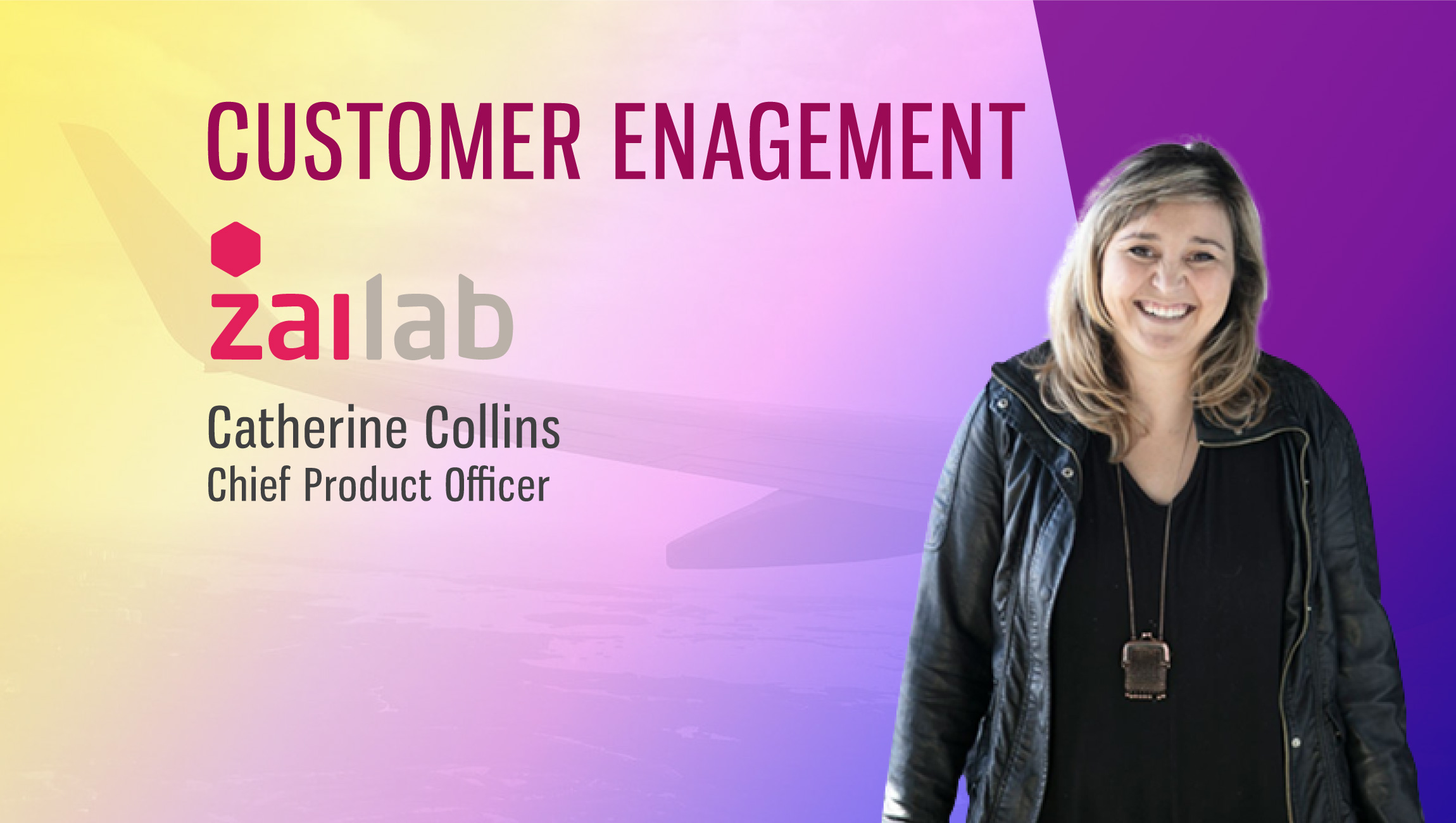
TechBytes with Catherine Collins, Chief Product Officer, ZaiLab

0
Catherine-Collins

Catherine Collins
Chief Product Officer, ZaiLab

Contact centers play a vital role in omnichannel marketing and commerce. With customers engaging on multiple channels, marketers are looking to AI to help them achieve the scale required to address their CX requirements. We spoke to Catherine Collins, Chief Product Officer, Zailab, to understand the changing contours of customer engagement.

Html code here! Replace this with any non empty text and that's it.

How do you believe brands should leverage omnichannel contact center solutions to increase customer engagement?

It’s old news that customers no longer communicate with organizations with voice alone. We communicate via email, text message, live chat, and social media on a daily basis. Smartphones give us access to these channels 24/7. We have become more demanding as customers and no longer remain loyal to organizations out of brand loyalty. Nowadays we favor organizations that deliver excellent customer service – service that we expect to be delivered across any channel of communication. Omnichannel contact center solutions provide the vehicle for your customers to engage with your organization. Engagement is increased when the appropriate channel is available to your customer at the appropriate time. Each channel serves a different need.

A fast resolution, for example, requires a phone call, sending documentation – an email, quick responses to customers browsing a website – live chat, and updates and short informative answers – a text message. This engagement should not always be initiated by your customers either. Proactive engagement, where a customers’ needs are met without having to make contact, is proving to be a powerful tool in delivering excellent customer service.

What are the foundational tenets of the Conversation Cloud?

The term ‘call center’ is a legacy term used to describe a physical workplace where customers and agents communicate on the phone. Over time more communication channels were utilized and the term was adapted to ‘contact center’. Now Cloud communication has made it possible for agents to work from anywhere. This is evident in the fact that the number of home agents in the US has risen. Contact Babel reports that 52% of respondents to their recent study are using home agents (US Contact Centers 2018-2022). We felt that the term ‘center’ no longer applied to the way people were working. Contact centers are being driven to become customer focused and deliver excellent service. With that in mind, it’s becoming more important to have conversations rather than just ‘making contact’. This is why we use the term ‘Conversation Cloud’ to describe the network of conversations that are occurring in the cloud.

Could you take us through how ZaiLab’s offering solves the issue of context?

As customers move from one channel to another, it becomes impossible for your agents to deliver excellent service as the information concerning those conversations is held across different systems. For example, if a customer calls in on Monday and speaks to agent Bob then sends a follow-up email on Wednesday, the agent that deals with the email needs to have the context of the call that occurred on Monday in order to service the query appropriately. ZaiLab offers a conversation manager which groups interactions into conversations. So when a customer calls in, all past conversations with that customer will be available to the agent. That includes interactions across multiple channels – call, email, SMS and live chat. Agents are able to familiarize themselves with past interactions and gain valuable context before responding to the customer.

How does ZaiLab leverage AI/ML technologies in its offering?

Our AI determines which agent has the best chance of satisfying a customer’s needs and achieving a successful result (e.g a sale, resolved query etc.). When customers make contact with your organization they need to be matched to an appropriate agent. There are generally two problems that need to be solved – which customer should be served first and which agent is best suited to serve that customer. Today, most systems answer these questions by looking at the channel that the customer is communicating through, how long they have been waiting and then looking at the skill required to handle the query (e.g. whether an English-speaking agent is required). It then matches that customer to an agent with the appropriate skill. At ZaiLab, we believe there are many more attributes to consider when answering these questions. For example, we look at priority factors such as how many times that customer has called in a week, how many times they have been transferred on a call, their value to the organization, how happy the customer is and why they are making contact. All these factors need to be considered. When determining the best-fit agent, the previous interactions they have had with agents should also be considered.

For example, if a customer speaks with agent Bob and during that call becomes unsatisfied with the service that Bob is delivering, the next time that the customer calls in he/she should not be served to agent Bob. Furthermore, our AI monitors the agent and customer matches that have occurred and over time learns which matches will have the highest probability of getting a positive satisfaction score and a successful outcome.

How does ZaiLab track satisfaction through the customer journey?

ZaiLab tracks satisfaction in two ways. The first is through customer feedback in surveys. These surveys can be used to track how satisfied customers are with your organization and the services you offer or determine how satisfied they were with how your agent performed. The second method of tracking satisfaction is through speech analytics. ZaiLab has partnered with VoiceBase to analyze speech and determine the sentiment of the interaction. This allows for large volumes of interactions to be analyzed. The outcome of this will feed our AI so that better matches can be made between customers and agents.

What sets ZaiLab apart from its competitors?

ZaiLab has three differentiators. Number one, we only charge when you use the software. There are no monthly licensing fees, upfront or maintenance costs. This means that there are no software costs when your business is closed or your agents are on leave. With other pricing models, like tiered pricing, for example, sophisticated software features are only available in top-tier pricing packages, making those features inaccessible to the small and medium-sized contact centers. With our consumption-based pricing model, you have access to all the features right away and only pay when you use them. Now enterprise-grade features are suddenly more affordable because you aren’t forced to pay high prices for a package containing features you don’t use.

Our second differentiator is that ZaiLab software can be set up online in under ten minutes and is completely self-administered. Traditionally, there are long implementation cycles and training required when new contact center solutions are introduced to an organization. In addition, a product expert is often required to make simple changes to your workflow e.g. informing your customers of delays due to high call volumes. We put a lot of time and effort into making the solution easy and intuitive to use so that our software can be set up and maintained by a business user.

Thirdly, we offer intelligent routing through our Single Waiting Room.

Which industries and geographies is ZaiLab looking to expand into in the next few years?

ZaiLab is currently available in the US and in South Africa. In the next few years, ZaiLab will become available in Canada, UK, Australia, New Zealand, and Belgium. Currently, our focus is on the IT, Retail and Distribution industries. This will eventually grow into the Health and Financial industries as well as the BPO and Outsourcing industries.

Thanks for chatting with us, Catherine.
Stay tuned for more insights on marketing technologies. To participate in our Tech Bytes program, email us at news@martechseries-67ee47.ingress-bonde.easywp.com

Versium Surpasses 1 Billion Monthly Records Scored with its AI Predictive Targeting Engine

0
Versium Surpasses 1 Billion Monthly Records Scored with its AI Predictive Targeting Engine

Expanding Proprietary LifeData to 1.5 Trillion Attributes Hones Targeting Predictability

Versium, a market-leading predictive analytics company, announced a major milestone in the usage of the company’s automated AI predictive targeting engine. Versium has eclipsed 1 Billion prospect records scored per month, helping companies significantly increase sales and marketing efficiencies by leveraging machine learning technologies.

In addition, the company’s proprietary LifeData warehouse that powers its AI engine now exceeds more than 1.5 trillion consumer and business data attribute from more than 200 countries. These milestones demonstrate the power and scalability of Versium’s highly efficient and automated AI data processing engine, validating its fortitude as a company. In response to recent international legislative changes, the company also announced that it is fully GDPR compliant.

Also Read: As Mobile Devices and Software Upgrades Make Their Launch, AI and Predictive Analytics Provide A Helping Hand

Versium Founder and CEO Chris Matty stated, “These are major milestones for Versium. In the big data, AI analytics industry, the market is shifting from professional services to product. Our advances in automating data processing and AI modeling supports changing market demand and secures our position for the long term.” Matty continued, “Our proprietary LifeData makes our predictive models most accurate. While others in the market are using expensive professional services to solve these complex problems, we have built the technology to automate the process, thereby yielding accuracy, time and cost efficiencies. Routinely scoring more than 1 billion records monthly demonstrates that Versium has figured out how to scale its technology and grow profitably while expanding.” This fact is reinforced by Versium’s profitable quarter-over-quarter growth since 2017.

Founded in 2012, privately- held Versium is a data technology company that helps brands and agencies unleash the power of AI to dramatically improve marketing ROI. Versium’s automated predictive analytics solutions leverage the company’s SaaS-based, AI analytics platform and exclusive LifeData targeting data warehouse, to provide fast, accurate and actionable data intelligence at a fraction of the cost of hiring data science teams or professional services organizations. LifeData is the only industry source to contain more than 1.5 trillion proprietary consumer and business data attributes. Critical for advanced targeting, it includes both online and offline consumer and business professional behavioral data such as social-graphic details, real-time event-based data, purchase interests, financial information, activities, skills, demographics and more. When these attributes are matched to an enterprise’s internal data and used in Versium’s machine learning models, clients improve customer acquisition, retention and cross-sell and upsell marketing activities. Respected industry leaders including Microsoft, T-Mobile, Wunderman and others, use Versium AI-powered solutions to market effectively and grow.

Recommended Read: Meet the Jetsons: Are We As Close to Achieving Control Over AI As We Thought?

Animoto Survey Highlights Video Marketing’s Popularity on Social Media Amongst Small Business

1
Animoto Survey Highlights Video Marketing's Popularity on Social Media Amongst Small Business

Small Business Plan on Creating More Marketing Videos for Instagram, Facebook, and Youtube in the Next Six Months Than They Have in the Past Six Months

Animoto, the company that makes it easy for anyone to create professional marketing videos, recently released its “Small Business Video Marketing Report.” The report unearths how small businesses are embracing organic and paid video for their marketing on major social media platforms like Facebook, YouTube, and Instagram.

According to Animoto’s survey, Facebook is still leading the way as the social media favorite for small businesses that create marketing videos. Of the small businesses surveyed that create videos for social media, 91 percent plan to create more marketing videos for Facebook in the next 6 months than they have in the last 6 months. Another 74 percent said that was true for Instagram, while 60 percent said the same for YouTube. Overall, two-thirds of small business brands report that video receives more engagement—e.g. likes, shares, comments—than any other form of content on social media.

Also Read: Animoto Recognizes Massive Video Advertising Opportunity for Small Businesses on Instagram

Animoto’s survey also underscores how small business brands are starting to embrace video advertising on Instagram and continue to do so on Facebook. On Facebook’s Q4 2017 earnings call, it was announced that there are 2 million active advertisers on Instagram, and the mobile platform saw a 67 percent increase in business profiles between July and November of last year. Facebook is still the leading video advertising platform for small business brands, according to Animoto’s survey, with 63 percent of respondents having paid to advertise a video on Facebook. Instagram is starting to emerge as a video advertising hub for small business brands as well, with 29 percent of respondents having placed spend against an Instagram marketing video.

Small business marketing on social media:

  • 85 percent of small business brands surveyed reported that social media has gotten them a new client or customer
  • 66 percent reported that video received more engagement (likes, shares, comments) than any other form of content

Also Read: 81 Percent Of Small Business Owners Are Uncertain When It Comes To Their Social Media Marketing Efforts

Instagram emerging as a marketing video hub:

  • 73 percent said Instagram is important to their business
  • 74 percent said they plan on creating more videos for Instagram in the next 6 months than they have in the last 6 months
  • 29 percent have paid to advertise a video on Instagram
  • 57 percent have posted on Instagram Stories in the last 30 days

Facebook is still the video king:

  • 50 percent of respondents said Facebook is their most important social media channel
  • 91 percent said that they plan on creating a greater number of videos for Facebook in the next six months than they have in the last six months
  • 63 percent have paid to advertise their video on Facebook
  • 43 percent of them primarily use the Boost button
  • 57 percent of them primarily use Facebook Ads Manager

Also Read: Is Your Facebook Engagement Working For You?

“In a crowded social media landscape, small businesses want to make sure that the time they do spend on their social media marketing makes a difference. Video is the obvious choice for small business marketers needing to create a brand-building presence on social media. Never before have small businesses had the ability to take very simple content like photos and video clips and transform them into a marketing video that draws attention. We have seen so many of our customers become successful video advertisers and video publishers on social media—especially when their videos are optimized for the social experience on mobile by leveraging features like square aspect ratio,” said Jason Hsiao, the co-founder and Chief Video Officer of Animoto.

Animoto surveyed Animoto small business customers that have created a video in the last six months and indicated that they use Animoto videos for their social media marketing. The web-based survey was fielded April 23, 2018 through April 30, 2018 with a sample size of 308.

Recommended Read: Small Businesses Use Social Media Instead of a Website: Survey By Clutch

Merkle CRM 4.0 Arrives to Transform Data-Driven Commerce

0
Merkle CRM 4.0 Arrives to Transform Data-Driven Digital Marketing and Commerce
Merkle 4.0 is a Salesforce Fullforce Solution for the Marketing and Commerce Industry

Leading data-driven performance marketing agency —Merkle has announced the launch of CRM 4.0, a Salesforce Fullforce Solution for retail, consumer goods, consumer electronics and other industries. These industries are mostly navigating the shift to digital-first experiences. Merkle CRM 4.0 delivers the next generation of CRM for marketers and commerce pros by combining Merkle’s data and services with Salesforce.

Read More: Key Martech-Focused Takeaways from Mary Meeker Internet Trends 2018

The new solution enables identity resolution and predictive consumer engagement across channels to make digital advertising more addressable, experiences more personal and the relationships clients have with consumers more direct across multiple touchpoints including marketing and commerce.

Merkle CRM 4.0 solution integrates with Salesforce Marketing Cloud, including Salesforce DMP and Adverting Studio, and with Salesforce Commerce Cloud. Merkle clients can now take advantage of Salesforce’s marketing and commerce products in order to better engage with customers through personalized digital marketing and streamlined ecommerce experiences.

Recommended Read: Statflo Raises $12 Million To Continue Growth Of 1:1 Sales Accelerator Software In Wireless & Tech Retail Stores

“As a Salesforce partner, Merkle’s leading people-based marketing solutions combined with Salesforce’s marketing and commerce technologies to continue to innovate the market for CRM solutions,” said David Skinner, Senior Vice President, Strategic Alliances, and Partnerships at Merkle.

“We are thrilled that Merkle has been recognized as a Salesforce Fullforce Solution partner, and is helping brands connect with their customers in entirely new ways,” said Don Lynch, SVP, worldwide alliances, Salesforce.

Don added, “We work closely with Merkle as a selected Fullforce Solution partner to ensure our mutual customers benefit from the Salesforce Customer Success Platform.”

Merkle is a proud sponsor of Salesforce Connections 2018, the digital marketing, commerce and customer service event of the year, taking place in Chicago, 12-14 June and will co-host two sessions on Wednesday, 13 June.

How Retailers are Winning with Consumer-First Engagement Strategies will take place at 9:00 AM in the Jackson Park Theater and CRM 4.0- Driving Growth with a Next Generation Customer Platform will be at 12:30 PM in the Super Session Room W185.

Merkle, A Salesforce Fullforce Solutions Partner, Continues to Demonstrate Proven Expertise and Customer Successence 

Salesforce Fullforce Solutions are partner offerings recognized for their specialization in priority Salesforce industries and other key solution areas. Fullforce Solution partners have demonstrated proven expertise and customer success, and receive Salesforce go-to-market support, executive sponsorship and guidance as part of the Salesforce Partner Program.

Currently, Merkle specializes in the delivery of unique, personalized customer experiences across platforms and devices. The agency’s heritage in data, technology, and analytics forms the foundation for its unmatched skills in understanding consumer insights that drive people-based marketing strategies.

Read More: Embrace Agility, Confidence And Coaching For ‘Sales Mastery’

Carusele Wins 4 Influencer Marketing Awards in 2018 Communicator Awards

0
Carusele Wins 4 Influencer Marketing Awards in 2018 Communicator Awards

Carusele Won the Small Agency of the Year Award at the Shorty Awards Last Year

Carusele, a leading influencer marketing agency, announced that their programs won three Excellence Awards (the highest honor) and one Distinction Award at the 24th Annual Communicator Awards. The awards honored influencer marketing programs Carusele managed for Wyndham Vacation Rentals and Hills Bros. Cappuccino.

“While influencer marketing has been around for more than a decade, many brands are still struggling,” said Jim Tobin, president and founder of Carusele. “We’ve found success by focusing on inspirational and aspirational content combined with the industry’s most advanced targeting. It’s not only measurable, but these Carusele programs even offer guaranteed results.”

Also Read: How NOT to Handle a Collaboration Request When it Comes to Influencer Marketing

Wyndham Vacation Rentals won an Online Advertising and Marketing Excellence Award and was recognized with a Distinction Award for Content & Marketing Branded Social. The campaign strove to show people how to #BeVacationReady with tips, itineraries, and stories highlighting how to reduce vacation stress while getting ready for a busy summer vacation season.

Additionally, Hills Bros. Cappuccino’s #CappTheNight campaign was honored with an Excellence Award for Interactive Marketing. While generating buzz around awards season, this campaign also encouraged audiences to download more than 6,500 digital coupons to use when purchasing the product in-store.

Also Read: 5 Reasons Why Social Media Influencers are the Future of Digital Marketing

The Communicator Awards is the leading international awards program honoring creative excellence for marketing and communications professionals. Founded by passionate communications professionals over two decades ago, The Communicator Awards is an annual competition honoring the best digital, mobile, audio, video, and social content the industry has to offer. The Communicator Awards is widely recognized as one of the largest awards of its kind in the world.

Carusele, which won the 2017 Small Agency of the Year Award at the Shorty Awards, utilizes a hand-crafted network of over 7,500 content producers to produce premium influencer campaigns for leading brands and retailers. The company was spun out of Ignite Social Media (the 2016 Social Media Agency of the Year Worldwide) in 2015.

Recommended Read: Key Metrics for Measuring the Effectiveness of Your Influencer Marketing Campaign

Salesforce Marketing Cloud and Sitecore Enable Users to Better Understand Customer Interactions Across All Channels

1
Salesforce Marketing Cloud and Sitecore Enable Users to Better Understand Customer Interactions Across All Channels

Sitecore Is Offering Integration for Sitecore Experience Manager™ and Sitecore Experience Platform™ with Salesforce Marketing Cloud

Sitecore, a global leader in experience management software, announced that it is delivering phase one of the Sitecore Connect™ software for Salesforce Marketing Cloud customers. This first release provides an integration for Sitecore Experience Manager™ and Sitecore Experience Platform™ with Salesforce Marketing Cloud to help customers deliver highly personalized, connected experiences.

Recommended Read: Convince Mozilla About Risks of AI and Drive Home with $225,000

Sitecore Announces Availability of Core Integration with Salesforce Marketing Cloud

At the time of this announcement, Jon Suarez-Davis, Chief Strategy Officer, Salesforce Marketing Cloud, said, “Companies have to transform the way they engage with customers that have come to expected tailored experiences across every touchpoint. With Salesforce Marketing Cloud and Sitecore, users are able to better understand customer interactions across all channels—now including websites–and optimize marketing campaigns in order to enhance the complete customer journey.”

Sitecore’s relationship with Salesforce is designed to bring together Sitecore’s content management and experience platform capabilities to Salesforce Marketing Cloud, the world’s #1 marketing platform. By teaming up, Sitecore and Salesforce customers can streamline digital marketing, giving them faster time-to-market as teams access the content and images to power smarter, more relevant campaigns.

Read More: Outbrain Launches ‘Sphere’ for Unbiased Audience Development

“Delivering the first phase of the integration between Sitecore and Salesforce signals a new opportunity for our mutual customers to efficiently create and deploy marketing campaigns,” said Ryan Donovan, EVP, Product Management, Sitecore.

Ryan added, “With Sitecore Connect and Salesforce Marketing Cloud, marketers don’t have to think about how to integrate Sitecore-managed assets into their Salesforce email campaigns—it’s conveniently there and ready for them to use.”

Sitecore at 2018 Salesforce Connections Conference 

Additionally, Sitecore is showcasing its latest solution line-up as a sponsor of the 2018 Salesforce Connections Conference taking place on 12-14 June in Chicago, IL. Attendees can visit the Sitecore booth and also attend the session Using Sitecore Content with Salesforce Marketing Cloud, scheduled at 10:00 a.m. CDT on 14 June. Led by DJ Ursal, Senior Manager, Product Management, Marketing Cloud Content Management at Salesforce, this session will describe how content is stored and managed in Sitecore and made available in real time within Salesforce Marketing Cloud to enable easy content use and reuse across all channels.

Read More: Fierce Pace of Tech Disruption Has Forced Companies to Innovate via M&As

Availability

Sitecore Connect will be available later this month on the Sitecore Developer Portal (dev.sitecore.net) and will be listed in the Salesforce AppExchange.

Currently, Sitecore is the global leader in experience management software that combines content management, commerce, and customer insights. The Sitecore Experience Cloud™ empowers marketers to deliver personalized content in real time and at scale across every channel—before, during, and after a sale. More than 5,200 brands––including American Express, Carnival Cruise Lines, Dow Chemical, and L’Oréal––have trusted Sitecore to deliver the personalized interactions that delight audiences, build loyalty, and drive revenue.  

 Recommended ReadB2B Buying Disconnect: Are You Targeting the Right Set of Customers?

Billups Hires Denver Native and Billups Veteran, Ryan Chisholm, As Regional Director

0
Billups Hires Denver Native and Billups Veteran, Ryan Chisholm, As Regional Director

Ryan Chisholm Has Deep Industry Experience with Various Ooh, Advertising and Media Agencies Including Billups and Clear Channel

Billups, the leading independent agency in the out-of-home (OOH) industry, announced the appointment of Ryan Chisholm as Regional Director of its Denver office. With 15 years in the industry, five of which were with Billups at one time as Director of Media, Chisholm will oversee and grow the Billups office in Denver as well as partnering with clients in surrounding states including Colorado, Arizona, Nevada, New Mexico, Utah, Wyoming, Kansas and more.

Billups Hires Denver Native and Billups Veteran, Ryan Chisholm, As Regional Director
Ryan Chisholm

“The Denver and broader Mountain-West region is rapidly changing and one of the fastest growing markets in the out-of-home industry,” said Chisholm. “Billups has a strong track record of success in delivering smarter, creative and impactful OOH and digital OOH campaigns, and I’m thrilled to come back the agency to continue to drive our growth as we partner with clients across categories.”

Also Read: Billups Appoints David Krupp As Chief Revenue Officer

Raised in Golden, Colorado, Chisholm has deep industry experience with various OOH, advertising and media agencies including Billups and Clear Channel, where he was the General Manager of the Denver International Airport and Sales Director of a 4 state region for Clear Channel Airports.

“In the past year, Billups has experienced double-digit year-over-year growth. To support our growing roster of clients, we’ve expanded our footprint this year to include offices in Chicago and Denver,” said Billups CEO Ben Billups. “I’m very excited to welcome back Ryan to Billups as we continue on our mission to deliver amazing and move the OOH industry forward. Ryan has experience working with brands across categories on OOH and broader integrated campaigns and is a fantastic addition to our team.”

Also Read: Move Over Conventional SEO Conferences, It’s Time We UnGagged!

In addition to Chisholm’s appointment, Billups continues to build momentum as the largest independent OOH agency in the country. Today Billups employs more than 95 people, spanning 14 offices nationwide, with a roster of top agencies and brands across categories such as CPG, entertainment, QSR, retail, spirits, tourism and technology.

Together with Boohma Technologies, Billups is also pioneering new technology and data advancements to maximize OOH campaigns by leveraging AI, data science and hyper-local audience insights. In 2017, total revenues by Billups increased by more than 30 percent as agencies and brands continue to shift marketing dollars to invest in OOH campaigns and activations.

Recommended Read: Top 10 Takeaways From The Mary Meeker 2018 Internet Trends Report

VIOOH Heralds a New Era of Cooperation Across the OOH Advertising Industry

0
VIOOH Expands UK Team With CRO Appointment

VIOOH, The New Global Platform Shaking Up OOH Advertising Sector By Enabling Industry-Wide Cooperation

VIOOH is now officially Live. VIOOH is a global, open and independent platform, combining automation, programmatic and traditional buying models, launched in the UK, US, and Belgium. This new platform heralds a new era of cooperation across the out of home industry, connecting media owners and buyers.

MarTech RADAR 2018: Top 150 B2B Technology Companies You Should Follow

At the time of this announcement, Jean-Christophe Conti, CEO of VIOOH, said, “DOOH is experiencing double-digit growth, second only to mobile digital advertising, which we believe presents an unmissable opportunity for media owners. Against this backdrop, we are delighted to introduce VIOOH to the market following considerable investment and development.”

“The platform makes OOH inventory more accessible and attractive to advertisers and media agencies, at a time where a larger percentage of budgets are being spent online. To that extent, VIOOH is enabling data-driven media buying and programmatic trading in real time,” Conti continued.

Recommended ReadOracle Marketing Cloud Adds Infinity and Audience CX to Enable Pinpoint Targeting

Designed by Out of Home (OOH) experts for the OOH industry and backed by advertising powerhouse JCDecaux, VIOOH offers all media owners and buyers a frictionless experience for automated OOH and programmatic Digital Out of Home (DOOH) transactions. The data-driven, open platform increases efficiency, speed to market and allows for greater campaign creativity whilst enabling dynamic and measurable outcomes.

This unique platform is driving change in the Out-of-Home industry and launches with a full suite of products, which includes: VIOOH Automation, VIOOH Exchange, and VIOOH Content, with many more ambitious features to come, including patent-pending industry innovations.

Exclusive to VIOOH, the platform features inventory from JCDecaux global entities including the UK, the US, and Belgium, with Germany, Spain, Italy, Singapore, Denmark, Finland and Hong Kong launching at a later date. As a truly global and open platform, VIOOH is planning to expand rapidly beyond these markets and to welcome other media owners.

Recommended ReadContextual Content and AI: The New Wingmen for Email Marketing Campaigns

VIOOH Brings OOH to Real, Targeted Audiences or a Broader Demographic

VIOOH offers media buyers a transparent platform that ensures advertising messages are 100% viewable, brand safe and seen by real, targeted audiences or a broader demographic.

The machine learning algorithm incorporates a number of data sources that enable better-targeted campaigns and more effective outcomes.

Following increased scrutiny around data privacy, in light of the GDPR rules which came into effect last month, VIOOH is naturally compliant since it leverages aggregated, anonymized audience data.

Proving its global ambition, VIOOH is partnered with several leading, global demand-side platforms (DSPs) including Adform, Scoota, and MediaMath. In order to ensure all key advertisers and sellers can transact programmatically, in real time, VIOOH is in discussion with other relevant, leading industry DSPs including AppNexus and Vistar, to accommodate diversified, media buying strategies.

The platform has already been used by a number of test partners including Addison Lee and 7Stars who created a programmatic award-winning campaign.

“By providing a better ability to respond with optimized, targeted and measurable campaigns, VIOOH is a compelling proposition for existing agencies, specialists, and advertisers as well as new media buyers that are eager to invest in OOH,” said Ben Maher, Commercial Officer, VIOOH

VIOOH is a unique offering that has been developed over the past 18 months with investment from JCDecaux. This support has enabled VIOOH to rapidly scale and open conversations with key players across the industry, but the company will operate as a strictly independent entity.

Combining both OOH and mobile digital advertising is a powerful combination which is proven to successfully increase consumer engagement and influence their behavior. A 2017 Nielsen report as presented by OAAA found that DOOH and mobile prompted more online activations than both radio and print, while research from Campaign found that mobile click-through increased by 15% when combined with DOOH.

The Role of Addison Lee and 7Stars in VIOOH 

Recent winner of the ‘Most effective programmatic media partnership’ Addison Lee delivered their winning campaign through the platform and their agency the7stars. Their key objectives were to increase overall bookings, build consideration and usage of the Addison Lee booking app and an overall push to position themselves as a premium car service.

The campaign used data-driven logic (Route, CACI and mobile network data) to determine locations and messages, based on audience and impact times. Creative was managed in near real time, at a placement-by-placement level and integrated weather and social feeds via API. Hour by hour reporting enabled the marketing team to optimize their campaign based on performance metrics.

Dom Blacklock, Head of programmatic, the7stars, said, “Working with JCDecaux, the platform gave us the ability to run more relevant and impactful creative at exact frame location and times, using custom decisioning across time/location/live Heathrow flight times/live weather. We saw a great impact in bookings through this ability to tailor our outdoor message at opportune moments.”

Addison Lee experienced a strong improvement in perception and brand health as well as increased usage through their booking app.

Read More: Ad Blockers: Take a Page from Video Game Advertisers 

Leanplum Study Reveals Emails Drive 3x App Engagement When Combined With Push Notifications

0
Leanplum Study Reveals Emails Drive 3x App Engagement When Combined With Push Notifications

Analysis Looks at the Evolution of Email in the Mobile Era and its Role in Driving Retention and Revenue for Marketers

Leanplum, the leader in mobile engagement, announced a new Mobile Marketing Trends report, Not Your Grandma’s Email: The Transformation of Email in a Mobile World, which examines the performance of email across modern-day marketing channels.

According to App Annie, in Q1 of 2018, the app economy was responsible for $18.4 billion in revenue. Email marketing helps brands tap into this growing revenue opportunity by prompting users for return visits to their mobile apps, that in turn drives higher monetization. Yet, using email as a standalone marketing channel isn’t enough. To truly engage customers wherever they are — web, mobile, mobile web — marketers need a multi-channel strategy that combines email with other communication channels.

Also Read: Tremor Video DSP Launches Comprehensive Three-Point Brand Protection Plan for Programmatic Video Industry

In this report, Leanplum unveils first-of-its-kind data to help marketers leverage email as a core part of their multi-channel campaigns to drive mobile retention and revenue.

Leanplum Email Report
Key findings include:

  • Mobile app engagement increases 3x when you coordinate email messages with push notifications
  • Users who open email messages have 40 percent more weekly sessions versus those who don’t
  • Dormant users are 50 percent more likely to re-engage with your app as the result of an email message
  • Loyal users love frequent emails, but emailing less engaged users too often leads to unsubscribes

“Connecting users around the world is at the heart of what we do at HelloTalk. To showcase our value early on, we crafted a campaign that reached new users across multiple channels. A single pop-up message worked well on its own, but combining it with an educational follow-up email was even better. With Leanplum, we’ve seen our engagement and retention efforts paying off — with 21 percent of users coming back to the app and first messages increasing 7x,” said Marta Krzeminska, Marketing Director at HelloTalk.

Also Read: DealSignal Releases A New Total Audience Measurement Module

“Forward-looking brands have recognized that in a mobile-first world email cannot be siloed from the data that apps provide. Leanplum’s latest Mobile Marketing Trends report validates the importance of understanding user behavior in your email campaigns so you can successfully orchestrate with other mobile channels such as push notifications and fuel marketing engagement,” said Joyce Solano, SVP of Global Marketing, Leanplum.

For this report, Leanplum analyzed global data over a 60-day period, from hundreds of mobile-savvy brands that sent at least 1,000 emails per day. Apps from a variety of verticals were included in the findings — including, but not limited to, travel, gaming, education, entertainment, and fintech.

Also Read: Metadata and Conversica Partner to Automate AI-driven Lead Gen

Tremor Video DSP Launches Comprehensive Three-Point Brand Protection Plan for Programmatic Video Industry

0
Tremor Video DSP Launches Comprehensive Three-Point Brand Protection Plan for Programmatic Video Industry

Provides Brand Safety, Combats Ad Fraud and Polices the Supply Chain at No Cost for Advertisers

Tremor Video DSP, the leading programmatic video platform, announced the launch of its comprehensive three-point brand protection plan. Provided for free to the brands and agencies partnering with Tremor Video DSP, the plan’s core components include ensuring brand safety, combating ad fraud and policing the supply chain. Tremor Video DSP believes no advertiser should have to settle for bot fraud, or worse, pay for non-human impressions and its brand protection plan comes with a Fraud-Free Guarantee.

The rapidly evolving digital video ecosystem is redefining the modern living room, while enabling brands to reach people in more personalized ways, across multiple screens, at scale. However, it raises challenges around transparency and supply quality with the high premiums of video attracting 64 percent of all ad fraud activity.

Also Read: Automate.io and HubSpot Join Forces To Refine Marketing And Sales Automation

“Tremor Video DSP’s plan is a step toward us buying programmatic video with confidence – knowing that they are making efforts to ensure that we are engaging real people through an accountable platform. By attempting to cover all bases, and not just one, Tremor Video DSP has reinforced their ongoing commitment to providing a secure environment for the delivery of ads,” said Sarah Baehr, Co-Chief Investment Officer at Horizon Media.

Advertisers are increasingly confronted with issues concerning brand safety and ad fraud and are now seeking solutions – in fact, over 57 percent of marketers have increased their spending on channels that can prove they are brand safe. Tremor Video DSP’s plan builds on over 10 years of experience in delivering best-in-class video solutions and helps protect advertisers’ investment in video.

Also Read: Metadata and Conversica Partner to Automate AI-driven Lead Gen

The plan includes:

Brand-Safe Delivery – Powered by contextual intelligence tools such as Grapeshot pre-bid brand safety verification, which uses machine learning to ensure only brand-safe supply is surfaced on all campaigns.

Real-Time Fraud Verification – Excludes fraudulent inventory in real-time through verification partners like DoubleVerify to ensure intelligent bidding, as well as pre-bid bot and site fraud blocking.

Transparent Supply Chain – Includes a commitment to exclusively buy authorized inventory as per the IAB Tech Lab’s ads.txt protocol. In addition, Tremor Video DSP has been awarded the Certified Against Fraud Seal for full compliance with Trustworthy Accountability Group’s (TAG) Certified Against Fraud Program.

“We are delighted to recognize Tremor Video DSP with TAG’s Certified Against Fraud Seal, which demonstrates the rigorous steps taken by the company to fight fraud, protect the digital advertising ecosystem, and safeguard advertisers’ brands. We look forward to working with Tremor Video DSP to continue to advance these important efforts to build a safer, more transparent advertising supply chain,” said Mike Zaneis, CEO of TAG.

In conjunction with launching its three-point brand protection plan, Tremor Video DSP has announced the hiring of Kristin Marchesiello, Esq. as the Associate General Counsel and Privacy Officer who will oversee all privacy-related initiatives to further support compliance.

“Comprehensive brand protection must become the standard. Every player in the ecosystem must work together to deliver on digital video’s promise,” said Abbey Thomas, CMO, Tremor Video DSP.

Also Read: Tremor Video DSP Becomes First Video DSP to Mandate Brand Safety for Advertisers

404